

Emergency Power and Generator Safety Guide
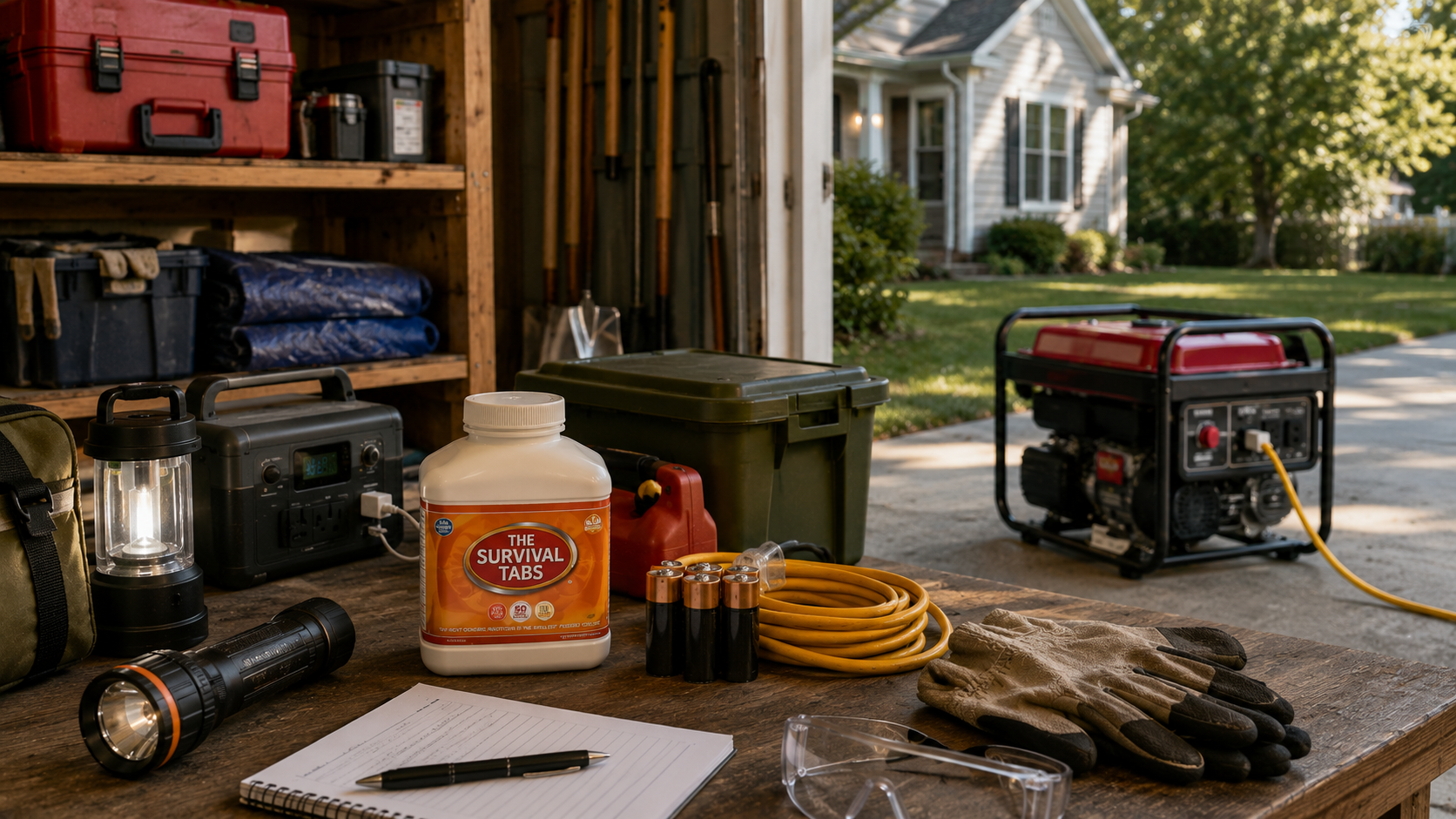
A safety-first guide to emergency power priorities, portable-generator boundaries, carbon monoxide prevention, electrical isolation, fuel handling, and safer alternatives.
Purpose and limits
This is not a generator construction, wiring, repair, installation, load-engineering, fuel-storage, or medical-treatment manual. Follow the manufacturer, local code, utilities, emergency services, and qualified electricians or generator professionals.
Immediate checklist
- Decide which loads are truly essential.
- Prefer battery and other non-combustion options for small loads.
- Operate portable generators outdoors only.
- Keep generators at least 20 feet from doors, windows, and vents.
- Point exhaust away from buildings.
- Use working battery-backed carbon-monoxide alarms.
- Never connect a generator directly to household wiring.
- Use qualified transfer equipment and professional installation.
Start with essential loads
Emergency power plans should protect health, communication, lighting, refrigeration, and other critical needs before comfort loads.
- List devices and their rated running and starting requirements.
- Separate medically essential from convenient loads.
- Check whether a device can safely remain off.
- Avoid operating more equipment than the system supports.
Medical equipment
People relying on powered medical devices need an individualized continuity plan.
- Contact the device manufacturer and clinical team before emergencies.
- Register with utility programs when available, without assuming priority restoration.
- Plan batteries, charging, transport, and an alternate safe location.
- Call emergency services when loss of power creates immediate danger.
Battery-based options
Power banks, device batteries, rechargeable lights, and properly designed battery systems avoid generator exhaust.
- Use listed products from reputable sources.
- Charge before forecast hazards.
- Follow temperature, ventilation, and manufacturer limits.
- Do not use swollen, damaged, wet, or recalled batteries.
Portable power stations
A portable power station is an energy-storage device, not unlimited household power.
- Match loads to the manufacturer’s ratings.
- Keep ventilation openings clear.
- Use only approved charging methods and cables.
- Do not expose it to water or excessive heat.
- Stop using it if damaged, hot, swollen, smoking, or producing unusual odor.
Portable generators and carbon monoxide
Generator exhaust contains carbon monoxide, an odorless, colorless poison.
- Never operate a generator in a home, garage, basement, crawlspace, shed, porch, or carport.
- Opening doors and windows does not make indoor or attached-space operation safe.
- Keep the generator outdoors at least 20 feet from any door, window, or vent.
- Direct exhaust away from your home and neighboring buildings.
Carbon-monoxide alarms
Alarms are a backup, not permission to place a generator too close.
- Install battery-operated or battery-backup alarms on every level and outside sleeping areas according to current safety guidance.
- Test and replace alarms according to manufacturer instructions.
- Leave immediately if an alarm sounds.
- Call emergency services from fresh air.
Placement
A generator location must manage exhaust, rain, fire, theft, noise, and access without moving danger toward others.
- Use a dry outdoor location consistent with manufacturer instructions.
- Keep clearances from combustible materials.
- Do not place it where exhaust can enter a neighbor’s building.
- Do not improvise an enclosure that traps exhaust or heat.
- Keep children and animals away.
Weather protection
Electricity and water create severe hazards.
- Follow the manufacturer’s approved method for weather protection.
- Do not operate or handle plugs with wet hands.
- Keep connections off wet ground.
- Stop during unsafe conditions.
- Never bring a running generator indoors because of rain.
Electrical connection
Backfeeding can kill utility workers, neighbors, and household occupants.
- Never plug a generator into a wall outlet.
- Use a properly installed transfer switch or other code-compliant equipment selected by a qualified electrician.
- Follow utility interconnection rules.
- Do not improvise adapters or modify cords.
- Inspect the system before seasonal use.
Extension cords
- Use only cords rated for the load and environment.
- Check gauge, length, grounding, listing, and outdoor rating.
- Inspect for cuts, crushed sections, heat damage, or loose connections.
- Keep cords out of water, doors, and walkways.
- Do not daisy-chain or overload cords.
- Replace damaged cords rather than taping unsafe repairs.
Sizing and load management
Generator selection requires accurate load information and professional guidance for complex systems.
- Read equipment labels and manuals.
- Account for starting demand.
- Add loads gradually.
- Watch for overload warnings or unstable operation.
- Do not bypass protective devices.
Fuel
Fuel is a fire, vapor, poisoning, environmental, and legal hazard.
- Use only the fuel specified by the manufacturer.
- Store only quantities allowed by law and local fire rules.
- Use approved, labeled containers.
- Keep fuel outside living areas and away from ignition sources.
- Never store fuel near exits.
Refueling
Hot generator parts can ignite spilled fuel.
- Turn the generator off.
- Allow it to cool fully according to instructions.
- Refuel outdoors with the engine stopped.
- Clean spills safely.
- Do not smoke or use flames nearby.
Maintenance
A generator that has been stored may have fuel, battery, wiring, pest, or mechanical problems.
- Follow the manufacturer’s maintenance schedule.
- Use qualified service for repairs beyond user-authorized tasks.
- Check recalls and safety notices.
- Test only in a safe outdoor setup.
- Do not disable carbon-monoxide shutoff or other safety features.
Noise and hearing
Generators can damage hearing and disturb neighbors.
- Use appropriate hearing protection near operating equipment.
- Maintain required ventilation and safety distance.
- Do not defeat exhaust or cooling systems to reduce noise.
- Respect local noise rules.
- Coordinate placement without increasing CO exposure.
Security
Theft prevention must not create exhaust, fire, or escape hazards.
- Do not chain equipment in a way that blocks emergency movement.
- Keep locks away from hot and moving parts.
- Do not operate in an unsafe enclosed location to hide it.
- Mark ownership and document serial numbers.
- Avoid broadcasting generator and fuel locations.
Children, older adults, and disability access
Make controls and emergency actions understandable and accessible.
- Assign trained adults to operate equipment.
- Keep children away from fuel, cords, batteries, and engines.
- Use visual, audible, and tactile alert methods as needed.
- Plan relocation when safe power cannot be maintained.
Apartments and multifamily housing
Portable-generator operation may be prohibited or impossible to do safely.
- Follow the landlord, fire code, building rules, and local authorities.
- Never operate on balconies, corridors, rooftops, garages, or near shared openings.
- Use building-approved charging or shelter options.
- Plan an alternate powered location for critical medical needs.
Fire response
Keep an appropriate extinguisher accessible only if household members are trained to use it.
- Prioritize evacuation.
- Call emergency services.
- Do not fight a growing fire, fuel fire, or electrical fire beyond training.
- Do not restart damaged equipment.
- Preserve the scene for qualified assessment when safe.
Signs of carbon-monoxide poisoning
Headache, dizziness, weakness, nausea, vomiting, chest pain, and confusion can be warning signs.
- Move everyone to fresh air immediately.
- Call emergency services.
- Do not reenter to retrieve belongings.
- Do not rely on smell or on someone feeling better after leaving.
After power returns
Restoration can create surges, damaged-equipment, and reconnection hazards.
- Turn off and disconnect temporary equipment safely.
- Let generators cool before storage.
- Have damaged wiring and equipment assessed.
- Restock batteries and fuel within safe limits.
- Review what worked and update the plan.
Frequently asked questions
Can I run a generator in a garage with the door open?
No. Never run it in a garage or other enclosed or attached space.
Is a porch or carport safe?
No. CPSC warns these locations are too close. Operate outdoors at least 20 feet from the home, with exhaust directed away.
Can I make a special cord to power the house?
No. Never backfeed or use improvised adapters. Use qualified, code-compliant transfer equipment.
Does a carbon-monoxide alarm make indoor use safe?
No. Correct outdoor placement is essential; alarms are an additional layer.
Can I build my own generator?
This article intentionally excludes generator construction and modification because errors can cause electrocution, fire, CO poisoning, equipment damage, and harm to utility workers.
Where do Survival Tabs fit?
They may be one compact part of a broader emergency food plan. They do not generate power and are not a substitute for safe water, medicine, refrigeration planning, or safe electrical practices.
Professional review required before publication
- Electrical and generator review
- Fire and fuel-safety review
- Carbon-monoxide and toxicology review
- Emergency-management review
- Medical-device and clinical review
- Accessibility and safeguarding review
- Building-code, landlord, and legal review
- Product-compliance review
Authoritative sources
CDC generator safety fact sheet
CDC carbon-monoxide basics
CPSC carbon-monoxide guidance
CPSC generator and engine-driven tool guidance
CDC power-outage safety
CPSC hurricane-season generator warning