

Emergency Medication Refrigeration During Power Outages
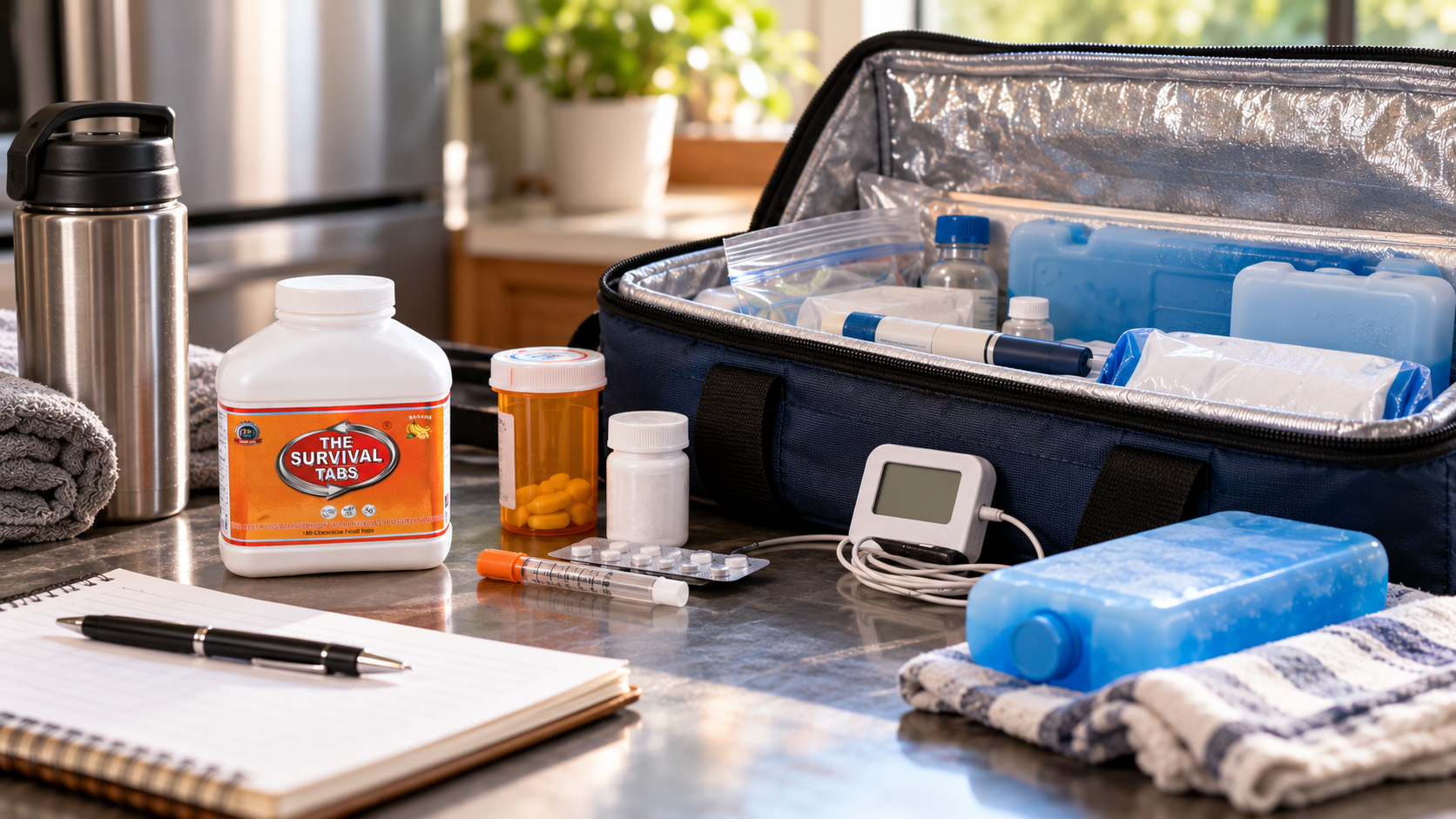
Quick answer: Before an outage, ask the pharmacist or manufacturer exactly how each medication should be stored, how long it can tolerate temperature changes, and what to do if refrigeration fails. Do not guess from another medicine.
Create a medication-specific plan
List the exact medication, storage range, original packaging, pharmacy, prescriber, manufacturer contact, refill process, and the individual instructions already provided.
Prepare monitoring and cooling
Use a suitable thermometer and a professionally recommended cooling method. Keep medication dry and separated from direct contact with ice unless instructions specifically allow it. Avoid freezing a medicine that must only be refrigerated.
Protect the refrigerator
Keep the door closed during outages and document when power failed and temperatures when known. A household refrigerator, cooler, vehicle, hotel, or shelter may not maintain the required range.
Ask before using exposed medication
Contact the pharmacist, manufacturer, or healthcare professional with the time and temperature history. Do not discard, continue, or alter a life-sustaining medicine solely from general internet advice; obtain urgent replacement guidance.
Plan transport and replacement
Identify backup pharmacies, accessible powered locations, insurance contacts, and safe transport packaging. Never leave medication in a hot or freezing vehicle.
Quick checklist
- Save official alerts and contacts offline.
- Include medication, accessibility, children, older adults, animals, and transport needs.
- Practice the plan and update it after household changes.
- Follow current local instructions during an actual emergency.
Official sources
- CDC — Power Outage Safety: https://www.cdc.gov/natural-disasters/response/what-to-do-protect-yourself-during-a-power-outage.html
- Ready.gov — Power Outages: https://www.ready.gov/power-outages
This guide provides general preparedness education and does not replace emergency services, product labels, or qualified professional guidance.