

Emergency Meal Planning Guide
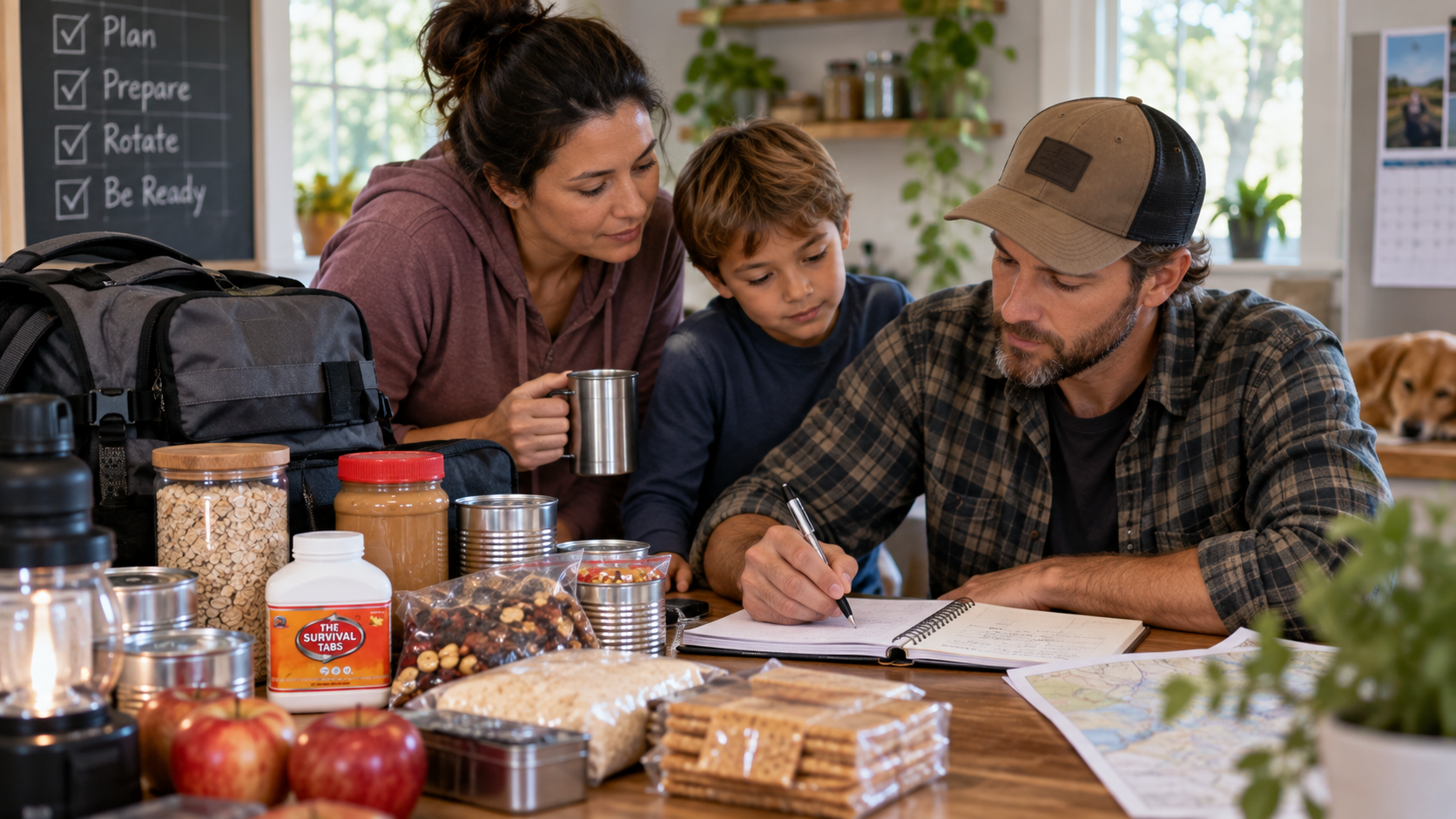
Emergency Meal Planning Guide
An emergency meal plan turns stored ingredients into meals that work during outages, evacuation or supply interruptions. Plan around safe water, household needs and the utilities likely to be available.
Count people and days
Include children, older adults, pets, allergies, cultural preferences and medically required diets. Use realistic portions and check calories rather than counting packages as complete days.
Plan three preparation levels
Keep no-cook meals for immediate outages, low-fuel meals for limited utilities and familiar cooked meals for stable sheltering. Store a manual can opener and safe utensils.
Track water and fuel
Dry foods can require substantial water and cooking time. Keep preparation water separate from drinking water calculations. Never use grills, camp stoves or generators indoors.
Build variety
Combine grains or crackers, beans or other proteins, canned foods, nut or seed products where allergies permit, fruit, vegetables and calorie-dense ingredients. Survival Tabs may add compact backup nutrition but are not a full-calorie meal plan.
Rotate and practice
Use stored foods in ordinary meals, replace them and test recipes before an emergency. Follow current food-safety guidance during outages and discard compromised food.