

Emergency Lighting and Battery Safety Guide
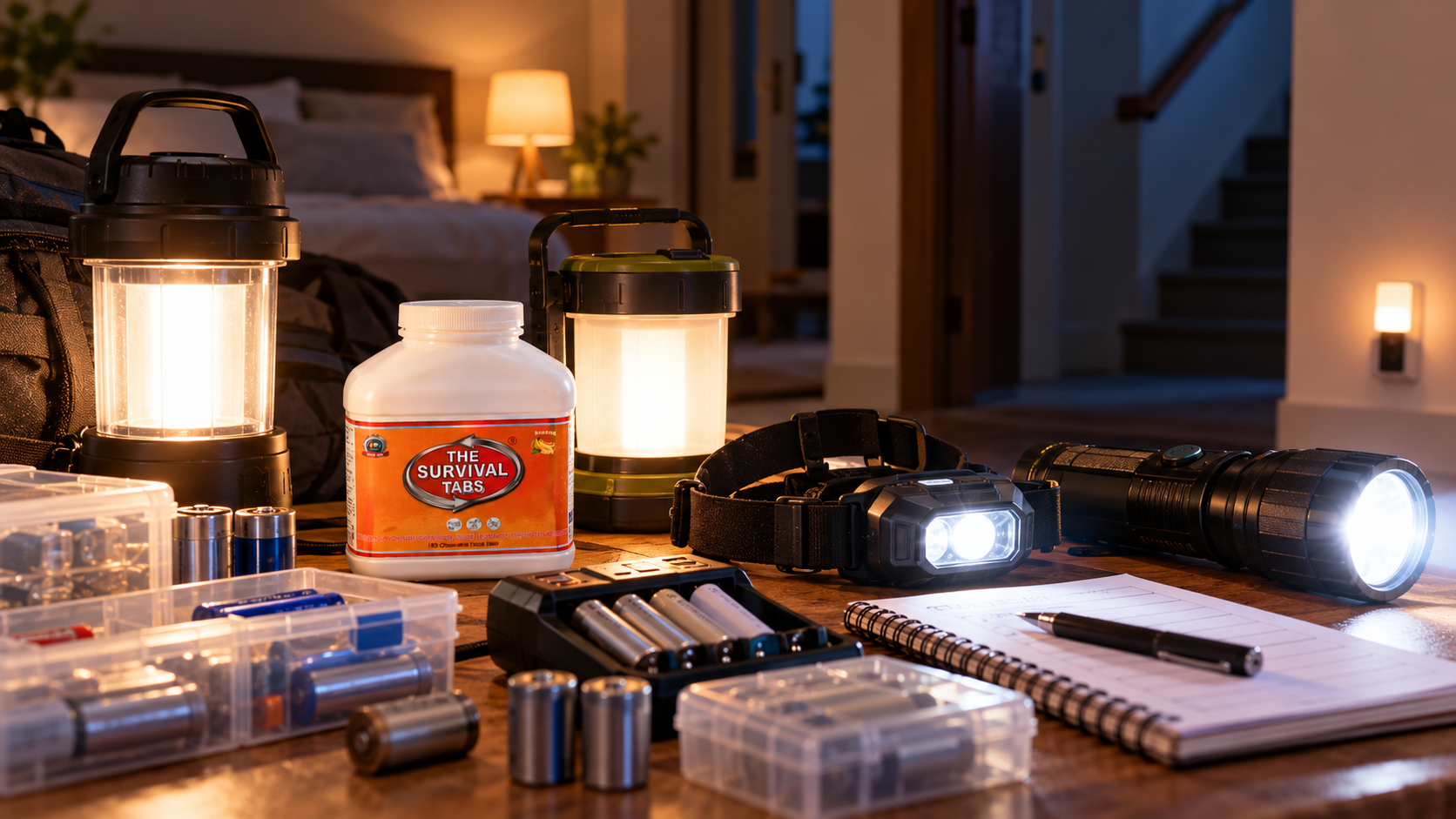
Plan reliable outage lighting with layered flashlights, safe batteries, accessible placement, and routine testing.
Build lighting in layers
Use a headlamp for hands-free tasks, a flashlight for directional light, and battery-powered lanterns for rooms. Place lights where people can reach them before moving through dark stairs or hallways. Add small night-lights with outage backup near beds, bathrooms, and exits.
Prefer lower-fire-risk options
Battery-powered lights are generally safer than candles during outages. If candles are used despite the risk, keep them away from children, pets, curtains, bedding, and traffic paths, and never leave them unattended. Do not use fuel lanterns indoors unless the manufacturer explicitly approves indoor use and local guidance permits it.
Store and handle batteries correctly
Keep batteries in a cool, dry place in their original packaging or a case that prevents terminals from touching metal. Do not mix old and new batteries or different types in one device. Remove leaking, swollen, damaged, or unusually hot batteries from service without touching leakage with bare skin, and follow local disposal rules.
Keep the system ready
Test lights on a schedule and record replacement dates. Match spare batteries to each device and rotate them before expiration. Recharge power banks periodically according to their instructions. Keep one light and a whistle within reach of each bed.
Use light without creating new hazards
Do not shine intense beams into drivers’ eyes, stretch cords across walking routes, or cover hot lamps. During post-flood entry, use battery-powered lighting and avoid switches or energized equipment until electrical safety is confirmed.
Sources
Ready.gov emergency-kit guidance; CDC flooded-home safety guidance; device and battery manufacturers’ instructions.
Quick checklist
- Learn the local hazard and official alert channels.
- Choose safe actions, routes, and backup options before an emergency.
- Keep essential supplies accessible and review the plan with everyone involved.
- Follow current instructions from emergency and public-health authorities.
Frequently asked questions
How often should I review this plan?
Review it at least twice a year and after a move, household change, major equipment change, or local emergency.
Should official instructions override this guide?
Yes. Conditions vary, so current directions from emergency responders, utilities, public-health agencies, and local authorities take priority.