

Emergency Laundry and Clothing Hygiene Guide
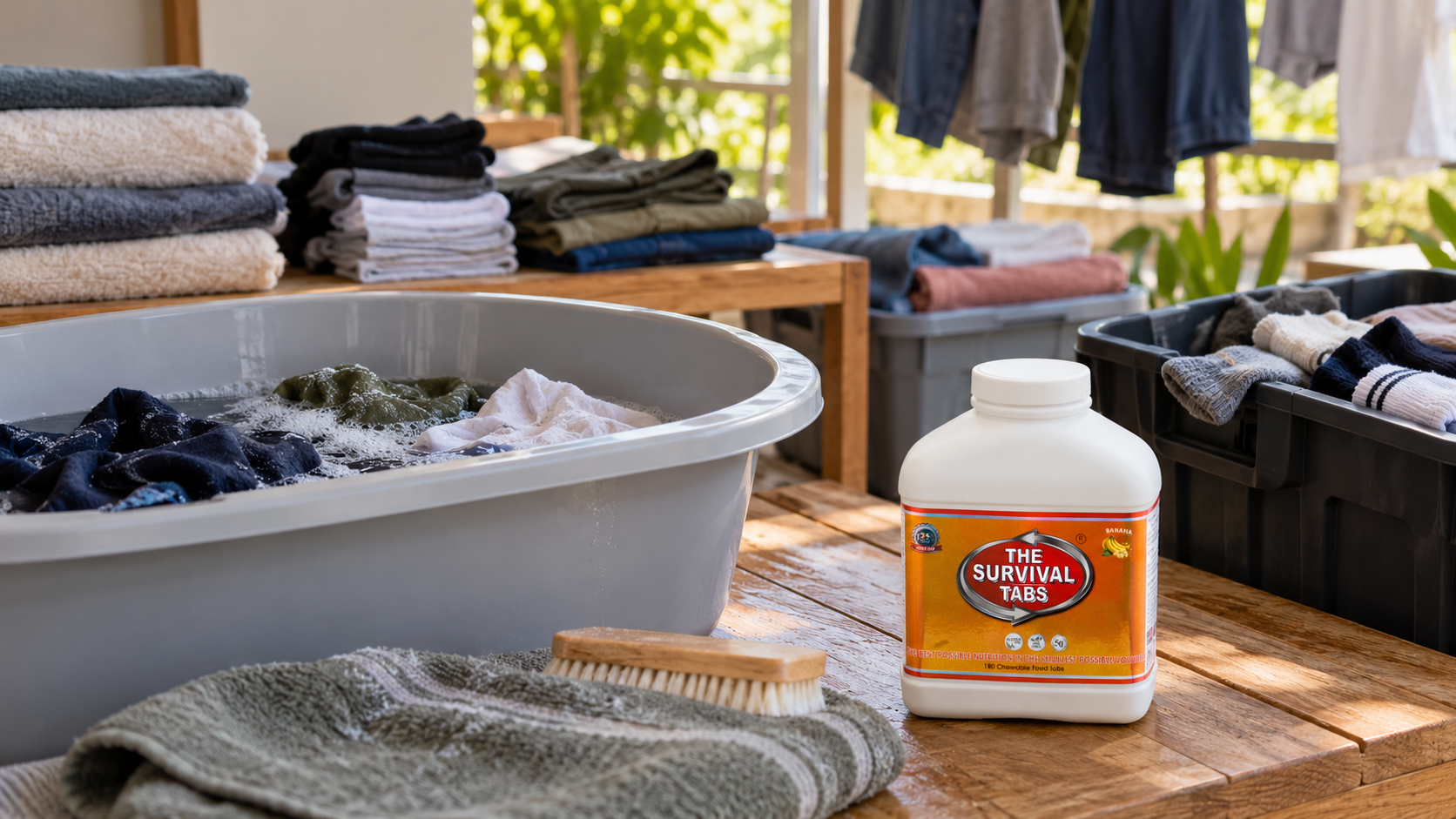
Quick answer: Prioritize dry clothing, underwear, socks, towels, and items needed for medical or caregiving tasks. Separate clean, dirty, wet, and contaminated items, and do not use scarce safe drinking water for laundry when drinking or medical needs are unmet.
Plan a clothing reserve
Keep several changes of season-appropriate clothing, underwear, socks, and essential protective items accessible. Include infant, menstrual, continence, caregiving, work, accessibility, and climate needs. Store clean items dry and protected from pests and chemicals.
Separate categories
Use different containers for clean, ordinary dirty, wet, and potentially contaminated clothing. Moisture and sealed storage can encourage odor and microbial growth, so dry ordinary wet items promptly when conditions permit.
Use water carefully
Follow public-health and utility instructions about water safety. Use the cleanest appropriate water available and soap or detergent according to its label. Do not mix cleaning products. Handwashing laundry does not make chemically or biologically contaminated protective clothing safe.
Handle contamination conservatively
Clothing exposed to floodwater, sewage, pesticides, industrial chemicals, wildfire ash, body fluids, or unknown powders may require incident-specific disposal or professional cleaning. Avoid shaking contaminated items and follow local public-health, employer, or hazardous-material instructions.
Dry and protect skin
Dry items completely when possible. Change wet socks and clothing to reduce skin problems and cold stress. Keep wounds covered according to medical guidance, maintain hand hygiene after handling dirty laundry, and seek care for infection or chemical exposure symptoms.
Quick checklist
- Follow current official alerts and local instructions.
- Include medications, accessibility, children, older adults, pets, and transport needs.
- Keep essential contacts and records available offline.
- Review supplies and plans after every major change or event.
Frequently asked questions
Can untreated floodwater be used for laundry?
Do not use contaminated water unless officials provide a safe method and permitted use. Floodwater can contain sewage, chemicals, and debris.
Is extra bleach always safer?
No. Follow the product label and official guidance. Never mix bleach with ammonia, acids, or other cleaners.
Official sources
- CDC — Hygiene in an Emergency: https://www.cdc.gov/hygiene/about/when-where-emergencies.html
- CDC — Floodwater Safety: https://www.cdc.gov/floods/safety/
This guide provides general preparedness education. Current local instructions, product labels, and qualified professional guidance take priority.