

Emergency Hygiene and Disinfection Guide
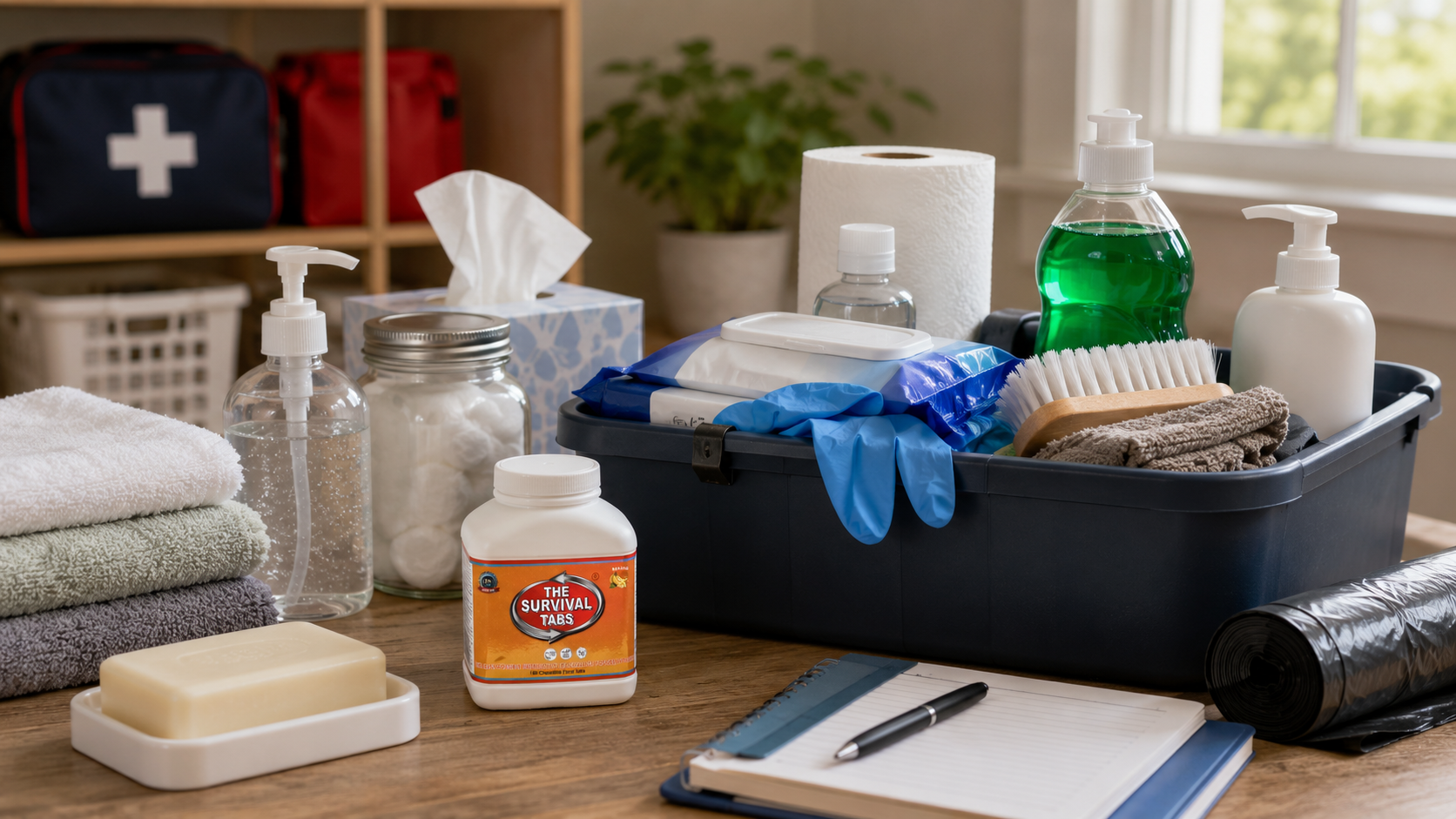
A practical, safety-first guide to reducing infection risk during outages, evacuations, storms, supply disruptions, and other emergencies.
Medical and public-health notice: This guide supports household preparedness. It does not replace diagnosis, treatment, wound care, sterile medical processing, infection-control protocols, product labels, or instructions from public-health authorities. Seek qualified care for serious wounds, chemical exposure, breathing problems, poisoning, severe illness, or rapidly worsening symptoms.
The Core Principle
Emergency hygiene is not about making a home or shelter sterile. The goal is to interrupt common routes of transmission while avoiding chemical injuries, contaminated water, unsafe waste handling, and false confidence.
Use the least hazardous method that is appropriate for the task. Cleaning with soap or detergent and water is often the first step. Sanitizing and disinfecting have narrower purposes and must follow the product label.
Cleaning, sanitizing, disinfecting, and sterilizing
* Cleaning removes dirt, organic matter, and many germs from surfaces.
* Sanitizing reduces germs to levels defined for a particular use, such as certain food-contact surfaces.
* Disinfecting uses an appropriate registered product to kill specified germs on specified surfaces when label directions are followed.
* Sterilizing is a controlled medical or laboratory process. Household improvisation is not a substitute.
Do not use the words interchangeably. A visibly dirty surface normally needs cleaning before disinfection because soil can interfere with product performance.
Priority Order During an Emergency
1. Protect safe drinking water and sanitation first.
2. Keep hands clean at critical moments.
3. Separate human waste, garbage, raw food, dirty laundry, and cleaning chemicals.
4. Clean high-touch and food-preparation areas with the correct method.
5. Disinfect only when the situation and product label call for it.
6. Protect people with higher medical risk and follow their care plans.
7. Escalate illness, injury, poisoning, and chemical exposure early.
Build a Household Hygiene Kit
Store supplies where adults can reach them but children and pets cannot. Keep chemicals in original labeled containers.
Core supplies
* Plain soap for handwashing and bathing.
* Alcohol-based hand sanitizer containing at least 60% alcohol for times when soap and safe water are unavailable and hands are not visibly dirty or greasy.
* Disposable or washable towels, clean cloths, and paper towels.
* Household cleaner or detergent appropriate for common surfaces.
* An EPA-registered disinfectant selected for the intended surface and use.
* Disposable gloves in suitable sizes for waste, bodily-fluid, or chemical tasks.
* Eye protection if required by a product label or risk assessment.
* Heavy-duty garbage bags, ties, and a covered waste container.
* Toilet paper, menstrual products, diapers, incontinence supplies, and personal hygiene items.
* Laundry detergent and a way to separate dirty from clean items.
* A dedicated basin or container for washing that will not be used for drinking water.
* Printed product labels, safety directions, local poison-control information, and emergency contacts.
Helpful additions
* A hands-free or foot-operated water dispenser for a temporary handwashing station.
* Unscented disposable wipes for personal cleanup when bathing is limited; wipes do not replace handwashing when hands may carry pathogens.
* Tongs or a scoop dedicated to contaminated materials.
* Waterproof labels and a marker for dating opened products and prepared solutions.
* Absorbent material for small spills, used only as directed by the chemical label or local authority.
* Separate travel-size kits for vehicles, evacuation bags, and caregivers.
Hand Hygiene
Handwashing with soap and clean running water is the preferred method in most household situations.
Wash hands at these critical times
* Before preparing food, eating, feeding another person, or handling medication.
* After using the toilet, changing a diaper, assisting with toileting, or handling human waste.
* Before and after caring for a sick or injured person.
* After coughing, sneezing, blowing the nose, or handling used tissues.
* After touching garbage, floodwater, animals, animal waste, or contaminated laundry.
* After removing gloves and after using cleaning or disinfecting chemicals.
* Whenever hands are visibly dirty or greasy.
Handwashing steps
1. Wet hands with clean running water.
2. Apply soap and lather the palms, backs of hands, between fingers, and under nails.
3. Scrub for at least 20 seconds.
4. Rinse thoroughly under clean running water.
5. Dry with a clean towel or air dry.
If a tap is unavailable, use a clean water container that allows water to flow without hands dipping into shared water. Prevent wastewater from pooling near living or food areas.
Hand sanitizer is a fallback, not a universal replacement. Keep it away from flame and supervise children. It is less effective on visibly dirty or greasy hands and does not remove every type of contaminant.
Set Up a Temporary Handwashing Station
1. Choose a stable location near the activity but away from food, sleeping areas, and the safe-water supply.
2. Use a covered container holding verified safe water.
3. Provide a controlled spout so users do not dip hands or cups into the container.
4. Place soap where it remains clean and dry.
5. Provide clean single-use towels or a protected air-drying method.
6. Collect or drain wastewater safely according to local instructions.
7. Clean the station regularly and refill it without contaminating the spout.
Surface Cleaning and Disinfection
A safe decision sequence
1. Identify the surface, the contamination, and the people who may be exposed.
2. Read the entire product label, including surface compatibility, dilution, ventilation, protective equipment, contact time, storage, and first aid.
3. Remove people who should not be present, especially children, pets, and anyone with breathing sensitivity.
4. Ventilate the area as directed without compromising storm, smoke, or shelter safety.
5. Clean visible soil with soap or detergent and water when the label or situation requires it.
6. Apply the product only by a method listed on the label.
7. Keep the surface visibly wet for the full labeled contact time.
8. Rinse food-contact surfaces if the label requires it.
9. Allow the area to dry, store the product safely, remove gloves correctly, and wash hands.
High-touch priorities
* Toilet handles, faucet controls, doorknobs, light switches, and handrails.
* Shared phones, radios, keyboards, remotes, and communication equipment, using device-safe methods.
* Food-preparation surfaces, handled according to food-contact directions.
* Caregiving surfaces and reusable equipment, following manufacturer instructions.
* Shared shelter fixtures and accessibility equipment, without damaging controls or grips.
Routine cleaning may be enough in many situations. Disinfecting every object repeatedly can waste limited supplies and increase chemical exposure.
Chemical Safety: Non-Negotiable Rules
* Never mix cleaning or disinfecting products unless the label explicitly instructs you to do so.
* Never mix bleach with ammonia, acids, vinegar, toilet-bowl cleaner, or other products.
* Never apply surface disinfectants to skin, wounds, food, drinking water, pets, or clothing unless the label specifically permits that use.
* Never ingest, inhale deliberately, inject, or nebulize disinfectants.
* Never transfer chemicals into beverage bottles, food containers, or unlabeled containers.
* Never guess a dilution or contact time.
* Never use a product on a surface or with an application method not covered by the label.
* Keep chemicals away from heat, flame, direct sunlight, incompatible materials, children, and pets.
* Do not assume a stronger concentration works better; it may be ineffective, corrosive, or dangerous.
Bleach limits
Bleach products vary in concentration, formulation, approved uses, and shelf stability. Some splashless, scented, or laundry products are not appropriate disinfectants. Use only a product whose current label supports the intended task.
Do not publish or rely on a universal homemade bleach formula. If a public-health authority recommends a specific dilution during an event, verify the product concentration, prepare only the amount needed, label the container, follow ventilation and contact-time instructions, and discard it as directed.
If fumes or exposure occur
1. Stop using the product and move away from the exposure without entering a dangerous atmosphere.
2. Get fresh air if it is safe to do so.
3. Rinse skin or eyes exactly as the label or poison-control professional directs.
4. Call emergency services for severe breathing difficulty, collapse, confusion, seizure, or other life-threatening signs.
5. Contact Poison Control in the United States at 1-800-222-1222 or use the official online service; elsewhere use the local poison center.
6. Keep the product container or label available for responders. Do not induce vomiting unless a qualified professional directs it.
Personal Hygiene When Water Is Limited
Reserve verified safe water for drinking, food preparation, medication, and critical hygiene. Follow local restrictions and boil-water or do-not-use notices.
Low-water priorities
* Hands at critical moments.
* Face and eyes using clean materials and safe water.
* Genital, menstrual, diapering, and incontinence hygiene.
* Feet, skin folds, and areas at risk of irritation.
* Oral care using safe water and normal commercial products.
* Cleaning around wounds only as directed by a clinician or recognized first-aid guidance.
Do not replace toothpaste, wound products, or prescribed skin care with homemade chemical recipes. Whitening, caustic soap making, herbal treatments, and improvised antiseptics are outside this guide.
Toilets, Human Waste, and Garbage
If sewer or septic service may be damaged, follow local utility and emergency-management instructions before flushing.
Waste-control checklist
* Keep waste away from food, drinking water, sleeping areas, children, pets, wells, and floodwater.
* Use a designated toilet or emergency sanitation system approved by local authorities.
* Line containers and close bags as directed; do not overfill them.
* Wear suitable gloves for waste handling and wash hands afterward.
* Clean and disinfect contaminated hard surfaces using a labeled method.
* Store waste temporarily in a secure, ventilated location until approved disposal is available.
* Do not bury, burn, dump, or mix human waste with household chemicals unless local authorities explicitly direct a method.
Large sewage releases, septic backup, or contaminated floodwater may require trained cleanup. Keep people out of the area and contact the appropriate utility, health department, landlord, or remediation professional.
Food-Area Hygiene
* Separate raw foods from ready-to-eat foods.
* Wash hands before and during food preparation.
* Use safe water for washing, cooking, ice, infant feeding, and brushing teeth when authorities require it.
* Clean food-contact surfaces before and after use.
* Use only products labeled for food-contact surfaces and rinse when required.
* Discard food exposed to sewage, floodwater, leaking chemicals, or unsafe temperatures according to official guidance.
* Do not use surface disinfectant directly on food.
Laundry and Contaminated Textiles
1. Avoid shaking contaminated laundry, which can spread material into the air.
2. Wear gloves when appropriate and keep dirty laundry away from the body.
3. Wash using the warmest appropriate water setting and detergent allowed by the item’s care instructions.
4. Dry items completely using the warmest appropriate setting or a protected drying area.
5. Clean and disinfect hampers or hard containers as appropriate.
6. Wash hands after handling dirty laundry and after removing gloves.
Items contaminated with chemicals, sewage, heavy mold, or hazardous substances may need specialized disposal rather than household laundering.
Caring for Someone Who Is Sick
* Follow current guidance from the person’s clinician and public-health authority.
* Improve ventilation when appropriate and safe for the hazard outside.
* Provide separate personal items when practical.
* Clean shared high-touch surfaces using current guidance.
* Use gloves or other protective equipment only for tasks that call for them, and remove them safely.
* Track worsening symptoms, medication needs, hydration, and access to care.
* Protect caregivers who are pregnant, immunocompromised, elderly, or otherwise at increased risk.
Isolation, masking, testing, and disinfection recommendations vary by disease and can change. Verify current official guidance rather than relying on an old emergency plan.
Wounds, Medical Equipment, and Sterile Tasks
Household disinfectants are not wound treatments and do not make improvised instruments sterile.
* Control life-threatening bleeding and seek emergency help.
* Use first-aid supplies according to their instructions.
* Do not pour bleach, surface cleaner, alcohol, peroxide, or mixed chemicals into a wound unless a qualified clinician specifically directs the product and method.
* Do not reuse single-use medical items.
* Clean reusable medical equipment only according to the manufacturer and care team.
* Maintain backup power and cleaning plans for medically necessary devices.
* Seek care for deep, contaminated, puncture, bite, crush, burn, or infected wounds and for any wound in a person at increased risk.
Children, Older Adults, Disabilities, and Pets
* Store chemicals locked, upright, and in original containers.
* Do not ask children to apply disinfectants.
* Use plain-language labels, tactile organization, large print, or caregiver prompts where needed.
* Preserve accessible routes and do not leave wet floors, cords, buckets, or chemical containers in travel paths.
* Plan extra hygiene supplies for continence, feeding tubes, mobility equipment, respiratory devices, sensory needs, and skin care.
* Keep pets away from wet treated surfaces until the label says reentry is safe.
* Ask a veterinarian before using any chemical on or near an animal.
Floods, Sewage, and Mold
Floodwater can contain sewage, chemicals, sharp objects, and electrical hazards. Cleaning should begin only after authorities say entry is safe and electricity, structure, and contamination risks have been assessed.
* Wear task-appropriate protective equipment.
* Use safe water for washing and cleaning.
* Discard porous items that cannot be safely cleaned according to official guidance.
* Do not mix bleach with ammonia-containing sewage or other cleaners.
* Dry wet materials promptly when safe to reduce mold growth.
* Use trained help for extensive mold, sewage contamination, hazardous chemicals, or damaged structures.
A Seven-Step Household Hygiene Plan
1. Identify hazards: water status, sanitation, illness, sewage, chemicals, and shelter conditions.
2. Protect people: separate unsafe areas and prioritize those at higher risk.
3. Stabilize basics: safe water, toilets, handwashing, waste, food, and medication.
4. Assign zones: clean supplies, dirty items, chemicals, food, laundry, and waste.
5. Use task cards: product, surface, protective equipment, contact time, ventilation, and disposal.
6. Inspect twice daily: water, soap, waste, illness, chemical storage, and supply levels.
7. Update the plan when official guidance, household needs, or the emergency changes.
Common Mistakes to Avoid
* Trying to sterilize the entire home.
* Disinfecting dirt instead of cleaning first.
* Mixing products or improvising stronger concentrations.
* Ignoring label contact time.
* Using drinking-water supplies for low-priority cleaning.
* Reusing dirty gloves or touching clean objects while wearing them.
* Storing chemicals near food, medicine, heat, or children.
* Using old social-media recipes instead of current official guidance.
* Treating chemical exposure or infection without qualified help.
* Forgetting accessibility, menstrual hygiene, infant care, continence, and caregiver needs.
When to Get Professional Help
* Difficulty breathing, severe eye pain, collapse, seizure, confusion, or major chemical exposure.
* Suspected poisoning or ingestion.
* Severe dehydration, persistent vomiting or diarrhea, blood in stool, or rapidly worsening illness.
* Serious wounds, burns, bites, or signs of infection.
* Sewage backup, widespread mold, hazardous chemical release, or structural damage.
* Questions involving medical-device processing, sterile procedures, infection-control protocols, or occupational exposure.
Quick Readiness Checklist
* Safe water status verified.
* Soap and handwashing station ready.
* Toilet and waste plan ready.
* Chemicals labeled, separated, and secured.
* Product directions and contact times available.
* Gloves and required protective equipment available.
* Clean and dirty zones identified.
* Food-contact cleaning method confirmed.
* Care plans and medical contacts available.
* Poison-control and emergency numbers saved offline.
* Children, pets, and vulnerable household members included.
* Supplies inspected and rotated.
Frequently Asked Questions
Should I disinfect every surface during an emergency?
No. Prioritize safe water, sanitation, hand hygiene, food safety, and surfaces with a meaningful contamination risk. Routine cleaning is often sufficient.
Can I make a stronger disinfectant if supplies are limited?
No. Follow the label or current public-health instructions. Stronger is not necessarily more effective and may increase injury, fumes, or surface damage.
Can hand sanitizer replace handwashing?
It is a useful fallback when soap and safe water are unavailable, but it does not remove every contaminant and is less effective on visibly dirty or greasy hands.
Can I use household disinfectant on a wound?
No. Surface disinfectants are not wound-care products. Follow recognized first-aid guidance and seek qualified medical advice.
What if the label is missing?
Do not guess. Set the product aside safely and use another properly labeled product.
What if local instructions conflict with this guide?
Follow current directions from emergency management, the health department, water utility, fire service, poison center, and clinicians responsible for the event.
Official Sources
CDC — About Handwashing: https://www.cdc.gov/clean-hands/about/index.html
CDC — Hygiene Basics: https://www.cdc.gov/hygiene/about/index.html
CDC — Cleaning and Disinfecting: https://www.cdc.gov/hygiene/about/when-and-how-to-clean-and-disinfect-your-home.html
EPA — Safe Disinfectant Use: https://www.epa.gov/newsreleases/epa-provides-critical-information-american-public-about-safe-disinfectant-use
EPA — Cleaning, Sanitizing, and Disinfecting: https://www.epa.gov/coronavirus-and-disinfectants/whats-difference-between-products-disinfect-sanitize-and-clean
Ready.gov — Water: https://www.ready.gov/water
FDA — Food Safety During Emergencies: https://www.fda.gov/consumers/consumer-updates/food-and-water-safety-during-power-outages-and-floods
Poison Control — Official Help: https://www.poison.org/
Publication Review Requirement
Before publication, this guide requires review by qualified public-health or infection-control, clinical or wound-care, poison-control or toxicology, sanitation, food-safety, accessibility, and emergency-management professionals. Product-specific instructions and local requirements must be rechecked immediately before publication and during any real event.