

Emergency Food and Water Preparedness Plan
Emergency Food and Water Preparedness Plan
A reliable household plan starts with safe water, then adds foods that work when power, refrigeration, fuel or normal shopping are unavailable. Build around the people you actually support rather than a generic kit.
Count people, days and special needs
List household members, pets, allergies, medical diets, infant needs and foods that are difficult to chew or prepare. Use current local emergency-management guidance to set water quantities and expand the reserve as space and budget allow.
Store water safely
Use appropriate food-grade containers and protect them from chemicals, heat and contamination. Keep stored water separate from any treatment equipment. Follow local boil-water, do-not-drink or do-not-use notices exactly; one treatment method does not make every contaminated source safe.
Choose practical foods
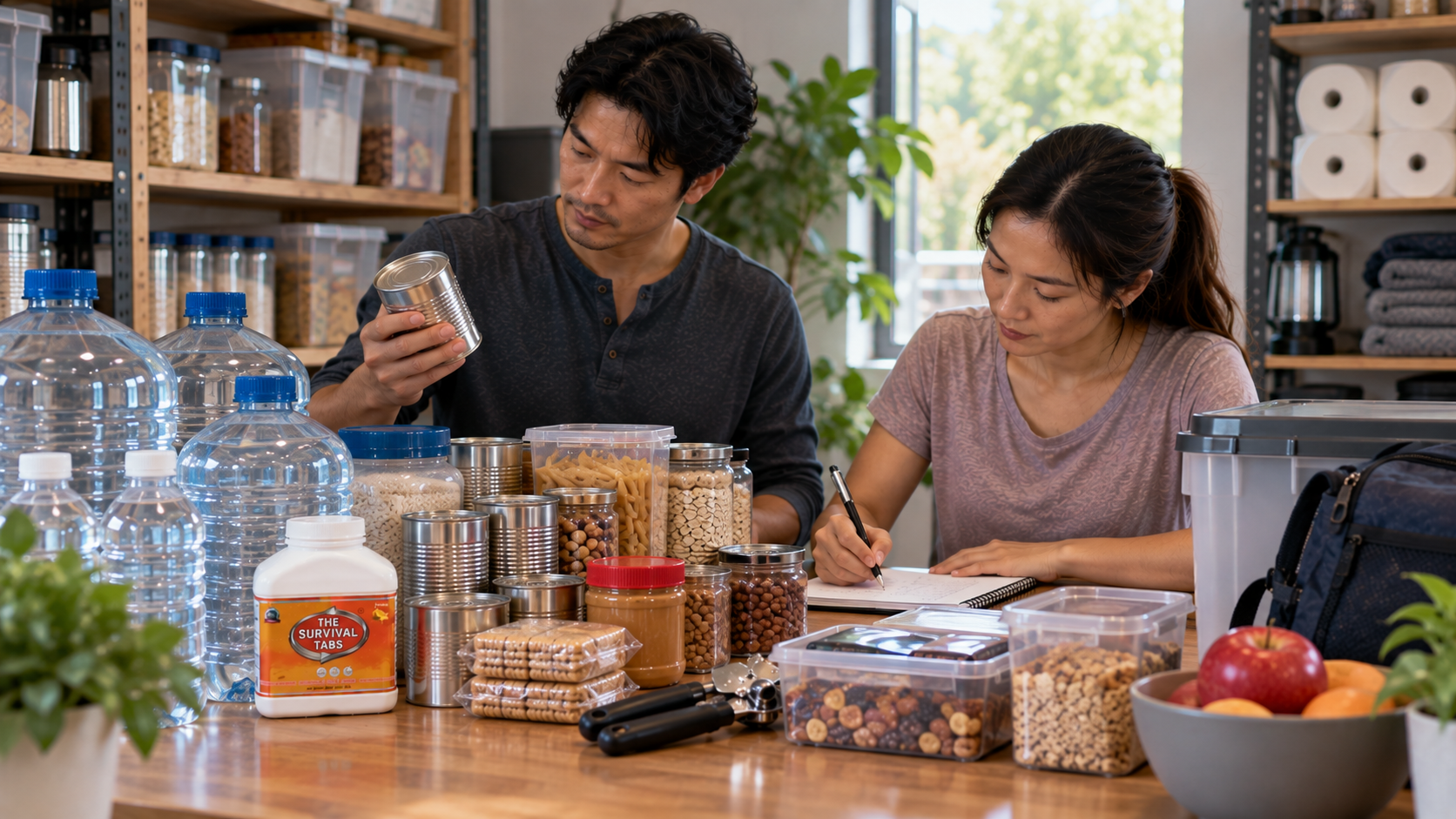
Prioritize shelf-stable foods the household already eats. Include no-cook choices, a manual can opener and foods that require little preparation water. Balance calories, protein, variety and dietary needs rather than counting packages alone.
Plan for utility loss
Never use grills, camp stoves or generators indoors or in enclosed areas. Keep refrigerator and freezer doors closed during outages and follow current food-safety guidance. Discard food exposed to floodwater, unsafe temperatures or damaged packaging; never taste food to test safety.
Layer and rotate
Keep a portable evacuation layer and a larger home reserve. Date, inspect and rotate ordinary foods through normal meals. Review the plan after household changes and at least annually.
Where Survival Tabs fit
Survival Tabs may add compact, no-cook reserve nutrition, but they do not replace safe water, adequate calories, varied food, medication or medically required diets. Check the current label for serving, ingredient and allergen information.