

Emergency Food Rotation and Everyday Use Guide
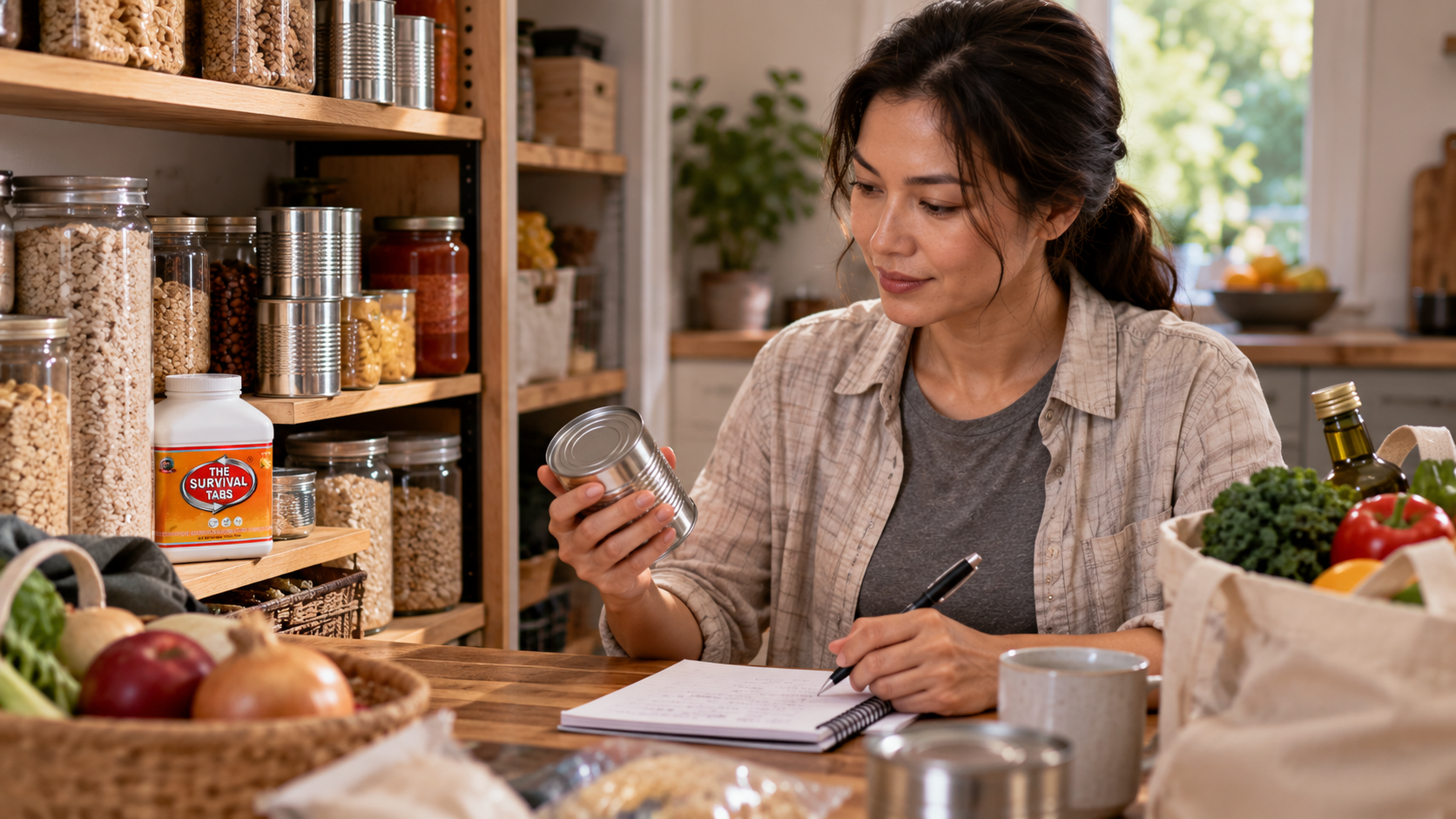
Emergency Food Rotation and Everyday Use Guide
Rotation keeps a preparedness pantry usable and reduces waste. The simplest system stores foods the household already eats, uses older suitable items first and replaces them during ordinary shopping.
Create an inventory
Record item, quantity, storage location and date information. Keep manufacturer instructions with the food and distinguish quality dates from safety instructions.
Use first-in, first-out
Place older suitable packages where they will be used first. Do not rotate damaged, swollen, leaking, rusted or contaminated containers into meals.
Plan ordinary meals
Schedule pantry meals using canned foods, grains, beans, sauces and other stored staples. Replace what is used so the reserve remains stable.
Inspect conditions
Check heat, moisture, pests and packaging integrity. Vehicle and outdoor supplies require closer inspection. Follow current food-safety guidance after outages or floods.
Long-life products
Long unopened shelf life does not eliminate inspection. Keep Survival Tabs sealed and stored according to current instructions; after opening, follow the package rather than assuming the unopened shelf-life statement still applies.