

First-Time Camping Guide
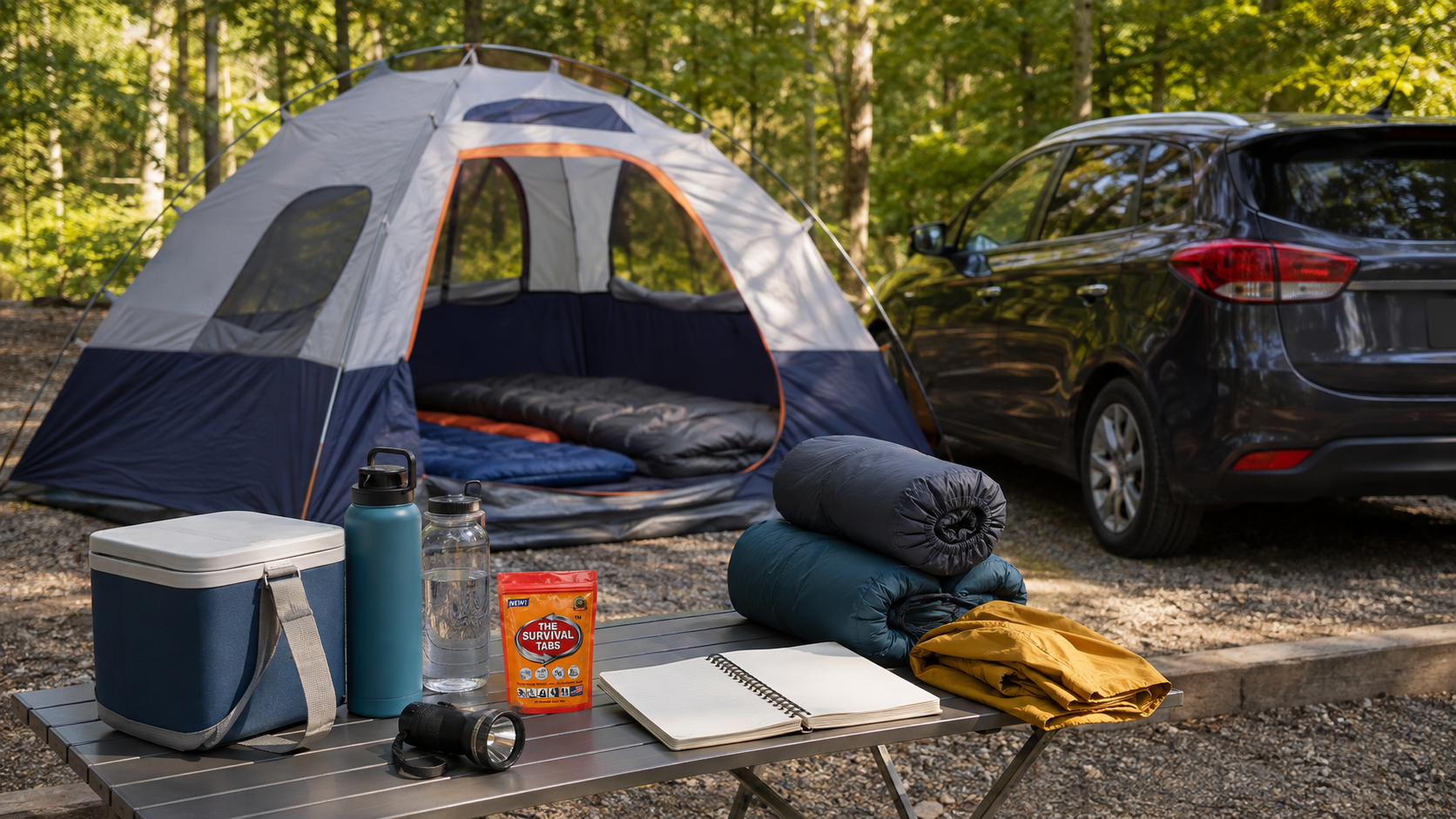
A practical, safety-first system for choosing a trip, packing the essentials, setting up camp, and coming home well
Camping does not require expert-level gear or survival skills. A first trip succeeds when the location, weather, equipment, food, and group plan are simple enough to manage with a wide safety margin.
This guide is for developed-campground and other low-complexity first trips. It does not replace campground rules, land-manager instructions, weather alerts, manufacturer directions, medical care, wilderness training, or local emergency guidance.
The First-Trip Standard
Choose a short, legal, accessible trip close enough to leave if the weather, health, equipment, or group situation becomes unsafe. Treat an early departure as a successful decision.
Non-Negotiable Safety Rules
* Check the official forecast, alerts, closures, fire restrictions, road conditions, and campground notices before leaving and again before setting up.
* Use only legal campsites and follow reservation, permit, group-size, vehicle, quiet-hour, generator, food-storage, pet, and fire rules.
* Do not use charcoal, grills, fuel-burning stoves, lanterns, generators, or unvented heaters inside a tent, vehicle, camper, or other enclosed sleeping area.
* Do not depend on a campfire for warmth, cooking, lighting, or emergency survival.
* Do not leave a flame, stove, grill, or campfire unattended, even briefly.
* Do not store food, trash, scented toiletries, pet food, or cooking equipment in a tent where local wildlife rules prohibit it.
* Do not camp in a drainage, wash, dry creek bed, flood-prone low area, below unstable trees, or where an official warning makes the site unsafe.
* Do not assume a tent protects against lightning, high wind, extreme heat, cold, wildfire, falling trees, or flooding.
* Do not drink untreated surface water or rely on an unfamiliar treatment method without a verified backup.
* Do not separate from a child, vulnerable adult, or inexperienced partner without a clear plan and safe communication.
* Call emergency services for severe breathing difficulty, chest pain, suspected carbon-monoxide exposure, major bleeding, altered consciousness, severe allergic reaction, heat stroke, hypothermia, or other life-threatening signs.
1. Choose the Easiest Suitable Trip
The best first campsite is usually a developed campground with defined sites, toilets, potable water or a clear water plan, vehicle access, staff or hosts, and an easy exit.
* Start with one night rather than a long weekend.
* Choose a site within a comfortable drive of home or another safe indoor fallback.
* Prefer mild expected temperatures and a low chance of severe weather.
* Confirm whether the campground is open, staffed, reserved, first-come, or subject to seasonal closure.
* Check the walking distance from parking to the campsite.
* Confirm toilet, water, shower, electrical, phone, accessibility, and waste facilities rather than assuming they exist.
* Check whether tents, hammocks, RVs, vehicles, generators, pets, fires, and food-storage methods are allowed.
* Avoid adding remote backcountry travel, river crossings, technical terrain, hunting, climbing, or boating to a first overnight unless separately trained and equipped.
Know the Difference Between Camp Types
* Developed campground: numbered sites and some facilities, with site-specific rules.
* Walk-in campground: a defined site reached by a short carry from parking.
* Dispersed camping: fewer facilities and more responsibility for water, sanitation, navigation, fire rules, and site selection.
* Backcountry camping: travel away from vehicle access, often requiring permits, navigation, food storage, emergency communication, and specialized skills.
If the plan depends on skills the group has never practiced, reduce the scope or choose a developed campground.
2. Read the Rules Before Packing
Rules are part of the safety system. They may change with fire danger, wildlife activity, weather damage, season, or local resource conditions.
* Save the campground confirmation and site number offline.
* Save the official arrival, check-in, gate, parking, and quiet-hour instructions.
* Confirm the maximum people, tents, vehicles, and pets per site.
* Check food-storage orders and whether a locker or bear-resistant container is required.
* Check fire restrictions on the day of arrival; a fire ring does not mean a fire is currently allowed.
* Confirm where dishwater, gray water, human waste, pet waste, trash, recycling, and ashes must go.
* Check local rules for collecting firewood and transporting outside firewood.
* Confirm whether water is potable and whether taps may be seasonally shut off.
* Write down the ranger, campground host, land-manager, and local emergency contacts.
3. Check Weather and Escape Options
Use the official point forecast for the campground, not only the nearest city. Elevation, terrain, trees, and water can change conditions.
* Review expected high and low temperatures, rain, wind, thunderstorms, heat, cold, wildfire smoke, flooding, and air-quality alerts.
* Identify a substantial building or hard-topped vehicle for lightning safety; a tent is not a safe lightning shelter.
* Know which road, bridge, ferry, gate, or trail could block departure.
* Avoid low ground beside streams or washes when heavy rain or flash flooding is possible.
* Plan a cancellation threshold before money, travel time, or group pressure affects judgment.
* Leave when wind threatens trees or tents, water rises, smoke or fire approaches, temperatures exceed the group’s safe plan, or official instructions require evacuation.
* Do not drive through floodwater or around barricades.
Simple Go-or-No-Go Questions
* Can every person sleep safely at the forecast low and function safely at the forecast high?
* Is there a verified shelter or exit for thunderstorms, high wind, wildfire, flooding, heat, or cold?
* Can the group arrive and set up before dark?
* Can essential medical, mobility, communication, food, water, and toileting needs be supported?
* Would the trip still be manageable if one key item failed or became wet?
* If any answer is no, change the site, date, duration, or plan.
4. Leave a Trip Plan
Give a responsible person who is not on the trip enough information to recognize a delay and contact the correct authority.
* Names and contact information for campers.
* Campground, site number, land manager, and exact location.
* Vehicle description, license plate, and parking area.
* Departure, arrival, check-in, and expected return times.
* Planned day trips or trails.
* Medical or accessibility information that responders may need.
* What devices the group carries and where coverage may fail.
* When the contact should act if the group is overdue.
Update the contact if the site, route, vehicle, or return time changes.
5. Build a System, Not a Shopping List
Choose familiar, functional gear that works together. Expensive equipment cannot compensate for a poor weather decision, missing water, unsafe combustion, or an unsuitable site.
Shelter System
* Tent sized for occupants and conditions, with all poles, stakes, guylines, and a compatible groundsheet if used.
* Manufacturer instructions saved or printed.
* A repair plan for a small tear, broken cord, or lost stake.
* A practice setup at home before the trip.
* A dry way to pack the shelter if it rains.
* Never apply fuel, flame, or an unapproved heater inside the shelter.
Sleep System
* Sleeping pad or mattress that insulates from the ground.
* Sleeping bag or bedding suitable for the expected low with a conservative margin.
* Dry sleep clothing and socks stored in a waterproof bag.
* Pillow or safe head support appropriate to the user.
* Extra insulation that does not block breathing or mobility.
* A plan for children, older adults, people who sleep cold, and anyone with circulation or medical concerns.
Light and Power
* A headlamp or flashlight for each person.
* A second independent light source for the group.
* Fresh batteries or charged power banks stored as directed.
* Reflective or visible markers for tent lines and safe paths.
* No open flame used as the primary tent light.
* No generator in or near an enclosed sleeping space; follow manufacturer and official distance guidance.
6. Pack Clothing for Conditions
Pack for the forecast range, precipitation, wind, sun exposure, insects, and campsite surface. Keep at least one dry layer available for sleep or emergency use.
* Moisture-managing base layers appropriate to the climate.
* Adjustable insulating layers rather than one overly hot garment.
* Rain and wind protection suited to the forecast.
* Sun hat, sunscreen, sunglasses, and protective clothing where needed.
* Warm hat and gloves when nights may be cool.
* Closed footwear appropriate to the ground, plus dry socks.
* Separate wet and dry storage bags.
* Spare clothing for children and anyone likely to become wet.
Change wet clothing promptly and do not sleep in clothing contaminated with fuel, chemicals, or heavy food odors where wildlife rules make that unsafe.
7. Food, Water, and Cooking
A first-trip menu should be familiar, easy to store, easy to prepare, and safe under the available refrigeration, water, and fuel conditions.
Water Plan
* Confirm whether campground water is potable and operating.
* Carry enough safe water for drinking, cooking, medication, infant feeding, pets, and hygiene until the supply is verified.
* Use clean, food-grade containers with secure lids.
* Do not treat clear-looking surface water as safe.
* Carry a backup treatment or additional water when the trip depends on local water.
* Protect water from heat, freezing, contamination, and vehicle chemicals.
Food Plan
* Use a written menu and count meals, snacks, beverages, and an extra no-cook reserve.
* Choose foods compatible with allergies, diabetes, swallowing needs, medications, religious practices, and other dietary requirements.
* Keep raw animal products separated and cold enough when used.
* Use a thermometer and follow current food-safety guidance for coolers and perishable foods.
* Wash or sanitize hands appropriately before preparing and eating food.
* Store leftovers safely or discard them; outdoor temperature is not a reliable refrigerator.
* Never feed wildlife or leave food scraps behind.
Stove and Grill Safety
* Use equipment only outdoors in a stable, clear, permitted location.
* Use the correct fuel and manufacturer-approved components.
* Inspect fuel containers, hoses, seals, and connections before lighting.
* Keep children, pets, loose clothing, dry vegetation, tents, and fuel away from heat.
* Never move or refuel hot equipment.
* Extinguish and cool equipment before packing.
* Move to fresh air and seek emergency help for headache, dizziness, weakness, nausea, confusion, chest pain, or altered consciousness that may indicate carbon-monoxide exposure.
Survival Tabs in the Camping Food Plan
Survival Tabs may be one compact component of an emergency food plan when the product label, serving information, dietary fit, and individual needs have been checked. They do not replace safe water, adequate calories, balanced meals, prescribed nutrition, or condition-specific medical planning.
8. Set Up Camp Before Dark
Arrive with enough daylight and energy to inspect the site, place the shelter, organize food, and learn the route to facilities.
* Check for dead or damaged branches, unstable trees, rockfall, drainage channels, pooled water, sharp objects, nests, and other hazards.
* Use the assigned tent pad or hardened surface where provided.
* Keep roads, paths, neighboring sites, emergency access, hydrants, and exits clear.
* Orient the tent according to site conditions and manufacturer guidance.
* Stake and tension the shelter without creating hidden trip hazards.
* Keep doors, vents, and exits operable.
* Locate toilets, water, trash, food lockers, host, emergency assembly areas, and the safest vehicle route.
* Store keys, shoes, lights, medication, mobility aids, and essential communication where they can be reached quickly.
9. Fire Safety
A campfire is optional. Use one only when allowed, conditions are suitable, and the group can supervise and extinguish it completely.
* Check current restrictions immediately before lighting.
* Use an established ring or approved location where required.
* Keep the fire small and continuously attended by a responsible adult.
* Keep water and appropriate tools ready.
* Do not use gasoline, solvents, or other accelerants.
* Do not burn trash, plastics, cans, food, or prohibited material.
* Keep tents, chairs, fuel, clothing, children, pets, and vegetation outside the safe area.
* Drown, stir, and repeat according to land-manager guidance until everything is cold to the touch.
* Do not bury hot coals or leave them for the next camper.
* If water is unavailable or restrictions prohibit safe extinguishment, do not build a fire.
10. Sanitation and Hygiene
Use campground facilities and local rules. Improvised waste practices can contaminate water, spread illness, harm wildlife, and violate regulations.
* Know whether toilets are flush, vault, portable, or unavailable.
* Carry toilet paper and hand-hygiene supplies if facilities may not provide them.
* Supervise children around toilets, water, roads, and waste areas.
* Dispose of dishwater only where directed; strain food scraps and pack them out when required.
* Do not wash dishes, bodies, or clothing directly in natural water.
* Store soap, toothpaste, wipes, menstrual products, diapers, and trash according to wildlife and waste rules.
* Never mix cleaning chemicals or use disinfectants on skin, food, or wounds unless the label specifically directs it.
* Pack out all required waste and leave the site cleaner than found.
11. Wildlife and Insects
Wildlife behavior and required storage vary by location. Local rules override generic camping advice.
* Never approach, touch, corner, feed, or attempt to photograph wildlife at close range.
* Store food, trash, coolers, cookware, scented toiletries, pet food, and other attractants exactly as required.
* Do not keep food or scented items in the tent when local rules prohibit it.
* Keep a clean cooking and eating area.
* Use approved insect precautions and check for ticks where relevant.
* Do not apply human insecticides or repellents to pets unless a veterinarian and the product label allow it.
* Know the local response for bears, snakes, insects, and other hazards before arrival.
* Report aggressive wildlife, food-conditioning incidents, or damaged storage equipment to staff.
12. Children, Older Adults, and Accessibility
Design the trip around the person who needs the greatest safety margin. Accessibility includes the route, site surface, shelter entry, toileting, food, communication, medication, sleep, and emergency exit.
* Confirm accessible site and facility details directly with the land manager when they are essential.
* Choose shorter travel and earlier setup times.
* Bring required mobility, sensory, communication, continence, charging, and transfer supports.
* Protect medications and devices within their labeled storage range.
* Use direct hydration, temperature, pain, skin, and fatigue checks rather than waiting for a person to complain.
* Give children clear physical boundaries and an adult supervision plan.
* Teach children what to do if separated: stop, stay visible, and use the agreed signal rather than wandering.
* Keep a warm, cooled, dry, or indoor fallback available when the participant’s needs require it.
* Cancel when essential care cannot be provided reliably at the site.
13. Pets
A pet adds site-access, transport, temperature, wildlife, food, water, waste, medication, and evacuation responsibilities.
* Confirm that the campground and planned activities allow the species and animal.
* Ask a veterinarian about health, heat, cold, altitude, paws, medication, vaccines, parasites, and travel needs when appropriate.
* Carry the animal’s normal food, safe water, dishes, bedding, control equipment, waste supplies, and identification.
* Never leave an animal in a hot vehicle, unsafe tent, or unattended situation.
* Prevent wildlife encounters and food access.
* Protect paws from hot ground, sharp surfaces, ice, chemicals, and thorns.
* Leave early for breathing difficulty, collapse, repeated vomiting, severe lethargy, inability to regulate temperature, injury, or unusual behavior, and seek veterinary help.
14. At-Night Routine
* Store all food, trash, cookware, scented items, and pet food correctly.
* Extinguish every fire and flame fully.
* Cool and secure stoves and fuel.
* Put keys, footwear, lights, glasses, medication, mobility aids, and communication within reach.
* Check weather and alerts before sleep.
* Keep exits and paths clear.
* Confirm children, vulnerable adults, and pets are accounted for.
* Agree on the response for wind, rain, lightning, smoke, wildlife, illness, or a necessary evacuation.
15. When to Leave
Leaving early prevents ordinary discomfort from becoming an emergency.
* An official evacuation, closure, fire restriction, severe-weather warning, or staff instruction applies.
* Lightning approaches and safe shelter is not available.
* Water rises, drainage changes, or a flood threat develops.
* Wind threatens branches, trees, tents, or vehicle access.
* Smoke, fire, heat, cold, or air quality exceeds the group’s plan.
* Essential food, water, medication, shelter, lighting, mobility, sanitation, or communication fails.
* A person or animal cannot stay safe, warm, cool, hydrated, oriented, or medically stable.
* The group is too tired, impaired, or inexperienced to manage conditions.
* Do not stay simply because the site was prepaid or others expect the trip to continue.
16. If Something Goes Wrong
Lost or Separated
* Stop unnecessary movement and use the agreed meeting and communication plan.
* Account for the last confirmed location and time.
* Notify campground staff or emergency services promptly when a child, vulnerable person, or high-risk situation is involved.
* Do not launch an untrained search that creates additional missing or injured people.
Illness or Injury
* Use trained first aid within the responder’s competence.
* Call emergency services for life-threatening conditions and follow dispatcher instructions.
* Do not give another person prescription medicine or use unverified remedies.
* Keep access clear for responders and send someone to guide them when safe.
Suspected Carbon Monoxide
* Move everyone to fresh air immediately.
* Call emergency services or Poison Help as appropriate.
* Do not re-enter the space to retrieve equipment.
* Do not rely on smell; carbon monoxide is odorless.
17. Break Camp and Recover
* Account for every person, pet, key, medication, device, and essential item.
* Extinguish fires completely and verify ashes are cold.
* Pack fuel separately and safely.
* Remove all food, trash, microtrash, pet waste, and temporary markers.
* Return the site, furniture, and food-storage equipment as required.
* Report damaged facilities, hazards, wildlife incidents, spills, or lost property.
* Dry and clean tents, bedding, coolers, and equipment before storage.
* Replace used first-aid, hygiene, food, water, and power supplies.
* Record what was unused, missing, uncomfortable, unsafe, or difficult.
* Make the next trip only slightly more complex after the current system works.
First-Time Camping Checklist
Before Booking
* Easy site and short duration selected.
* Facilities and accessibility verified.
* Rules, fire restrictions, food storage, pets, and vehicle limits checked.
* Safe weather window and exit plan identified.
Before Leaving
* Reservation, directions, site number, and contacts saved offline.
* Trip plan left with a responsible contact.
* Shelter practiced and complete.
* Sleep system checked.
* Food, safe water, cooler, and no-cook backup packed.
* Lights, batteries, weather radio or alert method, and charging packed.
* Medication, first aid, hygiene, sunscreen, insect protection, and documents packed.
* Forecast, closures, air quality, road conditions, and fire restrictions rechecked.
At the Site
* Hazards inspected before setup.
* Tent, exits, and guylines secured.
* Water source and toilets verified.
* Food and scented-item storage established.
* Fire and stove area established only if permitted.
* Emergency vehicle route and shelter location identified.
Before Sleep
* Food and trash secured.
* Fire and equipment cold.
* Keys, shoes, lights, medication, and communication reachable.
* Alerts checked and everyone accounted for.
Frequently Asked Questions
Do beginners need expensive camping gear?
No. Beginners need suitable, complete, familiar equipment and a conservative trip plan. Borrowing or renting can be reasonable when equipment is inspected, compatible, clean, and practiced before use.
Is a campfire necessary?
No. Many safe trips use no campfire. A fire may be prohibited or inappropriate because of wind, drought, wildfire danger, site rules, or the group’s ability to supervise and extinguish it.
Can I cook inside a tent when it rains?
No. Fuel-burning equipment creates fire and carbon-monoxide hazards. Cook outdoors in a permitted, stable location and keep a no-cook meal available when conditions prevent safe cooking.
Can food stay in the tent?
Follow the site’s wildlife and food-storage rules. In many areas, food, trash, toiletries, cookware, pet food, and other scented items must be secured outside the tent in a locker, vehicle, or approved bear-resistant container.
How much water should I bring?
Use the site’s verified supply, climate, activity, health, food, hygiene, infant, and pet needs to plan. Carry enough safe water until the local supply is confirmed and include a backup when failure would leave the group without water.
What if the forecast changes?
Update the plan, leave, or cancel. A reservation does not justify exposure to conditions the group or equipment cannot safely manage.
Is car camping automatically safe?
No. Vehicle access improves options, but severe weather, heat, cold, carbon monoxide, wildfire, flooding, wildlife, unsafe driving, and medical problems still require planning.
Should a first trip be remote?
Usually not. A developed campground close to reliable help lets beginners learn setup, sleep, cooking, sanitation, and routines with a safer exit.
Professional Review Before Publication
* Outdoor recreation or campground operations review.
* Fire and carbon-monoxide safety review.
* Weather and emergency-management review.
* Food-safety and public-health review.
* Accessibility and medical-needs review.
* Wildlife and land-management review.
* Pediatric, geriatric, and veterinary review where applicable.
* Legal, regulatory, and product-compliance review.
Official Sources
National Park Service — Ten Essentials
U.S. Forest Service — Camping: Know Before You Go
National Weather Service — Campground Weather Safety and Preparedness
National Weather Service — Lightning Safety Outdoors
Centers for Disease Control and Prevention — Carbon Monoxide Poisoning Prevention
Leave No Trace — The Seven Principles
Always confirm the current rules, alerts, facilities, and emergency information for the specific campground and land manager before travel.