

Emergency Food Cost and Value Guide
Emergency Food Cost and Value Guide
The cheapest package and the lowest cost per serving are not always the best value. Compare what the household can safely store, prepare and eat during the disruption being planned for.
Normalize the numbers
Compare cost per calorie, per day at realistic calories and per unit weight. Add shipping, water, fuel, cooking equipment and replacement waste.
Check serving claims
A serving may be a snack-sized portion. Read calories, protein, fat, carbohydrate and package count before accepting a “days supplied” statement.
Value includes usability
Consider shelf-life conditions, packaging durability, dietary fit, taste familiarity, preparation time, portability and storage space.
Use a layered budget
Ordinary pantry foods often provide economical calories. No-cook foods add outage resilience. Compact products add portability. Specialized diets may cost more but are essential for the people who need them.
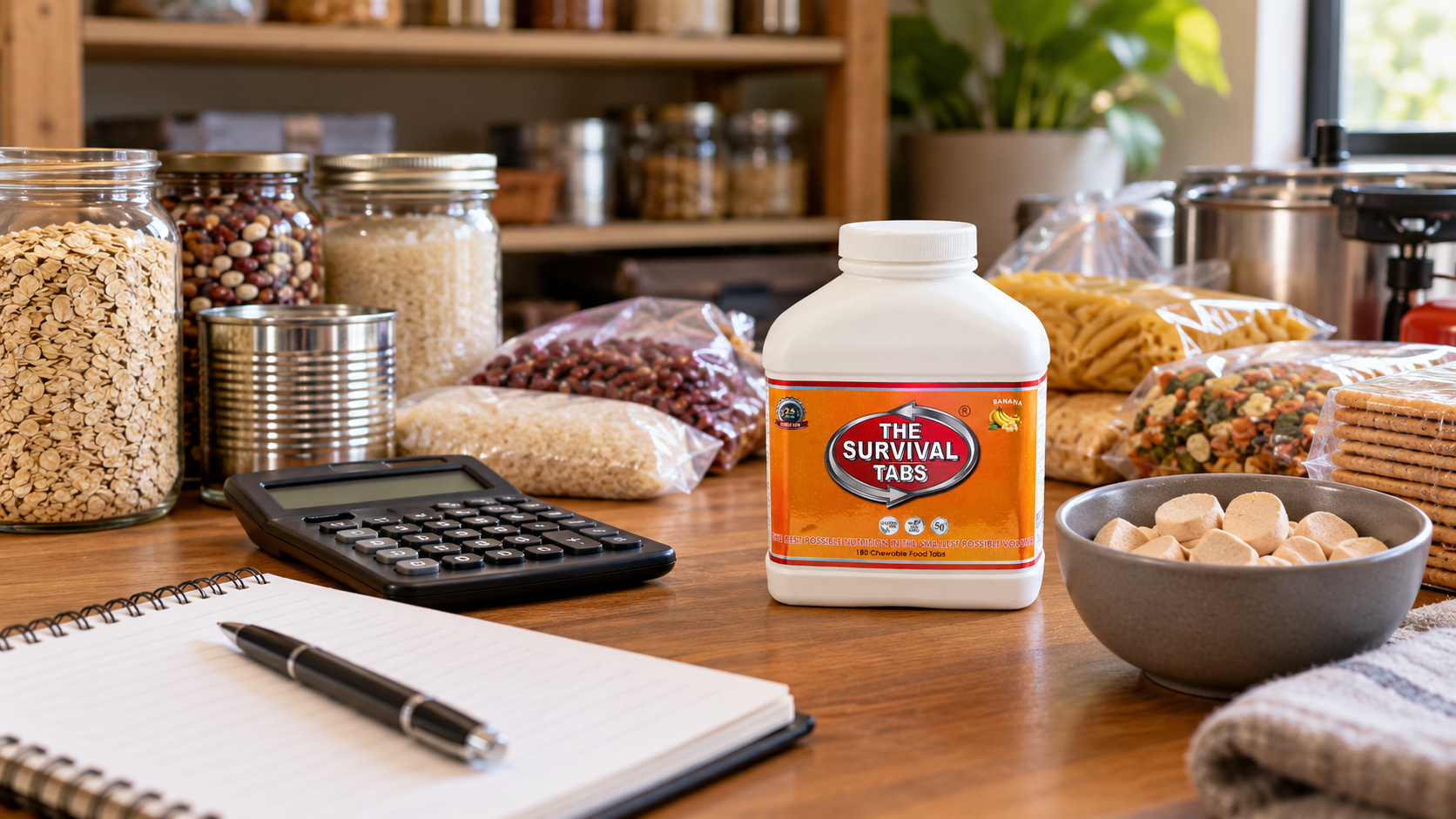
Survival Tabs
Compare current price against the current 240-calorie serving and its compact, long-storage role. Do not treat one serving as a normal full day or assign value based only on package size.