

Emergency Documents and Grab-and-Go Records Guide
Emergency Documents and Grab-and-Go Records Guide
Emergency supplies help with immediate physical needs; records help you recover. Identification, insurance information, financial records, medical information and household contacts can be difficult to reconstruct when displaced.
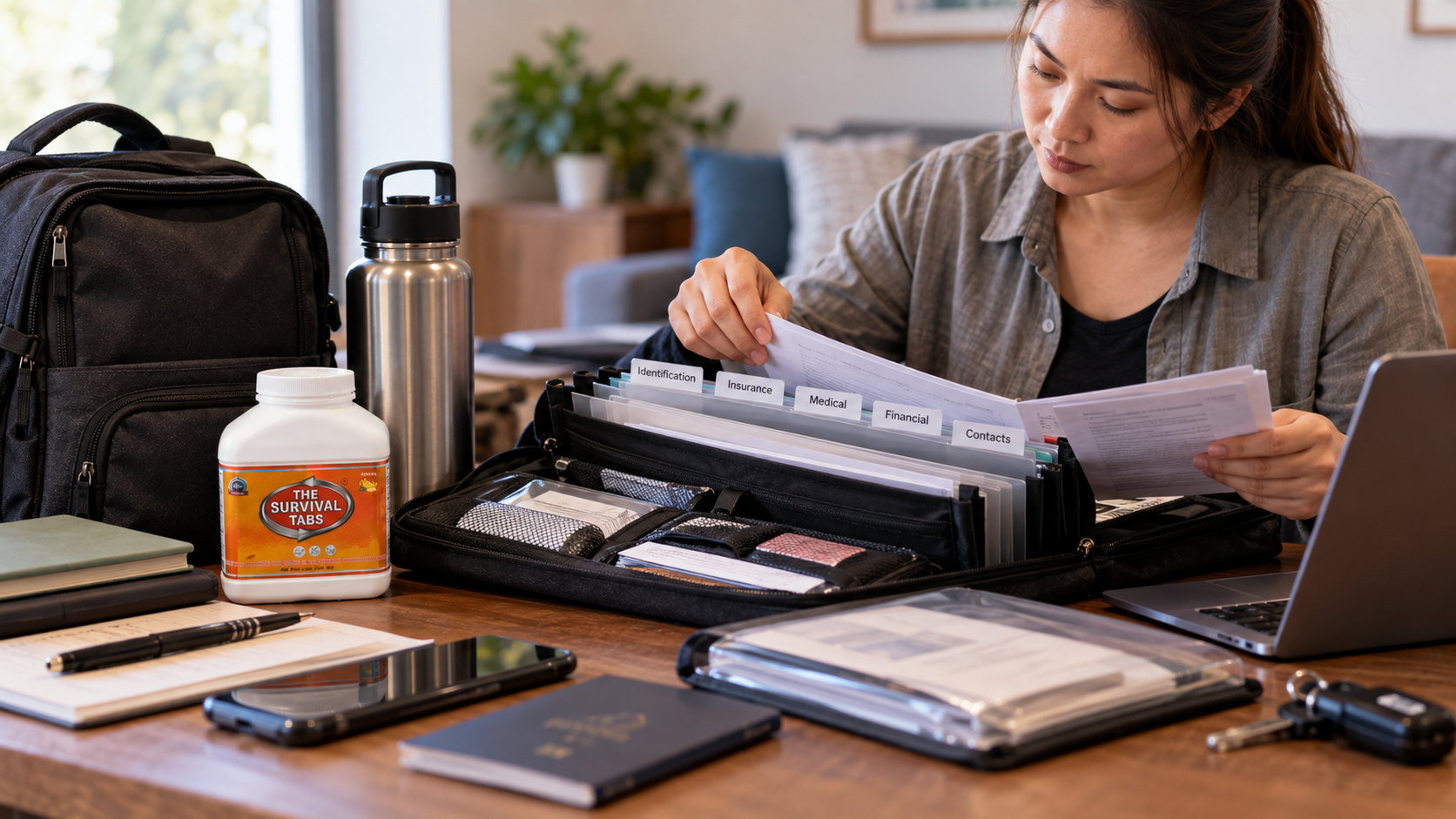
Create a household records set Start with identification information, insurance policies, key financial and legal documents, medical information and important contacts. FEMA's Emergency Financial First Aid Kit groups records into household identification, financial and legal documentation, medical information and household contacts—a useful structure.
Physical and digital copies A small protected physical set can help when power or connectivity is unavailable. Encrypted digital copies provide another layer if paper records are lost. Protect passwords and account details carefully.
Grab-and-go version Keep the evacuation copy compact. Copies may be preferable to irreplaceable originals when originals are not required. Include emergency contacts, identification copies, insurance information, essential medical information and an inventory of where important originals are stored.
Protect privacy Do not leave unprotected account numbers and identity documents in an easily accessible vehicle or public location. Use secure storage and limit information to what is genuinely useful.
Document property Maintain a basic home inventory using photos, video, receipts or serial numbers for significant items where practical. Store a copy away from the property or in protected digital storage.
Keep financial access resilient Know how to contact banks, insurers and essential services without relying on one phone. Consider an emergency payment strategy appropriate to your circumstances.
Review records after a move, major purchase, insurance change, new household member, new medication or other significant change. A useful emergency document kit is secure, current and accessible.