

Emergency Cooking and Stove Safety Guide
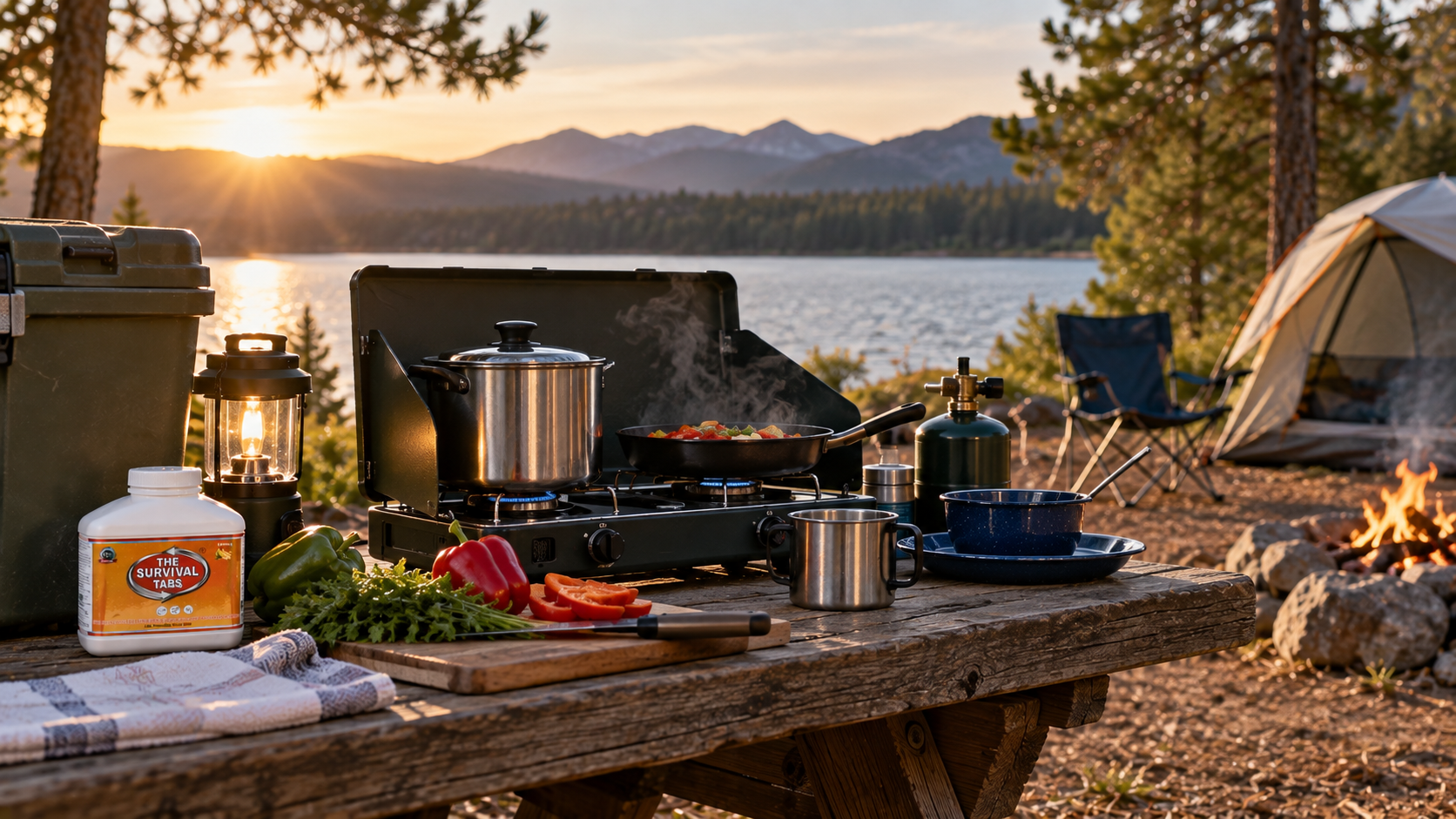
When electricity or normal cooking equipment is unavailable, the safest solution is often food that requires no cooking. If a stove or other backup cooking method is used, carbon monoxide, fire, burns, fuel storage, and ventilation become critical safety issues.
Plan for No-Cook Food
Include shelf-stable foods that can be eaten safely without heating. This reduces fuel needs and provides a backup when weather or safety conditions make outdoor cooking impossible.
Camp Stoves and Grills
Ordinary camp stoves, charcoal grills, hibachis, and similar unvented combustion appliances should not be used indoors, in garages, tents, or other enclosed spaces. They can produce dangerous carbon monoxide even when there is no obvious smoke.
Cooking Outdoors
Place outdoor cooking equipment on a stable surface away from doors, windows, air intakes, dry vegetation, tents, and combustible materials. Follow manufacturer clearances and local fire restrictions. Never leave active cooking equipment unattended.
Fuel
Use only the fuel specified by the equipment manufacturer. Store fuels in approved containers and according to local requirements. Keep fuel away from ignition sources and allow equipment to cool before refueling when required by its instructions.
Wind
Wind can destabilize flames, increase fire spread, and make some stoves inefficient. Use manufacturer-approved windscreens and operating procedures only. Do not create improvised enclosures that trap heat or combustion gases. If conditions exceed the stove's safe operating limits, do not use it.
Group Cooking
For larger groups, capacity, stability, fuel availability, pot size, and safe working space matter more than product rankings. Multiple smaller appliances may create additional fire and fuel-handling hazards, so organize a controlled cooking area and assign responsible operators.
Indoor Appliances During Outages
A permanently installed appliance may or may not be safe or functional during a power outage depending on its design and venting. Follow manufacturer instructions and utility or fire-safety guidance. Never use an oven or range as a space heater.
Carbon Monoxide
Maintain working carbon-monoxide alarms in homes. Symptoms such as headache, dizziness, weakness, nausea, confusion, chest pain, or loss of consciousness can indicate exposure and require immediate movement to fresh air and emergency assistance.
Fire Safety
Keep a suitable fire extinguisher accessible where appropriate and know how to use it. Keep children and pets away from hot surfaces and fuel. Avoid loose clothing near flames. Extinguish and cool equipment completely before storage.
Food Safety
Cooking equipment does not solve food-storage problems during an outage. Follow current guidance for refrigerated and frozen foods. Use safe water for cooking and food preparation.
Choosing a Backup Stove
Evaluate:
• intended outdoor use
• fuel availability and storage
• stability with your cookware
• expected weather
• group size
• ignition method
• maintenance requirements
• manufacturer safety instructions
Editorial note: Consolidates legacy IDs 182, 184, 190, 191, and 196. Product rankings, improvised stove modifications, indoor camp-stove use, and unsafe fuel practices excluded. Final publication should retain current EPA, fire-safety, and manufacturer guidance.