

Emergency Cooking and Stove Safety Guide
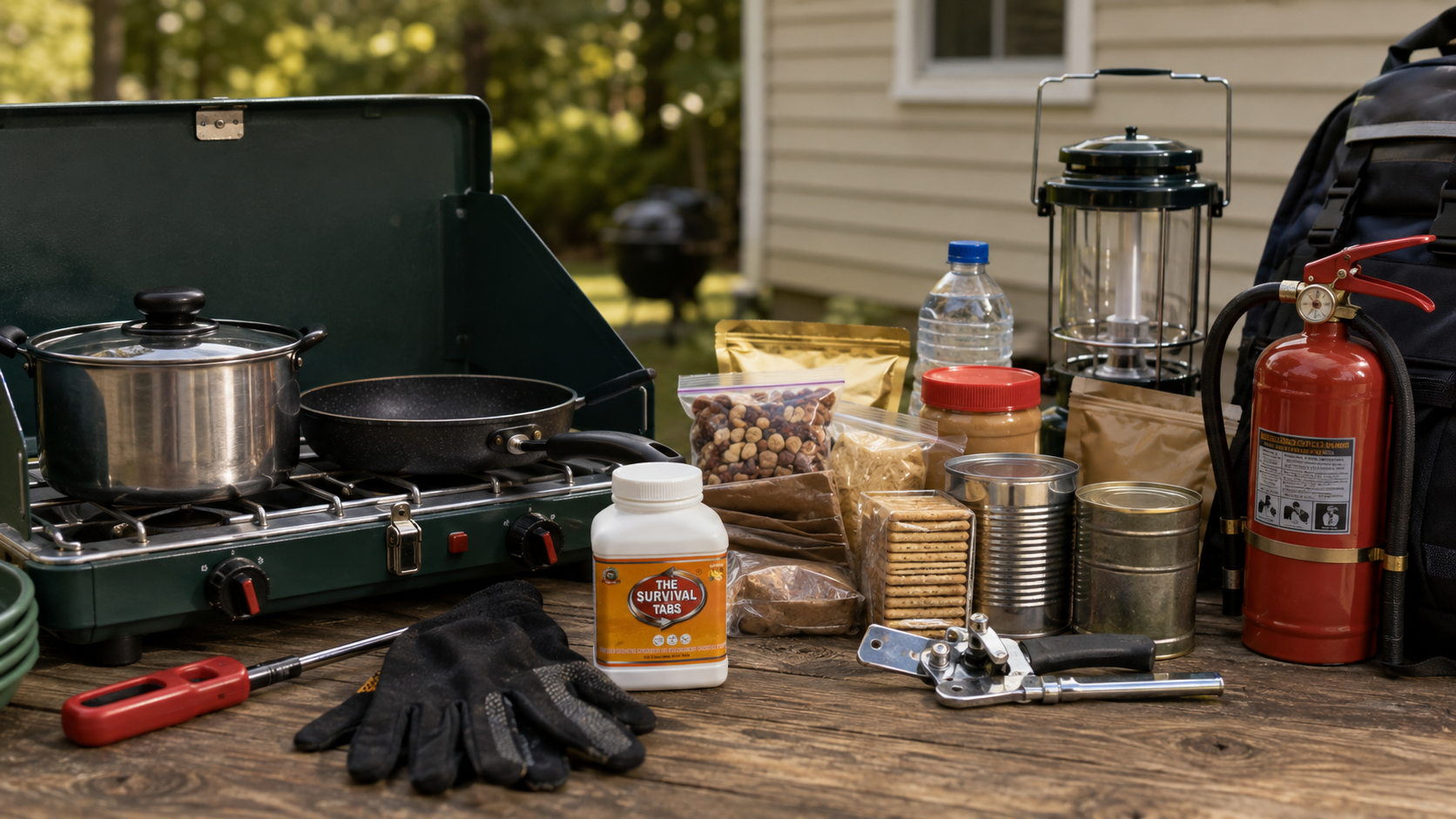
Emergency Cooking and Stove Safety
Emergency cooking is useful only when it is safe. During a power outage, evacuation, storm, or other disruption, the normal kitchen may not be available, refrigeration may be limited, and people may be tempted to use grills, camp stoves, or generators in unsafe locations. The first rule is simple: never trade food convenience for fire or carbon-monoxide risk.
1. Start With Foods That Need Little or No Cooking
A resilient emergency food plan reduces dependence on heat. Keep some foods that can be eaten safely without cooking, including commercially packaged shelf-stable foods, ready-to-eat meals, nut butters, crackers, canned foods, and compact emergency nutrition.
2. Understand Carbon-Monoxide Risk
Fuel-burning equipment can produce carbon monoxide, an odorless and colorless gas that can cause sudden illness or death. Portable gas camp stoves, charcoal grills, generators, and similar devices should not be used inside a home, garage, basement, tent, camper, or other enclosed or partially enclosed space unless specifically designed and installed for that setting according to manufacturer instructions.
Never use a gas oven or range to heat the home. Never assume an open window or garage door makes an unsafe appliance safe. If a carbon-monoxide alarm sounds or anyone develops headache, dizziness, weakness, nausea, chest pain, or confusion while fuel-burning equipment is operating, move to fresh air and seek emergency help.
3. Choose the Safest Available Cooking Method
If the normal electric stove works, use it normally. If power is out, prioritize no-cook foods first. For outdoor cooking, use grills and portable camping stoves only in open, well-ventilated outdoor areas away from doors, windows, vents, dry vegetation, and combustible materials. Follow manufacturer instructions and local fire restrictions.
4. Create a Stable Cooking Area
Place equipment on a level, noncombustible surface. Keep children and pets away. Keep fuel containers away from heat and flame. Do not leave active cooking equipment unattended. Have a suitable fire extinguisher nearby and know how to use it.
5. Manage Fuel Carefully
Store only fuels approved for the appliance. Keep containers sealed, upright, labeled, and away from ignition sources. Never refill hot equipment. Let it cool before refueling. Never mix fuel types or improvise connections.
6. Conserve Fuel and Water
Choose foods with short cooking times. Soak dry foods in advance when safe and practical. Use lids to reduce cooking time and heat only the amount of water needed.
7. Protect Food Safety During Outages
Keep refrigerator and freezer doors closed as much as possible. Do not taste questionable food to decide whether it is safe. If refrigeration has been lost for an extended period, follow current public-health guidance and discard foods that require refrigeration when they have been held at unsafe temperatures.
8. Keep the Cooking Area Sanitary
Separate raw foods from ready-to-eat foods. Use clean utensils and surfaces. If water is limited, reserve safe water for drinking and food preparation first.
9. Build a Layered Emergency Cooking Kit
A practical kit may include a manual can opener, matches or lighter stored safely, a pot with lid, heat-resistant gloves, utensils, foil, shelf-stable foods, clean water, and a fire extinguisher. If your plan includes an outdoor stove, include only the fuel and accessories specified by the manufacturer.
10. Plan for Different Scenarios
- Home outage: rely on no-cook foods first and normal appliances if utilities remain safe.
- Evacuation: prioritize portable ready-to-eat foods.
- Outdoor emergency: use approved outdoor equipment in an open location.
- Cold weather: do not use cooking equipment as a substitute for safe home heating.
11. Common Mistakes to Avoid
- Using charcoal or portable camp stoves indoors.
- Running generators in garages or near doors, windows, or vents.
- Using a gas oven to heat a room.
- Refueling hot equipment.
- Improvising fuel systems.
- Leaving flames unattended.
12. Emergency Cooking Checklist
- Keep several days of no-cook foods.
- Store a manual can opener.
- Use portable fuel-burning cooking equipment outdoors only as directed.
- Store fuel safely.
- Maintain smoke and carbon-monoxide alarms.
- Keep a fire extinguisher accessible.
- Protect food from unsafe temperatures and contamination.
- Practice the plan before an emergency.
Conclusion
Emergency cooking should make a difficult situation easier, not introduce a new hazard. Build around no-cook options first, then add a safe outdoor cooking method if appropriate. Use approved equipment exactly as intended and treat carbon monoxide and fire as serious risks.