

Earthquake Preparedness Guide
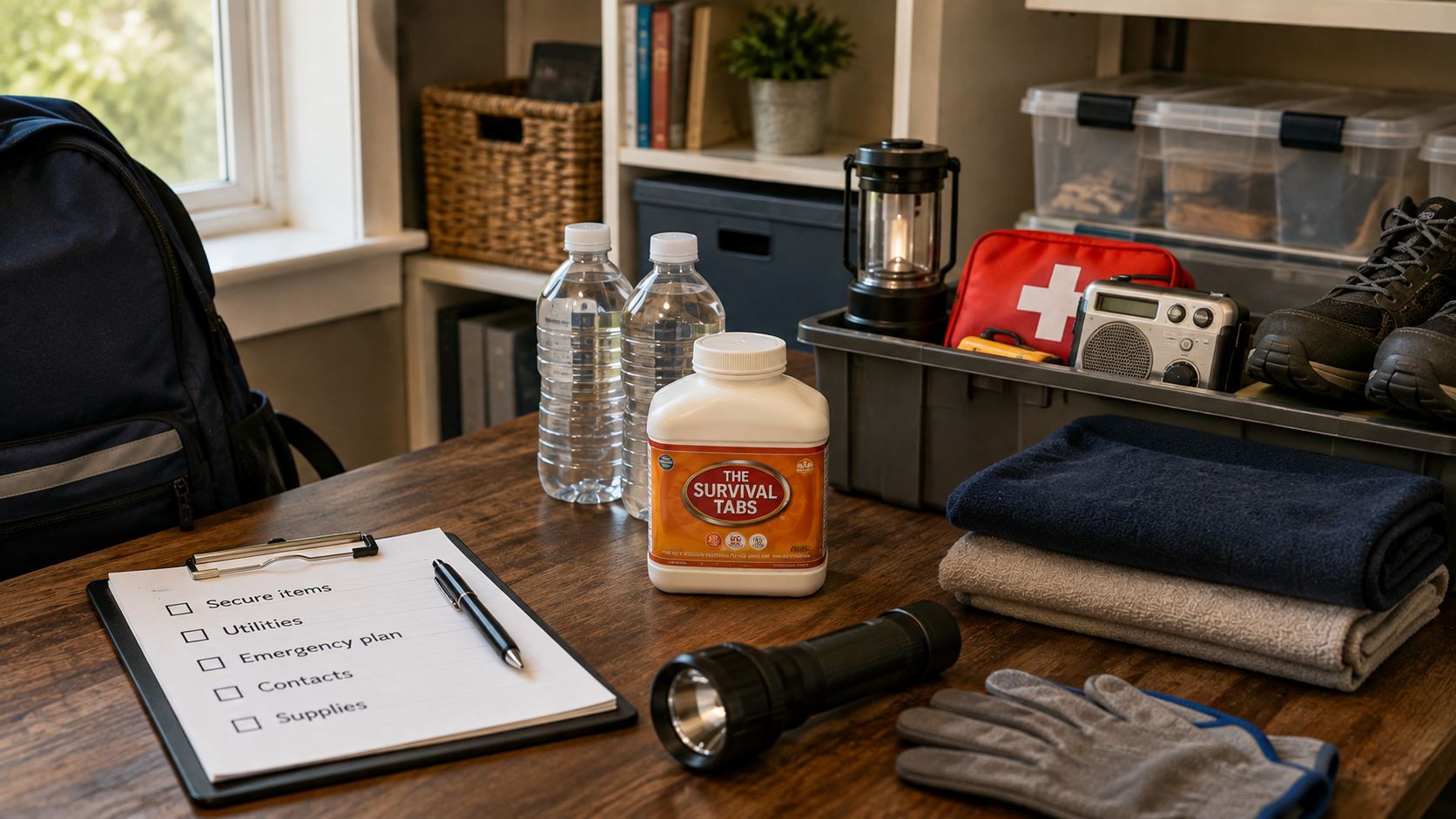
A practical guide to reducing household earthquake hazards, acting safely during shaking, and managing aftershocks and recovery.
Purpose and limits
This guide provides general earthquake preparedness education. It cannot predict earthquakes, certify a building, or replace local alerts, emergency services, engineers, utilities, medical care, or local codes.
Immediate checklist
- Learn local earthquake, tsunami, landslide, and dam-related hazards.
- Secure tall and heavy household items.
- Practice Drop, Cover, and Hold On.
- Keep shoes, lights, communication tools, water, food, and medicine accessible.
- Plan family reunification and out-of-area contact.
- Include accessibility, children, and animals.
- Expect aftershocks.
- Avoid damaged buildings, utilities, and coastlines when warned.
Understand earthquake risk
Earthquakes can cause shaking, falling objects, fire, utility damage, landslides, liquefaction, and tsunamis.
- Use USGS and local hazard information.
- Learn risks at home, work, school, and travel locations.
- Do not rely on myths about earthquake weather or exact prediction.
- Update the plan after moving or remodeling.
Reduce falling-object hazards
Many injuries are caused by falling or moving household contents.
- Anchor tall furniture and secure heavy objects with appropriate hardware.
- Place heavy and breakable items lower.
- Keep beds and seating away from unsecured objects where practical.
- Use qualified help when wall construction or anchoring is uncertain.
Building and structural boundaries
Only qualified professionals can evaluate structural capacity and damage.
- Follow local retrofit guidance and permit requirements.
- Do not make structural alterations from unverified online instructions.
- Know how to report cracks, settlement, or damaged foundations.
- Leave when officials or dangerous changes indicate the building is unsafe.
Utilities and shutoff planning
Know the location of water, electrical, and gas controls.
- Ask utilities or qualified professionals when and how household members should operate them.
- Do not shut off gas merely as a routine drill.
- Never restore gas service yourself after shutoff.
- Avoid sparks or flames when a leak may exist.
Drop, Cover, and Hold On
In most situations, immediately drop to hands and knees, cover the head and neck, and hold on to sturdy shelter.
- Stay where you are rather than running through falling debris.
- Move only a short distance when needed to reach safer cover.
- Stay away from windows and tall unsecured objects.
- Continue protection until shaking stops.
If you are in bed
- Stay in bed when it is safer than moving through debris.
- Protect the head and neck with a pillow.
- Move only when a nearby hazard makes the location unsafe.
- Put on sturdy shoes before walking after shaking.
- Check for broken glass and fallen objects.
If you use a wheelchair or mobility device
Use earthquake guidance appropriate to the device and individual.
- Lock wheels when possible.
- Cover the head and neck.
- Keep transfer, medication, communication, and backup-power plans accessible.
- Practice with caregivers without creating fall risk.
High-rises and public buildings
Expect alarms, sprinklers, power loss, and blocked routes.
- Drop, cover, and hold on during shaking.
- Do not use elevators after shaking unless officials authorize them.
- Follow building staff and fire-safety instructions.
- Use stairs only when conditions are safe.
Outdoors
- Move away from buildings, exterior walls, glass, utility lines, trees, and other falling hazards.
- Drop to the ground if shaking makes movement unsafe.
- Protect the head and neck.
- Remain alert for traffic and falling debris.
- Follow local instructions after shaking.
Driving
- Pull over carefully when safe.
- Avoid bridges, overpasses, power lines, signs, and damaged structures.
- Set the parking brake and remain alert.
- Do not drive through damaged, flooded, or barricaded roads.
- Expect emergency-vehicle and evacuation traffic.
Coastal and tsunami areas
Strong or long shaking near the coast may be a natural tsunami warning.
- Follow local tsunami evacuation signs and official instructions.
- Move to designated high ground or inland without waiting when local guidance calls for natural-warning action.
- Do not return after the first wave.
- Remain out of the hazard area until officials give clearance.
Children and schools
- Teach a calm protective-action phrase.
- Practice at home and learn school procedures.
- Choose reunification contacts and locations.
- Do not rush toward a school through unsafe roads.
- Keep identification and essential health information current.
Older adults and disability access
- Plan for mobility, hearing, vision, communication, cognitive, medication, and equipment needs.
- Secure mobility and medical equipment.
- Keep backup power and charging plans within safe limits.
- Arrange assistance and check-in roles.
- Make evacuation routes accessible after falling debris.
Pets and service animals
- Keep carriers, leashes, identification, and supplies available.
- Include animals in drills when safe.
- Expect frightened animals to hide or escape.
- Avoid delaying human protective action to search during shaking.
- Plan service-animal access to evacuation and shelter options.
Immediately after shaking
- Expect aftershocks and additional falling hazards.
- Check yourself and others for injuries.
- Move away from damaged buildings and utility hazards.
- Use texts or brief messages to reduce network congestion.
- Follow official information.
Medical boundaries
- Give care only within training.
- Call emergency services for serious injuries.
- Control severe bleeding with appropriate first-aid measures while awaiting help.
- Do not move a seriously injured person unless immediate danger requires it.
- Seek professional care for uncertain or worsening symptoms.
Entrapment
- Protect the airway from dust when possible.
- Use text, a whistle, or tapping to signal.
- Avoid unnecessary movement that can shift debris.
- Do not light matches.
- Conserve phone battery and physical energy.
Fire, gas, and electrical hazards
Earthquakes may damage lines, wiring, appliances, and fire protection.
- Avoid flames when gas may be leaking.
- Do not touch downed lines or wet electrical equipment.
- Use flashlights rather than candles.
- Report hazards and follow utility and fire-department instructions.
Water, food, and sanitation
Assume advisories may follow utility damage.
- Use official water instructions.
- Keep refrigerator and freezer doors closed during outages.
- Discard food exposed to unsafe temperatures, floodwater, chemicals, or damaged containers.
- Coordinate hygiene and sanitation with safe water availability.
Damaged buildings
- Do not enter until authorities or qualified professionals allow it.
- Leave if you hear shifting or see new damage.
- Do not remove structural debris or shore a building without expertise.
- Use professionals for gas, electricity, major water damage, asbestos, and hazardous materials.
- Keep children and animals away.
Documentation and recovery
- Document damage from safe locations.
- Preserve receipts, estimates, claim numbers, and official notices.
- Contact insurers, landlords, lenders, employers, and assistance programs.
- Watch for contractor and donation scams.
- Record temporary repairs without taking unsafe risks.
Practice and maintenance
- Run drills in different rooms and at different times.
- Test contact and reunification plans.
- Update secured furniture and supply locations.
- Review lessons after earthquakes and alerts.
- Coordinate with neighbors without creating untrained rescue roles.
Frequently asked questions
Can earthquakes be predicted exactly?
No. Treat claims of exact time, location, and magnitude prediction skeptically and use official hazard information.
Should I stand in a doorway?
Doorways in modern homes are not automatically stronger. In most situations, Drop, Cover, and Hold On is recommended.
Should I run outside during shaking?
Usually no. Moving through falling glass, masonry, and objects can increase risk. Protect yourself where you are unless the location presents an immediate specific danger.
Should I shut off the gas after every earthquake?
No universal rule applies. Follow utility and local emergency instructions, and never restore service yourself after shutoff.
What about the triangle-of-life method?
Use established official protective guidance rather than unverified alternatives.
How long do aftershocks last?
They can continue after the main shock. Remain alert and repeat protective action when shaking returns.
Where do Survival Tabs fit?
They may be one compact part of a broader emergency food plan, not a sole diet or substitute for water, shelter, warnings, medicine, or rescue.
Professional review required before publication
- Seismology and hazard review
- Emergency-management review
- Structural and building-code review
- Fire, electrical, gas, and utility review
- Tsunami and landslide review
- Medical review
- Accessibility and safeguarding review
- Veterinary review
- Legal, insurance, and product-compliance review
Authoritative sources
Ready.gov earthquakes
USGS Earthquake Hazards Program
CDC earthquake preparation
CDC safety during an earthquake
CDC safety after an earthquake
USGS earthquake facts and myths