

Drought and Household Water Shortage Preparedness Guide
Quick answer: Store a reasonable emergency drinking-water reserve, follow local restrictions, fix leaks, plan for sanitation and medical needs, and never assume an unapproved source is safe to drink.
Know the difference
Drought develops over time, while a local water shortage can also result from contamination, infrastructure damage, pump failure, or power loss. Monitor water-utility, public-health, agricultural, and emergency-management notices.
Protect drinking water first
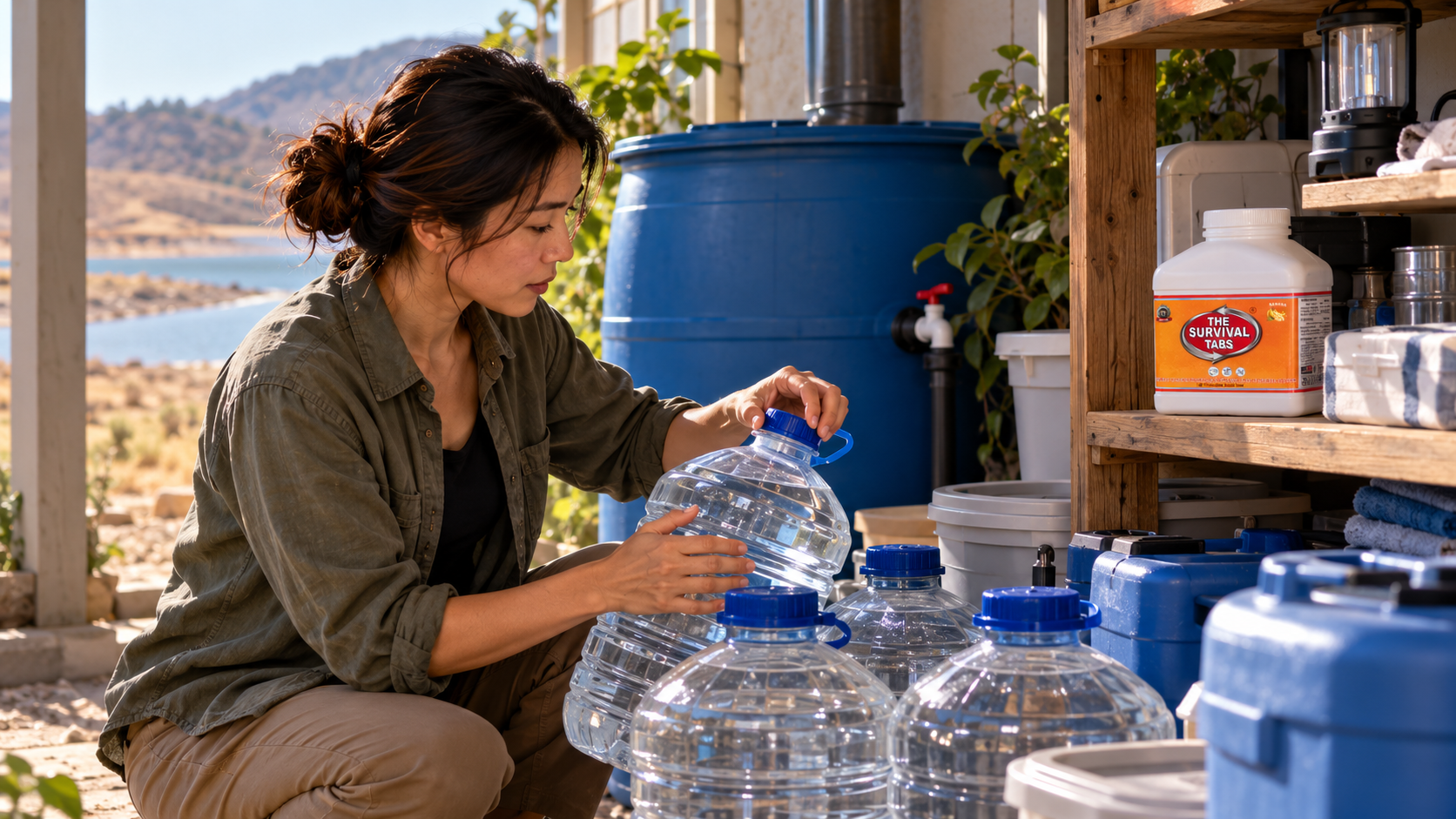
Use commercially bottled water or water stored in clean food-grade containers according to current public-health guidance. Keep it away from chemicals, heat, and direct sunlight when possible. Label storage dates and inspect containers.
Set household priorities
Plan for drinking, food preparation, medication, infant needs, pets, hygiene, and any medical equipment that uses water. Individualized medical or fluid instructions take priority over general conservation advice.
Reduce demand safely
Repair leaks, follow restrictions, delay nonessential outdoor use, and use water-efficient cleaning practices. Do not reduce hand hygiene, safe food preparation, or necessary medical care in ways that create new health risks.
Treat alternative sources cautiously
Rainwater, wells, pools, floodwater, surface water, and recycled household water have different hazards and legal limits. Ordinary filters do not remove every chemical or germ. Follow local authorities and qualified professionals before using an alternative source.
Quick checklist
- Follow current official alerts and local instructions.
- Include medications, accessibility, children, older adults, pets, and transport needs.
- Keep essential contacts and records available offline.
- Review supplies and plans after every major change or event.
Frequently asked questions
Can boiling fix every water problem?
No. Boiling addresses many germs but does not remove fuel, toxic chemicals, salt, or radioactive contamination.
Should emergency water be rationed immediately?
Follow official guidance. Drink according to health needs and reduce waste rather than deliberately dehydrating household members.
Official sources
- Ready.gov — Water: https://www.ready.gov/water
- CDC — Emergency Water Supply: https://www.cdc.gov/water-emergency/
This guide provides general preparedness education. Current local instructions, product labels, and qualified professional guidance take priority.