

Creating a comprehensive survival RV kit and preparing your camper for emergencies is crucial for long-distance trips and unexpected situations
Creating a comprehensive survival RV kit and preparing your camper for emergencies is crucial for long-distance trips and unexpected situations. Here's a detailed guide to address your questions:

Essential Items for a Survival RV Kit
- Survival Tabs: Pack 12-16 tabs per person per day for at least 15-30 days[1]
- Water: One gallon per person per day for at least three days[1]
- First aid kit with essential medications[1]
- Emergency blankets and sleeping bags[1]
- Multi-tool and survival knife[2]
- Flashlights and extra batteries[1]
- Battery-powered or hand-crank radio[1]
- Fire extinguisher and fire starters[2]
- Emergency food supplies (canned goods, dry foods)[3]
- Water filtration system or purification tablets[5]
- Maps, compass, and GPS device[2]
- Extra clothing and sturdy shoes[1]
- Duct tape and paracord[2]
- Sanitation and hygiene supplies[1]

Converting Your Camper into a Survival Vehicle
To quickly convert your camper into a survival vehicle:
1. Maximize storage efficiency: Use square containers and vertical storage solutions[4]
2. Install over-door organizers and expandable shelving[4]
3. Use tension rods in cabinets to prevent items from shifting during travel[4]
4. Keep your RV in a ready-to-go state with minimal setup[3]
5. Ensure all systems (electrical, plumbing, propane) are in good working order[3]
6. Install solar panels or a portable generator for off-grid power[3]
Emergency Food Storage Strategies for RVs
1. Use square or rectangular containers to maximize space[4]
2. Implement a rotating stock system to keep supplies fresh[3]
3. Store dry goods in airtight containers to prevent moisture and pests[4]
4. Utilize vertical space with stackable shelving units[4]
5. Keep a supply of long-shelf-life emergency foods[3]
6. Plan meals in advance to optimize space and reduce waste[4]

Planning an RV Escape Route
1. Use RV-specific mapping tools like RV LIFE Trip Wizard to plan routes suitable for your vehicle size[3]
2. Have multiple escape routes planned for various scenarios (floods, riots, etc.)[3]
3. Keep physical maps as backups in case of GPS or internet failure[2]
4. Identify safe meeting points with other RVers or family members[3]
5. Practice quick pack-up procedures to ensure rapid departure when needed[3]
Effective Water Purification Methods for Long Trips
1. Boiling: Bring water to a rolling boil for at least one minute (longer at higher altitudes)[6]
2. Chemical treatment: Use water purification tablets containing chlorine dioxide or iodine[5]
3. Filtration: Employ portable water filters like the Sawyer Squeeze or Platypus Gravity Filter[5]
4. UV light purifiers: Use devices like the Katadyn Steripen for quick purification[5]
5. Combination methods: Pre-filter water before boiling or using UV treatment for best results[5]
Remember to regularly check and update your survival kit, practice your emergency procedures, and stay informed about potential risks in your travel areas. By following these guidelines, you'll be well-prepared for a wide range of emergencies during your RV adventures.
***Statements regarding dietary supplements have not been evaluated by the FDA and are not intended to diagnose, treat, cure, or prevent any disease or health condition.***
 |
 |
 |
 |
 |
|
|---|---|---|---|---|---|
| 720 Tabs Emergency Food Survival Gluten Free and Non-GMO 25 Years Shelf Life | Food Supply 96 Tabs Emergency Food Replacement Disaster Preparedness | Ultimate Preparedness Emergency Food Supply 25 year shelf life | Emergency Food Ration Survival MREs Food Replacement | Emergency Food Survival Food Meal Replacement MREs Gluten Free and Non-GMO | |
| Day Serving | 60 days | 8 days | 120 days | 15 days | 2 days |
| Shelf-Life | 25 years | 25 years | 25 years | 25 years | 25 years |
| Non-GMO | ✓ | ✓ | ✓ | ✓ | ✓ |
| Gluten Free | ✓ | ✓ | ✓ | ✓ | ✓ |
| Tabs Amount | 720 | 96 | 1440 | 180 | 24 |
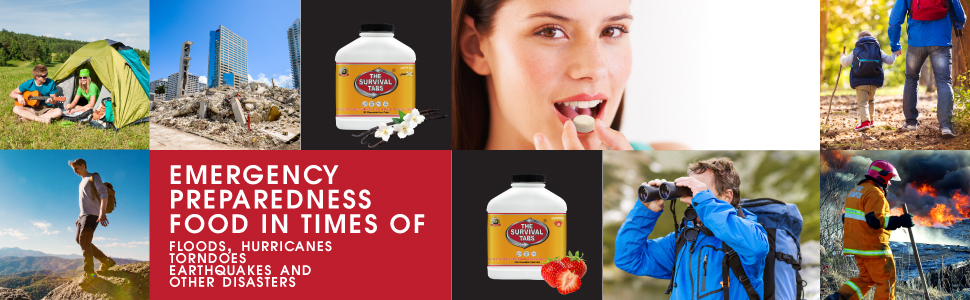
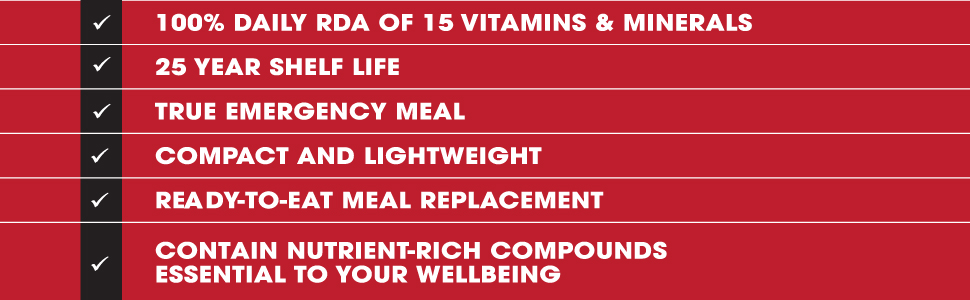
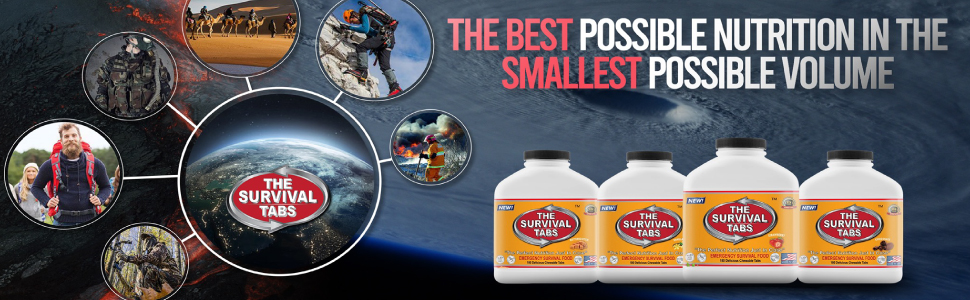
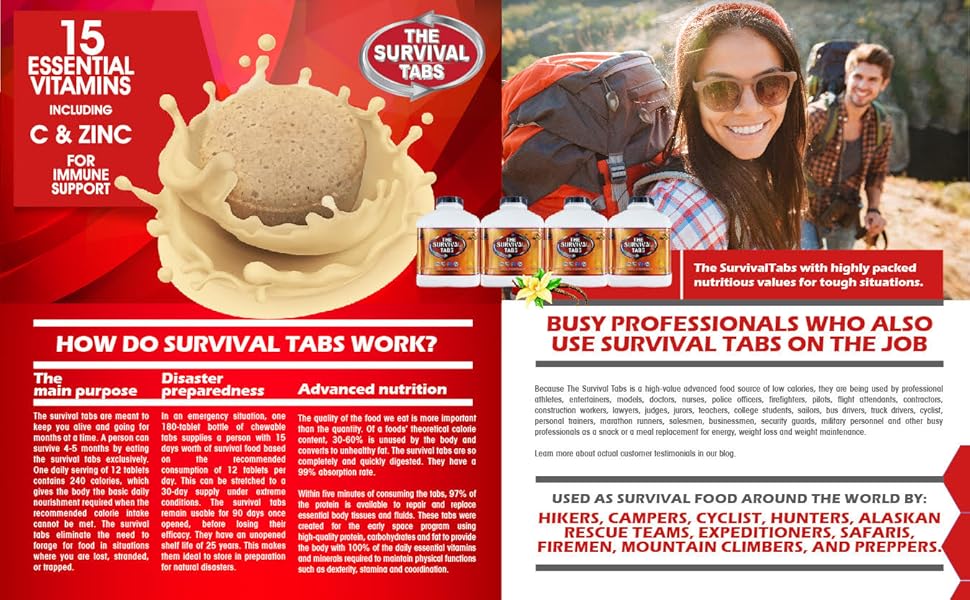
Emergency Foods contain 100% of the U.S. RDA of 15 Essential Vitamins & Minerals. Made with the highest quality protein which is essential in survival situations where your body needs to assimilate as much as possible from what you eat. With most of the food, we eat 30%-60% of the calorie content leaves the body unused. The Survival Tabs have such a highly concentrated formula that 99% of their calorie content is absorbed by the body with 97% of the protein content being available to repair or replacement of muscles, nerves, etc.