

Community Emergency Preparedness Guide
Knowledge Center ID: ST-KC-097
Quick answer: Community preparedness starts with knowing local hazards, reliable information sources, neighbors who voluntarily want assistance, and a few simple ways to communicate and coordinate before an emergency.
<!-- IMAGE:IMG-ST-KC-097-01 -->
Prepared Communities Start Before an Emergency
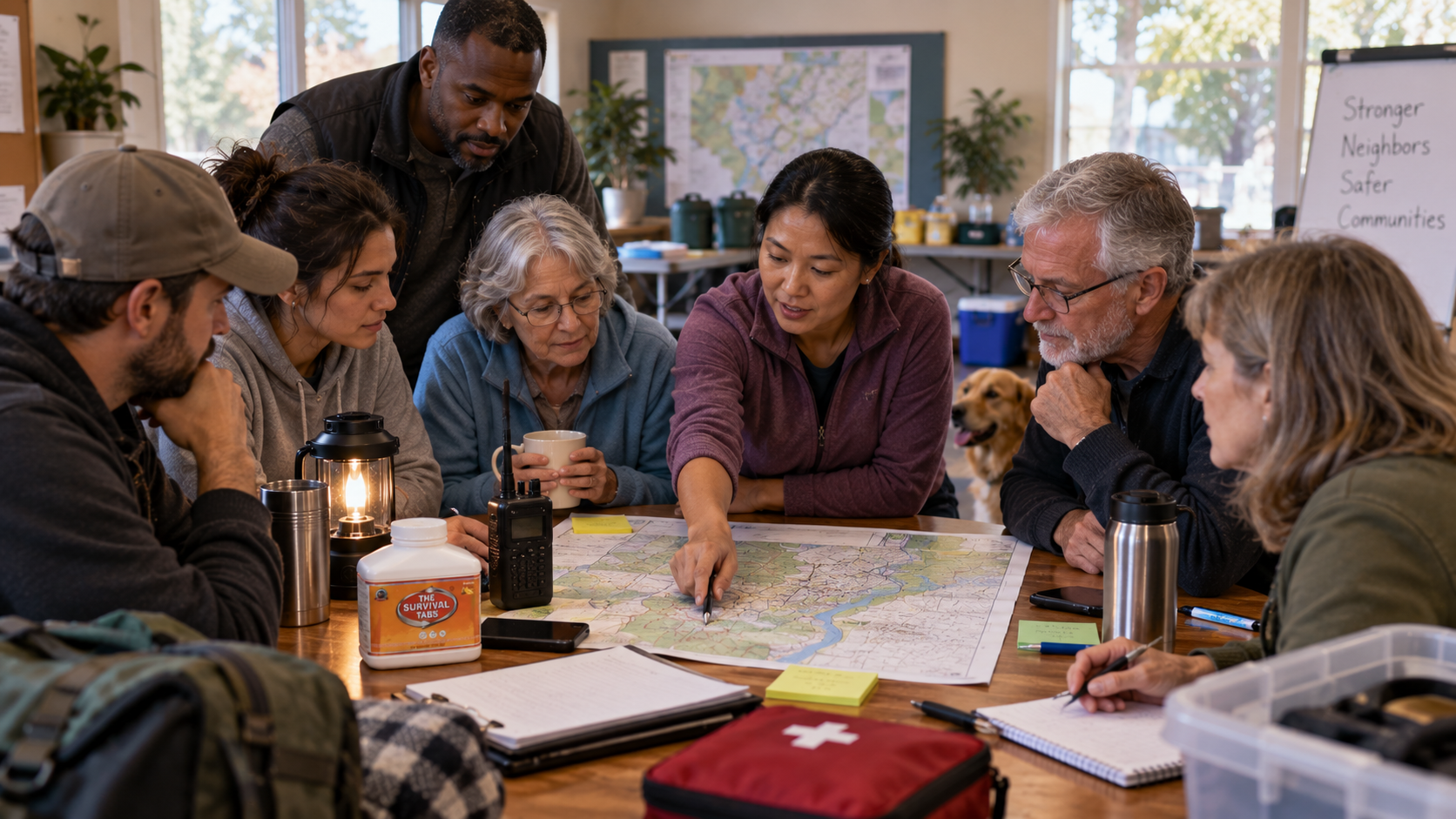
Community preparedness does not require a large organization or specialized equipment. It starts with people knowing local hazards, knowing who may need help, knowing where reliable information comes from, and agreeing on a few simple ways to communicate and coordinate.
The goal is not to replace emergency responders. It is to reduce confusion, identify needs early, and help neighbors support one another until professional services are available.
Map the People and Resources You Already Have
Identify existing community assets: schools, clinics, places of worship, community centers, businesses, apartment managers, neighborhood associations, volunteer organizations, and local emergency management.
Also identify skills and needs. Some residents may have first-aid training, language skills, transportation, or communications equipment. Others may request help because of mobility limitations, medical devices, age, language barriers, transportation gaps, or pet-care needs. Collect only information people voluntarily choose to share and protect privacy.
Create a Simple Communication Plan
Choose one or two official information sources and one neighborhood method for sharing verified updates. Avoid forwarding unconfirmed social-media claims.
Maintain an out-of-area contact who can help reconnect separated family members. Decide how the community will communicate when mobile data is congested or power is unavailable. A phone tree, group text, notice board, radio plan, or combination may work depending on local conditions.
<!-- IMAGE:IMG-ST-KC-097-02 -->
Define Helpful, Low-Risk Roles
Useful community roles include checking on neighbors, translating official messages, helping distribute verified information, coordinating transportation, identifying accessibility needs, documenting local damage from safe areas, and connecting residents with official services.
People should not enter damaged buildings, approach downed power lines, perform hazardous rescues, or attempt medical procedures beyond their training.
Training Makes Coordination Safer
FEMA’s Community Emergency Response Team program is one established pathway for community disaster preparedness and basic response training. Local fire departments, emergency management agencies, Red Cross chapters, and other recognized organizations may offer additional training.
Training before an emergency is more useful than trying to learn complex skills in the middle of one.
<!-- IMAGE:IMG-ST-KC-097-03 -->
Plan for Supplies Without Creating a Warehouse
Households should maintain their own emergency supplies when possible. Community planning can then focus on shared gaps: charging access, information, transportation, cooling or warming locations, accessibility support, and connections to food or water distribution.
If a community stores shared supplies, assign responsibility for inventory, expiration dates, security, accessibility, and replacement.
Community Preparedness Meeting Agenda
A useful meeting can cover:
1. Local hazards.
2. Official alert sources.
3. Meeting or check-in locations.
4. Communication backup.
5. Residents who may request assistance.
6. Transportation and accessibility.
7. Volunteer training opportunities.
8. Supply gaps.
9. A simple drill date.
10. Who updates the plan.
Frequently Asked Questions
Do we need to form a formal emergency organization?
No. Even a small group of neighbors with a communication plan and verified contacts can improve preparedness.
Should a neighborhood stockpile food and water?
Household supplies should remain the foundation. Shared supplies can help with specific community gaps but require ongoing management.
What is CERT?
Community Emergency Response Team training prepares volunteers in basic disaster preparedness and response skills under an established program.
How often should a community plan be reviewed?
Review it periodically and whenever key contacts, hazards, building access, or local procedures change.
Related Knowledge Center Topics
Complete Guide to Emergency Preparedness; Family Emergency Preparedness Guide; Emergency Radio and Communication Guide; Power Outage Preparedness Guide; Apartment Emergency Preparedness Guide.
SEO and Publishing Package
SEO title: Community Emergency Preparedness Guide
Meta description: Build a practical neighborhood preparedness plan with verified alerts, communication backups, volunteer roles, training, accessibility, and shared-resource planning.
Suggested URL: /blogs/knowledge-center/community-emergency-preparedness-guide
Suggested schema: Article with FAQPage markup where supported and validated.
Manual Image Plan
IMG-ST-KC-097-01
Placement: Featured
Prompt: Diverse neighborhood residents calmly gathered around a simple emergency preparedness map and checklist in a community room, inclusive, realistic, non-alarmist, no text.
Alt text: Neighbors discussing a practical community emergency preparedness plan.
IMG-ST-KC-097-02
Placement: After “Create a Simple Communication Plan”
Prompt: Editorial illustration of neighbors using multiple communication methods during an outage: phone, battery radio and paper contact list, simple clean composition, no text.
Alt text: Community using several backup communication methods during an outage.
IMG-ST-KC-097-03
Placement: After “Training Makes Coordination Safer”
Prompt: Realistic community preparedness training scene with volunteers learning basic organization and safety skills from an instructor, no uniforms with readable logos, no text.
Alt text: Community volunteers participating in preparedness training.
Official Sources
FEMA — Community Emergency Response Team: https://community.fema.gov/PreparednessCommunity/s/cert-trainings
Ready.gov — Get Involved: https://www.ready.gov/get-involved
FEMA — Whole Community: https://www.fema.gov/emergency-managers/national-preparedness/frameworks/community
Editorial note: This guide is educational and does not replace instructions from emergency officials, building authorities, public-health agencies, utilities, qualified professionals, or product manufacturers.