

Community Emergency Preparedness Guide
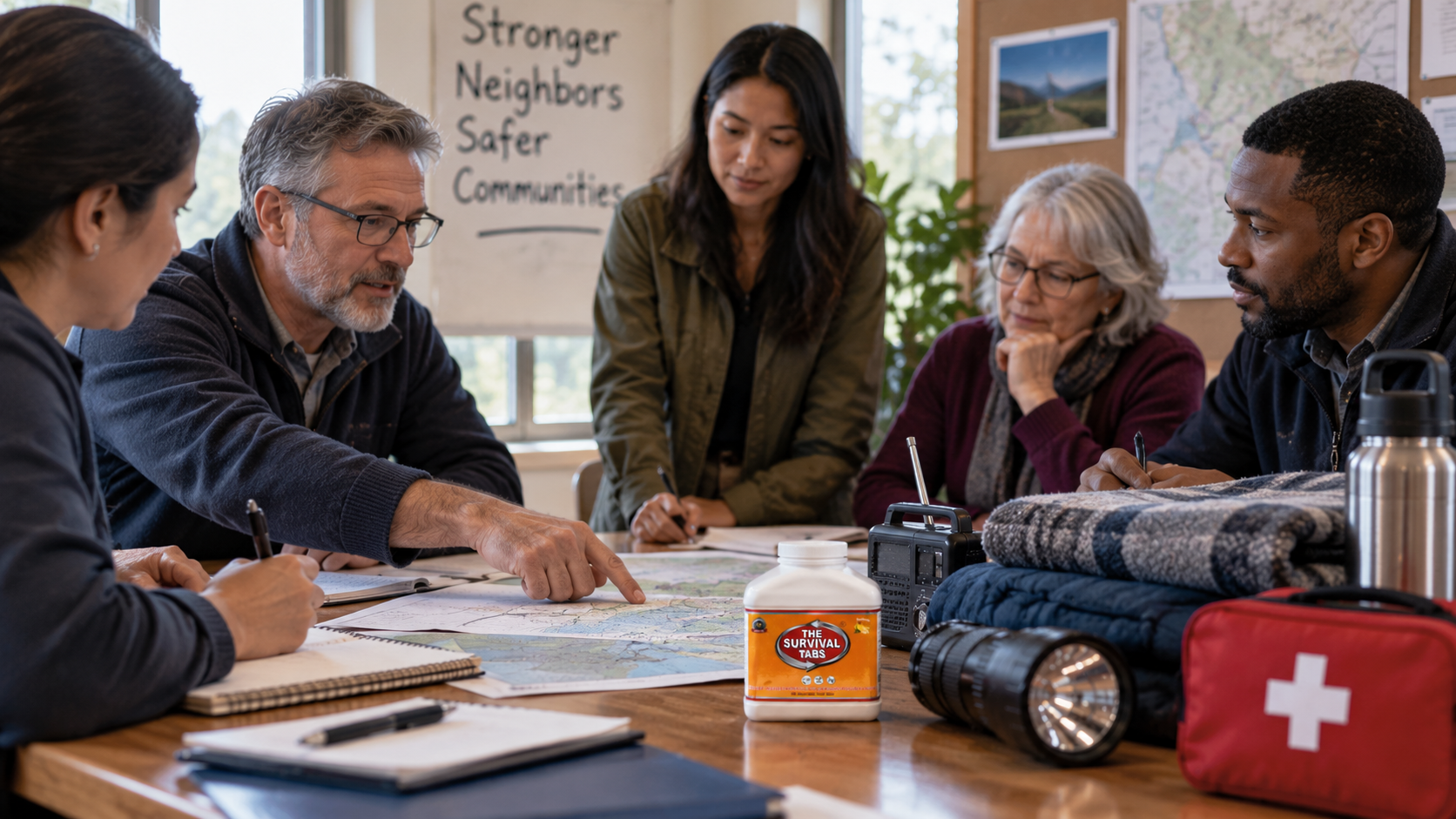
How neighbors, local organizations, and public agencies can prepare together—calmly, inclusively, and safely
A prepared community is not a group of people trying to replace emergency services. It is a network that knows its hazards, receives trusted warnings, plans for people who may need extra support, shares verified information, and helps residents take practical action before, during, and after an emergency.
This guide explains how neighborhoods, apartment buildings, schools, faith communities, nonprofits, businesses, and civic groups can strengthen preparedness while staying within their training, authority, and local rules.
Quick-start checklist
* Identify the local emergency-management and public-health agencies that issue official instructions.
* List the hazards most likely to affect the community and the places or populations most exposed.
* Choose at least two reliable warning channels and teach residents how to use them.
* Create an accessible contact and communication plan with backups for power and internet outages.
* Invite people with disabilities, older adults, caregivers, renters, language-minority residents, youth representatives, and local businesses into planning.
* Map community assets without publishing private medical, mobility, immigration, or household information.
* Define volunteer roles, boundaries, supervision, and training requirements before an emergency.
* Run a small discussion-based exercise, record gaps, assign owners, and repeat.
* Coordinate donations and mutual aid through trusted organizations rather than improvised collection points.
* Review the plan at least annually and after any real incident, drill, leadership change, or major local development.
1. What community preparedness means
Community preparedness connects household readiness with local systems. Households still need their own plans and supplies, but collective planning helps people receive warnings, find accurate information, reach accessible services, and support one another without creating confusion.
The strongest approach is whole-community planning: residents, emergency managers, first responders, health and social-service providers, schools, businesses, nonprofit organizations, and local leaders work together and include people who are often overlooked.
Preparedness is built before the emergency
* Relationships are established before communications fail.
* Roles are discussed before volunteers arrive.
* Accessibility needs are included before shelters or messages are designed.
* Information channels are verified before rumors spread.
* Plans are exercised before decisions become urgent.
Preparedness is not
* A private militia, security patrol, or substitute for police, fire, emergency medical services, or emergency management.
* A public list of residents’ diagnoses, medications, disabilities, immigration status, or home contents.
* A promise that volunteers can rescue, transport, treat, or protect everyone.
* A reason to ignore evacuation orders, road closures, shelter instructions, or public-health guidance.
* A product campaign disguised as public safety education.
2. Start with local authority and local risk
Emergency systems differ by jurisdiction. Begin by identifying who issues alerts, opens shelters, manages evacuations, coordinates volunteers, and communicates recovery information in your city, county, tribal area, territory, or state.
Build the official-contact list
* Local emergency-management office.
* Local public-health department.
* Police, fire, and emergency medical non-emergency contacts.
* Local utility outage and emergency lines.
* Public works, transportation, and road-condition sources.
* School district, housing authority, or facility-management contacts when relevant.
* Local animal-control and emergency pet-sheltering resources.
* Local 211 or comparable community-information service where available.
Keep emergency numbers separate from routine contacts. Call the local emergency number only for an immediate threat to life, safety, or property.
Create a community hazard profile
* Review official local hazard-mitigation plans, flood maps, wildfire information, severe-weather history, industrial risks, and evacuation zones.
* Consider cascading effects such as power loss, unsafe water, blocked roads, extreme temperatures, smoke, and communications outages.
* Identify seasonal patterns without assuming last year predicts the next emergency.
* Record areas where residents may lose access to elevators, transit, pharmacies, refrigeration, charging, or interpreters.
* Update the profile when land use, infrastructure, climate conditions, population, or official plans change.
3. Form a representative planning group
A small coordinating group can begin the work, but it should not speak for the whole community without participation. Representation improves the plan because people experience warnings, evacuation, sheltering, transportation, and recovery differently.
Invite practical partners
* Residents from different blocks, buildings, housing types, and income levels.
* People with disabilities and organizations led by people with disabilities.
* Older adults, caregivers, parents, and youth-serving organizations.
* People who use languages other than English and trusted community translators.
* Schools, childcare providers, faith communities, libraries, and community centers.
* Local businesses, pharmacies, food retailers, transport providers, and property managers.
* Public-health, emergency-management, first-response, and social-service representatives.
* Community-based organizations that already serve residents before disasters.
Set simple governance
* Write a short purpose statement focused on preparedness, not politics or enforcement.
* Name a coordinator and at least one backup.
* Document who can approve messages, spend funds, contact officials, and activate volunteers.
* Use a conflict-of-interest rule for purchases, donations, referrals, and product promotion.
* Keep meeting notes, decisions, open questions, owners, and due dates.
* Create a respectful process for residents to raise accessibility, privacy, or safety concerns.
4. Build an accessible warning and communication system
No single channel reaches everyone. Use multiple official and community channels, and plan for power, cellular, and internet failures.
Official warning channels
* Local opt-in text, phone, or email alert service.
* Wireless Emergency Alerts on compatible mobile phones.
* Emergency Alert System broadcasts.
* NOAA Weather Radio for weather and certain hazard information.
* Official local government, emergency-management, public-health, and utility websites or accounts.
* The FEMA app or other official tools appropriate to the jurisdiction.
Community backup channels
* Phone tree with primary and backup callers.
* Building captains or block contacts who share only verified messages.
* Printed notice locations known in advance.
* Battery-powered radio monitoring.
* Door-to-door wellness checks only when conditions are safe and the activity is authorized and trained.
* Accessible formats, including plain language, large print, captions, interpretation, and screen-reader-compatible messages.
Message discipline
* Identify the issuing authority and time of the update.
* State the hazard, affected area, required action, and where to get the next official update.
* Separate confirmed facts from unverified reports.
* Do not forward dramatic images or claims without checking the original official source.
* Correct errors visibly and quickly.
* Do not publish residents’ names, locations, medical needs, or absence from home.
5. Map assets, needs, and dependencies safely
Community mapping should show capabilities and gaps without creating a target list or exposing private information. Collect only what is necessary, obtain consent, restrict access, and define when records will be deleted or refreshed.
Useful assets to map
* Accessible public buildings and potential official reception or service locations.
* Community organizations with trained staff, generators, refrigeration, kitchens, vehicles, interpreters, or communications equipment.
* Public charging, cooling, warming, water-distribution, and information sites when officially designated.
* Residents or organizations with current first-aid, CPR, CERT, amateur-radio, or other relevant training.
* Local suppliers and service providers that may reopen during recovery.
* Routes and transportation options, including accessible transportation.
Dependencies and gaps
* Residents who may depend on electricity for mobility, communication, refrigeration, or medical equipment.
* Buildings where elevators, electronic locks, pumps, or ventilation fail during outages.
* Areas with limited cell coverage, road access, transit, or evacuation options.
* Households with infants, older adults, service animals, pets, or essential medication needs.
* Language, hearing, vision, cognitive, literacy, and digital-access barriers.
* Food, water, sanitation, shelter, charging, and transportation gaps.
Do not store detailed medical information in a casual neighborhood spreadsheet. Work with qualified agencies and privacy-aware systems when sensitive information is truly necessary.
6. Define volunteer roles and boundaries
Spontaneous goodwill can help, but unmanaged volunteers can enter unsafe areas, duplicate work, spread misinformation, or interfere with responders. Predefine low-risk roles and connect volunteers to recognized programs.
Appropriate low-risk roles
* Preparedness education and household-plan workshops.
* Translation, captioning, accessible-format preparation, and information distribution.
* Administrative support, call logging, supply inventory, and volunteer registration.
* Staffing an authorized information point or donation center under supervision.
* Checking on consenting neighbors when officials say conditions are safe.
* Helping residents enroll in alerts or find official services.
* Supporting drills, surveys, and after-action reviews.
Roles that require authorization or specialized training
* Search and rescue, firefighting, hazardous-material response, debris entry, or work near downed power lines.
* Medical assessment, diagnosis, treatment, medication administration, or patient transport.
* Traffic control, security enforcement, forced entry, evacuation orders, or entry into restricted areas.
* Operating shelters, feeding programs, vehicles, generators, or heavy equipment without required training and oversight.
* Handling children, vulnerable adults, personal data, money, or controlled supplies without approved safeguards.
Training pathways
* Ask local emergency management about Community Emergency Response Team training.
* Use recognized first-aid and CPR training appropriate to the volunteer’s role.
* Provide role-specific safety, accessibility, privacy, harassment-prevention, and incident-reporting training.
* Keep credentials current and never present basic training as professional licensure.
7. Plan for evacuation, sheltering, and continuity
Community plans should reinforce official instructions and help residents prepare for decisions. They should not create a competing evacuation order or unofficial shelter.
Evacuation planning
* Know official zones, routes, reception centers, and transportation-assistance programs.
* Identify residents who may need accessible transportation and encourage advance registration where an official program exists.
* Plan alternate routes, meeting points, and out-of-area contacts.
* Include medications, mobility devices, chargers, communication aids, service animals, and pet arrangements.
* Never route people around closures or into floodwater, smoke, fire, unstable structures, or other hazards.
Shelter planning
* Use official shelter information; do not assume a familiar building will open.
* Verify accessibility, transport, pet or service-animal policies, medical support limits, and required identification.
* Do not advertise an unofficial site as a shelter without authority, inspection, staffing, sanitation, fire safety, accessibility, and liability review.
* Prepare residents for shelter rules, limited privacy, noise, lighting, and changing conditions.
Continuity for community organizations
* Name primary and backup leaders.
* Maintain offline copies of essential contacts, procedures, and facility shutoff information.
* Protect records and define minimum services.
* Plan remote or alternate operations.
* Identify dependencies on utilities, vendors, staff, transportation, and communications.
* Test restoration procedures and update them after disruptions.
8. Supplies, donations, and mutual aid
Community resources should complement household supplies and official logistics. Large shared caches require secure storage, inventory control, rotation, accessibility, insurance, and a fair distribution policy.
Before buying supplies
* Confirm the need with local partners.
* Assign an owner for storage, inspection, expiration, and replacement.
* Check temperature, moisture, pest, fire, and security conditions.
* Plan how supplies will be transported and distributed during actual hazards.
* Include accessibility and dietary needs without promising universal suitability.
* Document donors, restrictions, conflicts of interest, and disposal procedures.
Donation management
* Follow requests from recognized response organizations; unsolicited goods can overwhelm operations.
* Prefer flexible financial support to vetted organizations when that is the official recommendation.
* Do not create independent drop-off sites during an incident without coordination.
* Publish accepted items, hours, location, safety rules, and closure notices.
* Separate public-safety information from fundraising or product promotion.
Mutual-aid agreements
* Write what each partner may provide, who can request it, and who approves deployment.
* Address cost, insurance, supervision, data protection, safety, and return of equipment.
* Do not promise resources that may be unavailable or legally restricted.
* Review agreements with the organizations and local authorities involved.
9. Include people who face disproportionate barriers
Inclusion is not a separate appendix. People with disabilities and other residents who face access barriers should participate in designing warnings, transportation, shelters, services, exercises, and recovery programs.
Accessibility actions
* Provide information in multiple accessible formats and languages.
* Use plain language and explain technical terms.
* Caption video, provide interpretation when needed, and ensure digital content works with assistive technology.
* Check physical access, restrooms, seating, quiet areas, charging, refrigeration, and transportation.
* Plan for service animals and do not treat them as pets.
* Include backup power and communication considerations without collecting unnecessary medical details.
* Test plans with the people who will use them.
Equity and trust
* Use trusted local messengers, not only official social-media accounts.
* Offer participation at different times, locations, and formats.
* Avoid requiring internet access, formal identification, English fluency, or transportation for every service when alternatives are possible.
* Explain how information will be used and protected.
* Track who is not being reached and change the plan.
* Do not use preparedness activities for immigration enforcement, political campaigning, or discriminatory screening.
10. Exercise the plan
An exercise is a controlled way to find gaps. Start small, state the objectives, avoid surprise simulations that may frighten residents, and coordinate with relevant authorities.
A simple discussion exercise
1. Choose one realistic local scenario and two or three objectives.
2. Invite representatives of the people and organizations involved.
3. Describe the situation in stages, including a communications or power failure.
4. Ask who decides, who communicates, what resources are needed, and what barriers appear.
5. Record decisions, unresolved questions, safety issues, and accessibility gaps.
6. Assign each corrective action an owner and due date.
7. Confirm completion and repeat the exercise with a different scenario.
Exercise safety
* Clearly label all messages and materials as exercise information.
* Do not activate real emergency channels, alarms, or dispatch unless formally coordinated.
* Do not ask untrained participants to enter hazards, move patients, use protective equipment, or perform rescues.
* Provide accommodations and a way to pause or leave.
* Protect personal information collected during the exercise.
11. Actions during an emergency
First priorities
1. Follow official warnings, evacuation orders, shelter instructions, and road closures.
2. Call emergency services for immediate threats; do not delay professional help while contacting the community group.
3. Activate only the roles and communication channels defined in the plan.
4. Share verified information with the source and update time.
5. Protect volunteers from unsafe travel, structures, weather, fire, floodwater, smoke, violence, hazardous materials, and downed utilities.
6. Document unmet needs and route them to the appropriate public agency or recognized relief organization.
Information checks
* What has the official authority confirmed?
* Which geographic area is affected?
* What action is required now?
* Which services or routes are open, closed, or unknown?
* When and where will the next official update appear?
* Does the message need translation, captioning, plain language, or another accessible format?
12. Recovery and after-action improvement
Recovery begins while response is still underway and may last far longer than the visible emergency. Community groups can help people navigate verified services, document unmet needs, restore social connections, and identify gaps without promising aid they do not control.
Recovery actions
* Share official information about safe reentry, utilities, debris, insurance, housing, health services, and assistance applications.
* Warn residents about contractor, charity, rental, insurance, and identity-theft scams.
* Track unmet needs by category without publishing personal case details.
* Coordinate volunteers and donations through recognized organizations.
* Include renters, undocumented residents, people without internet access, and people with disabilities in outreach.
* Support staff and volunteers with reasonable shifts, supervision, and referral to qualified help when needed.
After-action review
* What happened and what did the plan expect?
* Which warnings reached people and which did not?
* Which accessibility or transportation barriers appeared?
* Were roles, authority, and communication clear?
* Which resources failed, ran short, or could not be accessed?
* What should stop, start, or continue?
* Who owns each corrective action and when will it be checked?
13. Maintenance schedule
Monthly or routine checks
* Confirm key contacts and alert links.
* Review current seasonal hazards and official notices.
* Check shared equipment only if the group owns and maintains it.
Every six months
* Test the phone tree and offline communication method.
* Review volunteer availability, role boundaries, and training status.
* Check accessible formats and translation contacts.
* Inspect authorized shared supplies and update inventory.
Annually and after every incident
* Review the hazard profile and community changes.
* Run an exercise.
* Update leadership, agreements, facility information, and privacy practices.
* Close corrective actions from the last exercise or incident.
* Report progress to the community in a clear, non-sensitive summary.
14. Frequently asked questions
Should a neighborhood create its own emergency command center?
Usually, residents should coordinate with local emergency management and use defined low-risk roles. Do not present an informal location as an official command post, shelter, clinic, or dispatch center.
Should we keep a registry of residents who may need help?
Only when there is a clear purpose, informed consent, strong privacy controls, limited access, an update and deletion process, and coordination with an appropriate official or qualified organization. Encourage enrollment in official assistance registries where they exist.
Can volunteers perform wellness checks?
They may support preplanned checks on consenting neighbors when conditions are safe and local guidance permits. Volunteers should not enter hazards, force entry, provide medical treatment, or ignore evacuation or responder instructions.
How much shared food and water should the community store?
There is no universal quantity. Base any shared cache on a defined role, realistic distribution plan, safe storage, rotation capacity, local guidance, and the understanding that households should also prepare individually.
Can social media be our main warning system?
No. Social media can help distribute verified updates, but accounts, algorithms, connectivity, and power can fail. Use multiple official and offline channels.
Should local businesses be involved?
Yes, when roles are voluntary, transparent, lawful, and documented. Businesses can contribute facilities, communications, supplies, transportation, or continuity knowledge, but public-safety decisions remain with authorized agencies.
How do we avoid rumors?
Name approved sources, timestamp updates, distinguish confirmed from unconfirmed information, limit reposting, and correct mistakes visibly. When uncertain, say what is unknown and where the next official update will appear.
15. Publication and professional-review gate
Before publication or local adoption, have this guide reviewed against the relevant jurisdiction’s emergency-management structure, volunteer laws, privacy rules, disability-access requirements, shelter standards, and organizational insurance.
Specialized sections should be reviewed by qualified emergency-management, public-safety, disability-access, privacy, legal, public-health, and volunteer-management professionals as appropriate.
This guide is educational. It does not replace official instructions, professional emergency planning, legal advice, medical advice, or role-specific training.
Official sources
Ready.gov — Emergency Alerts
Ready.gov — Make a Plan
Ready.gov — Disasters and Emergencies
CDC — Emergency Preparedness and Disability Inclusion
CDC — Opportunities to Get Involved
Ready.gov — Preparedness Publications