

Civil Emergency Preparedness Guide
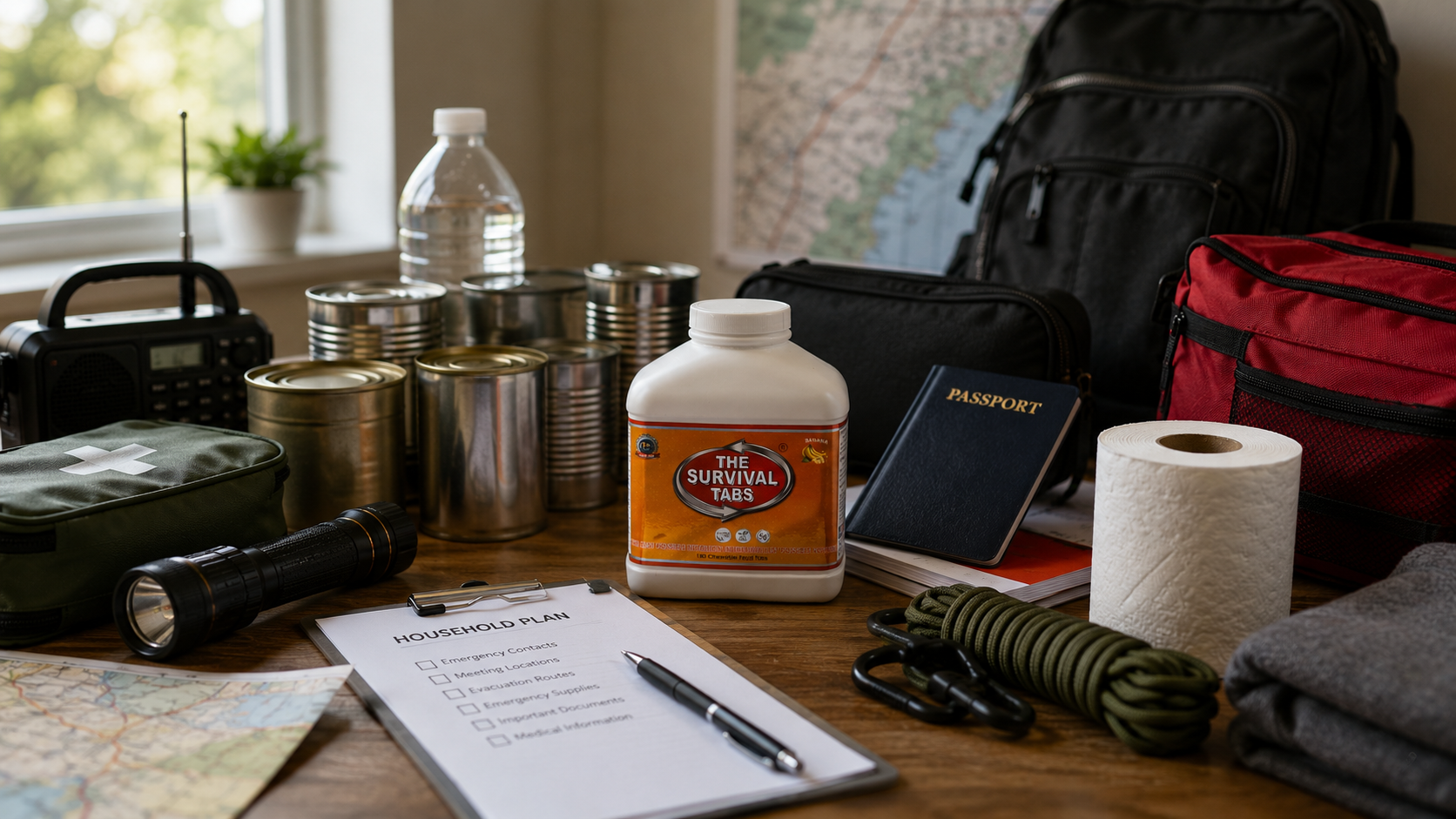
ST-KC-053 | Calm, lawful planning for households facing severe disruption, unrest, conflict spillover, evacuation, or prolonged service interruption
Civil emergencies can interrupt transportation, communications, utilities, medical care, banking, schools, workplaces, and access to ordinary supplies. The safest response is usually not dramatic survival behavior. It is early planning, trusted information, conservative decisions, and cooperation with legitimate emergency instructions.
This guide is written for civilians. It does not teach weapons use, tactical movement, checkpoint avoidance, covert travel, concealment, surveillance, fortification, or confrontation. It does not replace local authorities, emergency managers, clinicians, legal counsel, building professionals, or qualified security advice.
1. Start with the right objective
The objective is to keep people safe, preserve access to essential care, maintain communication, and create lawful options to shelter or leave before conditions deteriorate.
- Protect life before property.
- Follow verified instructions from local authorities and emergency services.
- Leave early when official guidance or credible local conditions indicate that travel is still safe.
- Stay put when movement would expose the household to greater danger.
- Keep plans flexible because roads, shelters, borders, utilities, and communications can change quickly.
- Prepare for people with disabilities, medical needs, language barriers, limited mobility, children, older adults, pets, and service animals from the beginning.
- Use supplies to reduce pressure on emergency services, not to isolate the household from legitimate help.
What this guide does not promise
- No plan can guarantee safety.
- No checklist works for every country, city, building, family, or emergency.
- A larger stockpile is not automatically safer if it creates fire, sanitation, medication, theft, or financial risks.
- Apps and online maps are useful only while devices, networks, accounts, and data remain available.
- Rumors, anonymous posts, and dramatic videos are not substitutes for verified local instructions.
2. Build a household decision system
A useful plan defines who decides, what information is trusted, what conditions trigger action, and how the household reconnects if people are separated.
Choose decision roles
- Name a primary household coordinator and an alternate.
- Assign one person to monitor official alerts and another to maintain the contact list, supplies, and transportation readiness.
- Give every adult authority to leave immediately when there is a direct life-safety threat.
- Do not require a group vote during fire, structural danger, violence nearby, official evacuation, or another urgent threat.
- Create simple responsibilities for children without making them responsible for adult safety decisions.
Write three operating modes
- Normal readiness: documents current, supplies rotated, contacts verified, and routes reviewed.
- Heightened readiness: devices charged, vehicles or transport options checked, bags staged, prescriptions reviewed, and family members recalled or contacted.
- Action mode: evacuate, shelter, reunify, or contact emergency services according to verified instructions and immediate conditions.
Define household triggers
- An official evacuation or shelter instruction.
- Fire, explosion, structural damage, hazardous smoke, or another immediate threat near the home.
- Loss of safe water, sanitation, essential medical equipment, or required medication access.
- Closure of the only practical transport route.
- Credible warning that commercial transport, borders, schools, workplaces, or local services may close.
- Repeated communications failures combined with worsening local conditions.
- A household member cannot remain safely in the building because of heat, cold, air quality, mobility, or medical needs.
Trigger points should be conservative and observable. Avoid triggers based on political predictions, social-media trends, or attempts to guess what other people may do.
3. Use verified information
Information quality is a life-safety issue. A household should know where official alerts appear before an emergency.
- Enable local emergency alerts on every compatible phone.
- Identify local government, emergency-management, fire, police, public-health, utility, transit, school, and weather channels that apply to the household.
- Keep a battery-powered or hand-crank radio if local broadcasts are part of the warning system.
- Write down key frequencies, numbers, and addresses because bookmarks may not be available.
- Use at least two independent sources before acting on non-urgent claims.
- Treat screenshots without a source, time, location, or official link as unverified.
- Check whether an alert is current, local, and applicable to your exact area.
- Do not share unverified casualty reports, road closures, shelter locations, or security claims.
Create a short information schedule
- Check official updates at planned intervals unless the situation is rapidly changing.
- Record the time and source of important instructions.
- Share one concise household update rather than forwarding a stream of alarming posts.
- Preserve battery by turning off nonessential notifications and reducing background data use.
- Keep one device reserved for emergency communication when possible.
4. Make a communication and reunification plan
Assume calls may fail, people may be at different locations, and familiar meeting places may be inaccessible.
- Choose an out-of-area contact who can relay short messages.
- Give every household member a paper contact card.
- Choose a nearby meeting point and a second point outside the immediate neighborhood.
- Choose a separate destination outside the wider affected area.
- Write down school, workplace, caregiver, medical, transit, and pet-care contacts.
- Agree on a brief status format such as name, safe or need help, current area, intended destination, and next check-in time.
- Use text or data messages when voice networks are congested, if authorities have not advised otherwise.
- Do not post the household’s exact location, route, supplies, or vacant-home status publicly.
If someone is missing
- Check the written plan and designated contacts first.
- Contact the institution responsible for the person, such as a school, workplace, care facility, or hospital, using verified numbers.
- Contact local emergency services when there is an immediate safety concern.
- Do not enter restricted, burning, damaged, violent, or otherwise unsafe areas to search independently.
- Keep a written log of calls, names, times, and instructions.
5. Prepare documents, money, and proof
Civil emergencies can make ordinary identity, travel, insurance, banking, housing, and medical records difficult to retrieve.
- Keep current identification and travel documents accessible.
- Store copies of birth, custody, guardianship, immigration, residency, insurance, property, lease, vehicle, and medical documents that apply to the household.
- Keep a current medication list, allergies, diagnoses, clinician contacts, device details, and pharmacy information.
- Include pet ownership, vaccination, medication, and microchip records.
- Store encrypted digital copies and a protected paper set in separate appropriate locations.
- Carry a modest amount of lawful local currency in small denominations without creating a security risk.
- Keep account and policy contact numbers without storing passwords in an exposed list.
- Record serial numbers and photograph important property for later claims when safe.
- Review expiration dates and replacement lead times for passports, permits, prescriptions, and identification.
Protect privacy
- Share full records only with people or organizations that need them.
- Use device locks, account recovery methods, and multifactor authentication where practical.
- Do not hand original documents to unofficial intermediaries.
- Confirm websites, email domains, phone numbers, and payment instructions before responding.
- Report suspected fraud through official channels.
6. Build practical household supplies
Plan for interruption, not indefinite isolation. Local authorities may recommend different quantities based on hazards, climate, geography, infrastructure, and household needs.
Water
- Store water in food-grade containers intended for water storage.
- Plan for drinking, food preparation, medication, basic hygiene, and pets.
- Protect stored water from heat, sunlight, fuels, cleaners, pesticides, and floodwater.
- Rotate supplies according to container and public-health guidance.
- Treat boil-water, do-not-drink, and do-not-use advisories as different instructions.
- Do not assume a household filter removes chemicals, fuel, salt, radiation, or every pathogen.
- Use the dedicated emergency-water guides for treatment decisions.
Food
- Choose familiar shelf-stable foods that fit dietary, cultural, allergy, medical, and preparation needs.
- Include foods that can be eaten without cooking.
- Keep a manual can opener where canned food is stored.
- Plan around realistic water, fuel, refrigeration, and cleanup limits.
- Rotate food through ordinary household use.
- Discard food exposed to floodwater, chemicals, damaged packaging, unsafe temperatures, or other contamination according to official guidance.
- Treat compact emergency nutrition as one optional component, not a complete long-term diet.
Medication and medical continuity
- Talk with a clinician or pharmacist about lawful emergency supplies and refill options.
- Keep prescriptions in original labeled containers unless a qualified professional directs otherwise.
- Maintain an updated medication and allergy list.
- Plan safe storage and backup power for medicines or devices that require temperature control or electricity.
- Pack mobility aids, hearing-aid batteries, glasses, communication tools, continence supplies, wound supplies, and other daily essentials.
- Do not ration, share, substitute, stop, or change prescription medication without professional guidance.
- Do not buy prescription medicines from unverified sellers.
Lighting, power, and tools
- Use flashlights or headlamps instead of candles when possible.
- Keep compatible batteries and safe charging cables.
- Use power banks according to manufacturer instructions and inspect them for damage or swelling.
- Never run a fuel-burning generator, grill, stove, heater, or engine indoors or in an enclosed area.
- Keep smoke and carbon-monoxide alarms working.
- Do not backfeed a building electrical system or improvise wiring.
- Keep a fire extinguisher appropriate to the home and know its limits.
- Include basic sanitation, cleaning, protective, and waste-management supplies.
7. Prepare to shelter safely
Sheltering may mean remaining at home, moving to a safer interior area, or going to an official shelter. The correct action depends on the hazard and current instructions.
- Identify the safest ordinary rooms for local hazards before an emergency.
- Know how to shut doors, move away from windows, and avoid damaged areas without making structural changes.
- Keep exits, corridors, stairs, and fire doors clear.
- Never block an exit with supplies, furniture, barricades, or security devices.
- Know whether the building depends on elevators, pumps, electronic locks, ventilation, medical power, or staffed services.
- Plan how people with limited mobility will reach a safe area without unsafe lifting.
- Keep shoes, lights, keys, communication tools, and essential medication accessible.
- Leave immediately for fire, collapse, dangerous fumes, or another condition that makes the building unsafe.
When an official shelter may be better
- The home is damaged, contaminated, without safe temperature control, or cannot support essential medical needs.
- Authorities direct residents to a shelter or reception center.
- Evacuation transport, accessible support, food, water, charging, information, or reunification services are needed.
- Remaining alone creates a greater risk than relocating.
- Household conflict, violence, or abuse makes the home unsafe.
Verify shelter locations through official sources. A social-media post or old map may direct people to a site that is closed, full, moved, or never activated.
8. Prepare to evacuate early and lawfully
Early, ordinary transportation is generally safer than waiting for conditions to become extreme. Do not delay solely to protect property or collect nonessential items.
Plan destinations
- Choose more than one destination in different directions.
- Confirm whether each destination is accessible, open, and appropriate for medical needs, children, pets, and service animals.
- Know local public shelters, hotels, relatives, community reception points, and accessible transport options.
- Plan onward lodging and expenses if leaving the wider area.
- Do not assume government transportation will be available, immediate, free, or able to carry pets.
Plan routes and transport
- Use primary and alternate routes based on official information.
- Include walking, public transit, paratransit, rides with trusted people, and other lawful options when relevant.
- Keep vehicles maintained and avoid letting fuel fall unnecessarily low during heightened risk.
- Do not store unsafe fuel quantities or carry fuel in unapproved containers.
- Know how to leave the building if elevators stop.
- Do not use restricted roads, rail corridors, utility sites, private property, checkpoints, or damaged structures as shortcuts.
- Turn around when roads, crowds, weather, fire, flooding, violence, or official restrictions make travel unsafe.
Pack an evacuation module
- Identification and necessary documents.
- Medication, medical devices, mobility and communication aids.
- Water and ready-to-eat food.
- Phone, power bank, cables, radio, and paper contacts.
- Weather-appropriate clothing, sturdy shoes, and basic hygiene supplies.
- Infant, child, older-adult, disability, and caregiver items.
- Pet or service-animal supplies and records.
- Cash and essential keys.
- Only the weight each person can safely carry.
9. Use non-confrontational personal safety rules
Civilian preparedness should reduce exposure and conflict. It should not turn household members into unofficial security personnel.
- Avoid demonstrations, active disturbances, damaged infrastructure, restricted areas, and large uncertain crowds when possible.
- Follow lawful curfews, evacuation orders, transit controls, and access restrictions.
- Do not argue with armed people, emergency responders, transport staff, shelter staff, or crowds.
- Keep movements ordinary, necessary, and consistent with official guidance.
- Do not display weapons, uniforms, tactical equipment, political symbols, or valuable supplies as a preparedness strategy.
- Do not photograph sensitive sites, responders, checkpoints, casualties, or private individuals when doing so could violate law, privacy, or safety.
- Do not trespass, bypass checkpoints, use disguises, or attempt surveillance avoidance.
- Move away from escalating conflict and call emergency services when safe.
- Use trained professionals for security, safeguarding, domestic-violence, or legal concerns.
If violence or an explosion is nearby
- Move away from immediate danger when a safe route is obvious.
- Take cover and follow official instructions.
- Do not approach the scene to observe, film, assist without training, or collect objects.
- Expect secondary hazards such as fire, unstable structures, broken glass, smoke, damaged utilities, traffic, and crowds.
- Call local emergency services when safe and provide concise verified information.
- Do not touch suspicious debris, weapons, munitions, containers, wires, or unknown substances.
10. Plan for utility and service interruption
Electricity
- Identify which household needs stop safely and which become life-threatening without power.
- Create backup plans for medical devices with clinicians, manufacturers, utilities, and emergency services.
- Charge devices during heightened readiness.
- Use approved equipment only and follow carbon-monoxide and fire-safety rules.
- Move to a safer location when the home cannot maintain safe temperature or medical support.
Water and sanitation
- Follow the exact public-health advisory.
- Separate drinking water from sanitation water.
- Use toilets and wastewater systems only as local authorities or utilities advise.
- Keep waste contained away from food, water, children, animals, and living areas.
- Do not combine cleaning or disinfecting chemicals.
- Use gloves and ventilation according to product labels.
Banking and commerce
- Keep more than one lawful payment method.
- Expect electronic payments, ATMs, deliveries, and fuel stations to be unavailable.
- Prioritize essential purchases and avoid panic buying.
- Keep receipts and document emergency expenses.
- Do not pay unofficial fees for access to aid, shelters, evacuation lists, or government services without verification.
11. Make plans that include everyone
People with disabilities
- Plan with the person, not for the person.
- Document communication, mobility, sensory, cognitive, medication, device, power, and personal-assistance needs.
- Identify accessible routes, transport, shelters, restrooms, and backup caregivers.
- Keep repair information and spare consumables for essential equipment.
- Do not separate a person from an aid, service animal, communication device, or caregiver unless safety or qualified care requires it.
Children
- Use calm, age-appropriate explanations.
- Make sure children know their full name, caregiver names, contact information, and meeting plan as appropriate.
- Keep custody, medical, school, and authorized-pickup documents current.
- Pack familiar comfort items and necessary feeding or hygiene supplies.
- Do not send children alone to investigate conditions or retrieve supplies.
- Report separation through official reunification and safeguarding channels.
Older adults and medically vulnerable people
- Plan around mobility, temperature, hydration, cognition, medication, caregiver, and power needs.
- Arrange regular check-ins that do not depend on one communication method.
- Know when loss of utilities or services requires early relocation.
- Avoid unsafe lifting or transport improvisation.
- Use qualified medical guidance for any change in care.
Pets and service animals
- Identify transport and shelter options before an emergency.
- Keep carriers, leashes, food, water, medication, waste supplies, and records ready.
- Use current identification and microchip information.
- Do not release animals during evacuation.
- Plan for the possibility that some transport or shelter options cannot accept pets, while service-animal rules may differ.
- Never leave an animal in a hot, cold, flooded, smoky, or otherwise unsafe vehicle or building.
12. Prepare for schools, workplaces, and care facilities
- Read each institution’s emergency, closure, reunification, and authorized-pickup procedures.
- Keep household contacts current in institutional records.
- Know whether the institution shelters in place, evacuates, or relocates during different hazards.
- Do not rush toward a school, hospital, workplace, or care facility when officials say access is restricted.
- Keep necessary medication and accommodation documentation current under the institution’s rules.
- Assign alternates for pickup, caregiving, and transport.
- Record the verified location to which people may be relocated.
13. If you are traveling or living abroad
People abroad must plan for local laws, transport, immigration, language, currency, medical systems, and consular limits.
- Monitor official local authorities and the embassy or consulate of your nationality.
- Keep passports, visas, residency documents, vaccination records, and dependent documents current.
- Enroll in an official traveler-notification program when available and appropriate.
- Know local emergency numbers and how to request help in the local language.
- Keep lawful local currency and a plan for lodging and onward travel.
- Leave through ordinary commercial options early when official guidance and conditions support doing so.
- Do not assume an embassy can provide in-country transport, medical care, law enforcement, pet transport, or immediate evacuation.
- Prepare for government-assisted transport to end at a nearby safe location rather than your home country.
- Keep family informed using a short agreed check-in method.
14. Reduce misinformation, scams, and privacy loss
- Confirm aid, shelter, transport, donation, and registration links through official websites.
- Check domain spelling before entering personal information.
- Do not send identity documents through unsolicited messages.
- Do not publish lists of vulnerable residents, empty homes, medication supplies, or household stockpiles.
- Use group chats for verified operational information, not speculation.
- Correct false information calmly and provide the official source.
- Preserve screenshots, receipts, contact details, and transaction records if fraud is suspected.
- Report threats, exploitation, trafficking, domestic violence, child or elder abuse, and other safeguarding concerns through qualified channels.
15. Support neighbors without creating unsafe roles
Prepared households can help reduce isolation, but informal aid must stay within training, consent, privacy, and safety limits.
- Share verified alerts and official service information.
- Check on neighbors who have agreed to contact.
- Offer low-risk help such as charging, translation, transport coordination, or collecting ordinary supplies when safe and lawful.
- Use fair, transparent rules for shared resources.
- Protect medical and personal information.
- Refer medical, fire, rescue, security, legal, shelter, and safeguarding needs to qualified services.
- Do not create unofficial checkpoints, patrols, detention, searches, forced entry, armed escorts, or command structures.
- Do not enter damaged buildings or active-danger areas to provide aid without authorization and training.
16. Return and recovery
Return only when authorities say the area and route are open and the building is safe enough to enter.
- Watch for structural damage, fire, gas odors, electrical hazards, contaminated water, sewage, mold, sharp debris, and hazardous materials.
- Do not reconnect utilities or enter damaged areas without qualified clearance when needed.
- Photograph damage before cleanup when safe and permitted.
- Keep receipts and a written timeline of losses, contacts, applications, and decisions.
- Use verified disaster-assistance, insurance, landlord, utility, and public-health channels.
- Discard contaminated food, water, medication, or supplies according to official guidance.
- Expect stress, grief, conflict, sleep disruption, and decision fatigue; seek qualified support when needed.
- Review what failed in the plan and update contacts, routes, supplies, responsibilities, and triggers.
17. A practical readiness sequence
Do today
- Enable alerts.
- Write the household contact card.
- Choose two meeting points and one out-of-area contact.
- Locate identification, prescriptions, keys, flashlights, chargers, and essential medical items.
- Check exits and remove obstructions.
- Identify one shelter destination and two evacuation destinations.
Do this week
- Create document copies.
- Review transport and accessible routes.
- Build or update household supplies.
- Talk with clinicians and pharmacists about continuity needs.
- Confirm school, workplace, caregiver, and pet plans.
- Practice one short communication and evacuation drill.
Maintain
- Review alerts, contacts, documents, medication, supplies, batteries, and routes on a regular schedule.
- Update the plan after moves, new medical needs, school or job changes, vehicle changes, or changes in household members.
- Replace expired, damaged, recalled, or unsuitable items.
- Repeat drills without creating fear.
- Keep the plan short enough to use under stress.
18. Household civil-emergency checklist
- Official alert sources identified.
- Primary and alternate household coordinators named.
- Three operating modes and observable triggers written.
- Out-of-area contact confirmed.
- Two meeting points and multiple destinations selected.
- Paper contact cards carried.
- Identification and essential records current.
- Medication and medical-device continuity reviewed.
- Water and food suitable for household needs.
- Lighting, charging, radio, and batteries ready.
- Smoke and carbon-monoxide alarms working.
- Exits and accessible routes clear.
- Transport and alternate routes checked.
- Cash and payment options available.
- Children, older adults, disabilities, pets, and service animals included.
- School, workplace, caregiver, and facility procedures known.
- Privacy and misinformation rules agreed.
- Return and recovery steps understood.
19. Frequently asked questions
How much should we stockpile?
Use local emergency guidance, household needs, storage safety, climate, medical requirements, and realistic rotation. Start with a manageable supply for service interruptions and expand responsibly. Do not compromise rent, medication, fire safety, exits, food safety, or sanitation to accumulate supplies.
Should we leave before an official evacuation?
Sometimes early departure through ordinary safe transport is prudent, especially when authorities advise heightened readiness or conditions are clearly deteriorating. Local facts matter. Do not enter danger to leave, ignore lawful restrictions, or rely on rumors. When abroad, monitor local authorities and the embassy or consulate of your nationality.
What if the household disagrees?
Use pre-agreed triggers, name a coordinator and alternate, and prioritize direct life-safety threats. No one should be forced to remain in fire, violence, abuse, structural danger, or medically unsafe conditions. Involve qualified emergency, medical, safeguarding, or legal support when needed.
Should we share supplies with neighbors?
Low-risk mutual aid can help, but it should use consent, fair rules, privacy, and clear limits. Do not withhold essentials from dependents, create coercive exchanges, expose vulnerable people, or take on medical, security, rescue, or enforcement roles without authority and training.
Should we carry weapons or tactical gear?
This guide does not recommend weapons or tactical behavior. Laws, training, storage, household risk, and local conditions vary. Civilian planning should emphasize avoidance, early movement, lawful instructions, communication, and professional help.
What if mobile service fails?
Use the paper plan, designated meeting points, out-of-area contact, local radio, and planned check-in times. Conserve battery and avoid repeated nonessential calls. Follow official broadcasts and do not travel solely to obtain information when movement is unsafe.
Can government evacuation be relied upon?
Do not assume transport will be immediate, available, free, direct to your preferred destination, or able to accommodate pets. Maintain lawful independent options where possible and follow official instructions.
20. Content boundaries and required review
Before publication, this article should be reviewed by qualified emergency-management, public-safety, accessibility, medical and pharmacy, fire and carbon-monoxide safety, child and dependent-adult safeguarding, behavioral-health, veterinary and service-animal, travel and consular, privacy and cybersecurity, legal and civil-rights, humanitarian-protection, and product-compliance professionals.
- Local evacuation, curfew, shelter, transport, immigration, documentation, and emergency-powers rules vary.
- Medication laws and emergency refill rules vary.
- Shelter access, service-animal accommodation, and disability protections vary.
- Conflict, unrest, terrorism, chemical, biological, radiological, and explosive hazards require current official instructions.
- Do not publish location-specific security claims without authoritative local review.
- Do not add weapons, tactical, concealment, fortification, checkpoint, surveillance, sabotage, or evasion instructions.
- Do not convert general preparedness guidance into political persuasion or fear-based marketing.
- Do not imply that Survival Tabs or any other single product guarantees survival or replaces a balanced emergency food plan.
Official sources
The following official resources support the planning framework. Local instructions take priority during an active emergency.
- Ready.gov — Make a Plan
- Ready.gov — Emergency Alerts
- Ready.gov — Evacuation
- Ready.gov — Shelter
- CDC — Emergency Prescription Preparedness
- U.S. Department of State — Crisis Response and Evacuations
Editorial note: verify every link, recommendation, and jurisdiction-sensitive statement again immediately before publication.