

Chemical Emergency Shelter-in-Place Guide
Quick answer: During a chemical release, the correct action depends on the substance, wind, distance, and official instructions. Go indoors, evacuate, or move crosswind only as directed; do not improvise cleanup or treatment.
Know local alert channels
Identify nearby industrial, transport, agricultural, or storage hazards without assuming an incident will occur. Enable local alerts and know which agencies issue shelter, evacuation, road-closure, and public-health instructions.
Prepare a shelter option
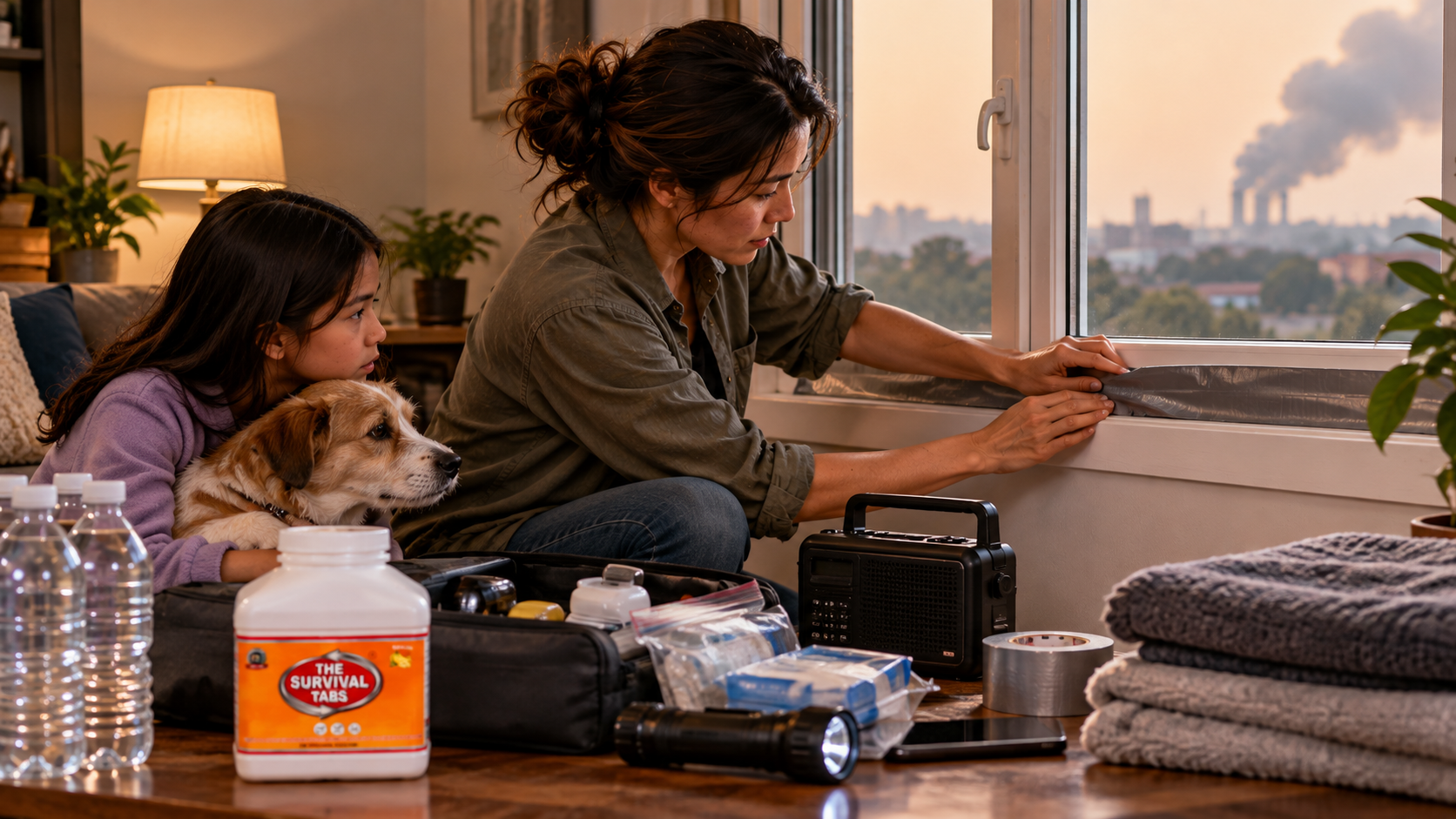
Choose an interior room that can be closed, with as few exterior openings as practical. Know how to turn off ventilation systems if officials instruct you to do so. Keep a radio, phone power, water, medication, contacts, and basic sealing materials available without permanently blocking ventilation.
Follow the incident instruction
If told to shelter, bring people and pets inside, close doors and windows, and follow directions for ventilation. If told to evacuate, leave by the specified route; driving through a visible cloud or toward the release can increase exposure. Do not use smell as proof that air is safe.
If exposure may have occurred
Move away from the source without spreading contamination. Follow official decontamination directions. Remove contaminated outer clothing only when instructed or when necessary to stop ongoing exposure, isolate it, and avoid touching eyes or skin. Contact poison control or emergency services for guidance; do not neutralize chemicals on the body with other chemicals.
After the all-clear
Ventilate, clean, discard items, or seek medical evaluation only according to incident-specific instructions. Document official messages and household symptoms. Never enter a restricted area to retrieve belongings.
Quick checklist
- Follow current official alerts and local instructions.
- Include medications, accessibility, children, older adults, pets, and transport needs.
- Keep essential contacts and records available offline.
- Review supplies and plans after every major change or event.
Frequently asked questions
Should I seal a room for days?
No. Temporary sealing is incident-specific. Follow officials because ventilation needs and safe duration depend on the release.
Can a household air purifier remove every chemical?
No. Most residential filters do not remove every gas or vapor. Do not substitute a purifier for evacuation or official shelter instructions.
Official sources
- Ready.gov — Chemicals and Hazardous Materials: https://www.ready.gov/hazmat
- CDC Chemical Emergencies: https://emergency.cdc.gov/chemical/
This guide provides general preparedness education. Current local instructions, product labels, and qualified professional guidance take priority.