

Car-Free Evacuation and Emergency Transportation Guide
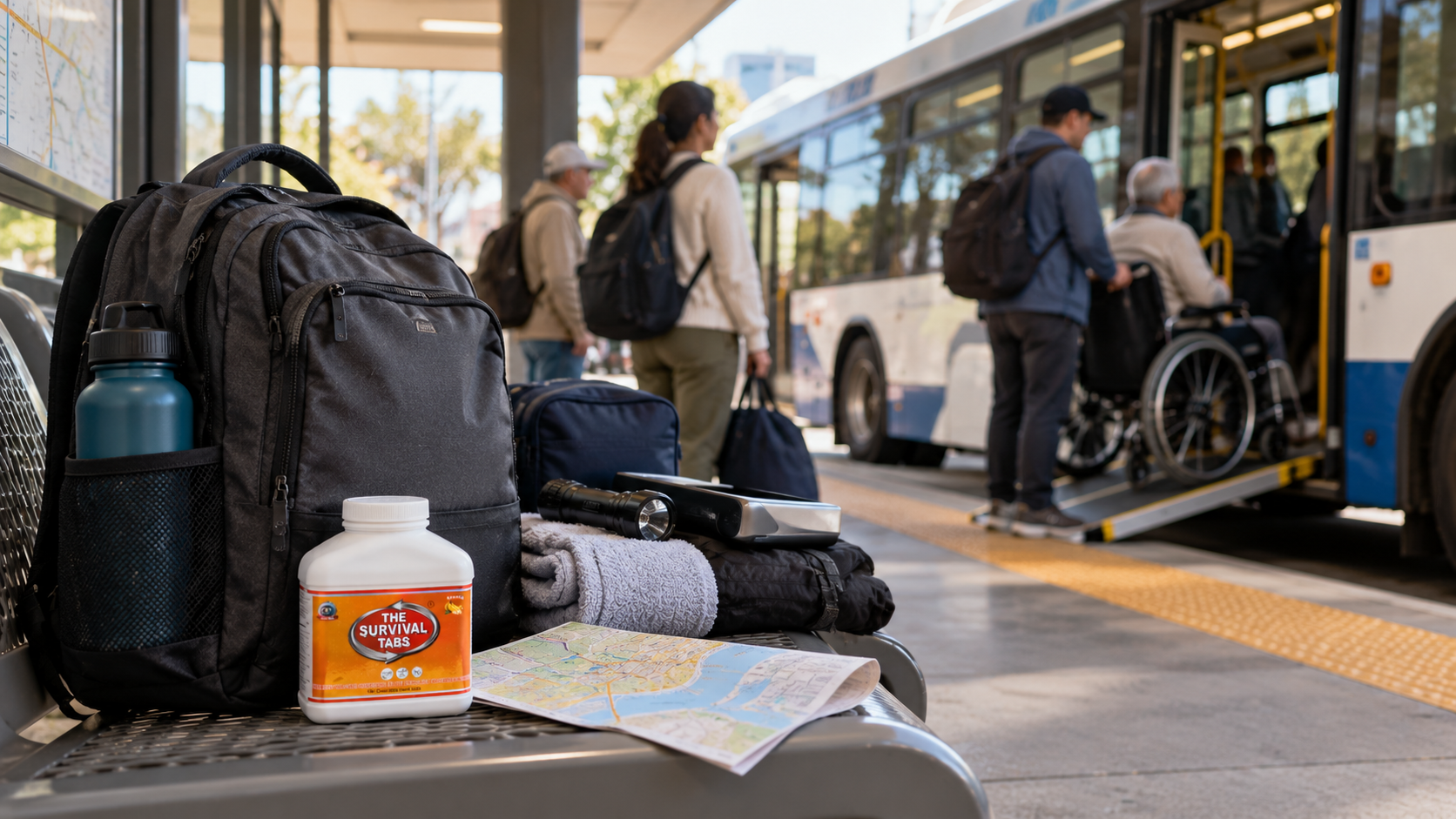
Quick answer: A car-free plan needs several realistic options: walking, public transit, paratransit, community pickup, taxi or rideshare when operating, and trusted contacts. Arrange accessible transportation before an emergency.
Map destinations first
Choose nearby and out-of-area destinations, then identify several ways to reach them. Save routes, stops, pickup points, and agency numbers on paper and offline.
Learn local evacuation transport
Ask emergency management, transit agencies, schools, workplaces, and care providers how transportation assistance is announced and who qualifies. Registration does not guarantee immediate service.
Plan for accessibility
Account for mobility devices, service animals, oxygen, communication needs, children, older adults, luggage limits, and help transferring. Confirm what a vehicle or shelter can accommodate.
Pack for mobility
Use a carryable bag with identification, medication, water, compact food, charging, hygiene items, weather protection, contacts, and essential equipment supplies. Do not pack more than the traveler can manage.
Leave early when instructed
Transit and roads may stop operating. Follow official routes and do not enter floodwater, smoke, restricted areas, or unsafe stations to maintain an itinerary.
Quick checklist
- Save official alerts and contacts offline.
- Include medication, accessibility, children, older adults, animals, and transport needs.
- Practice the plan and update it after household changes.
- Follow current local instructions during an actual emergency.
Official sources
- Ready.gov — Evacuation: https://www.ready.gov/evacuation
- Ready.gov — People with Disabilities: https://www.ready.gov/people-disabilities
This guide provides general preparedness education and does not replace emergency services, product labels, or qualified professional guidance.