

Car Emergency Kit Guide
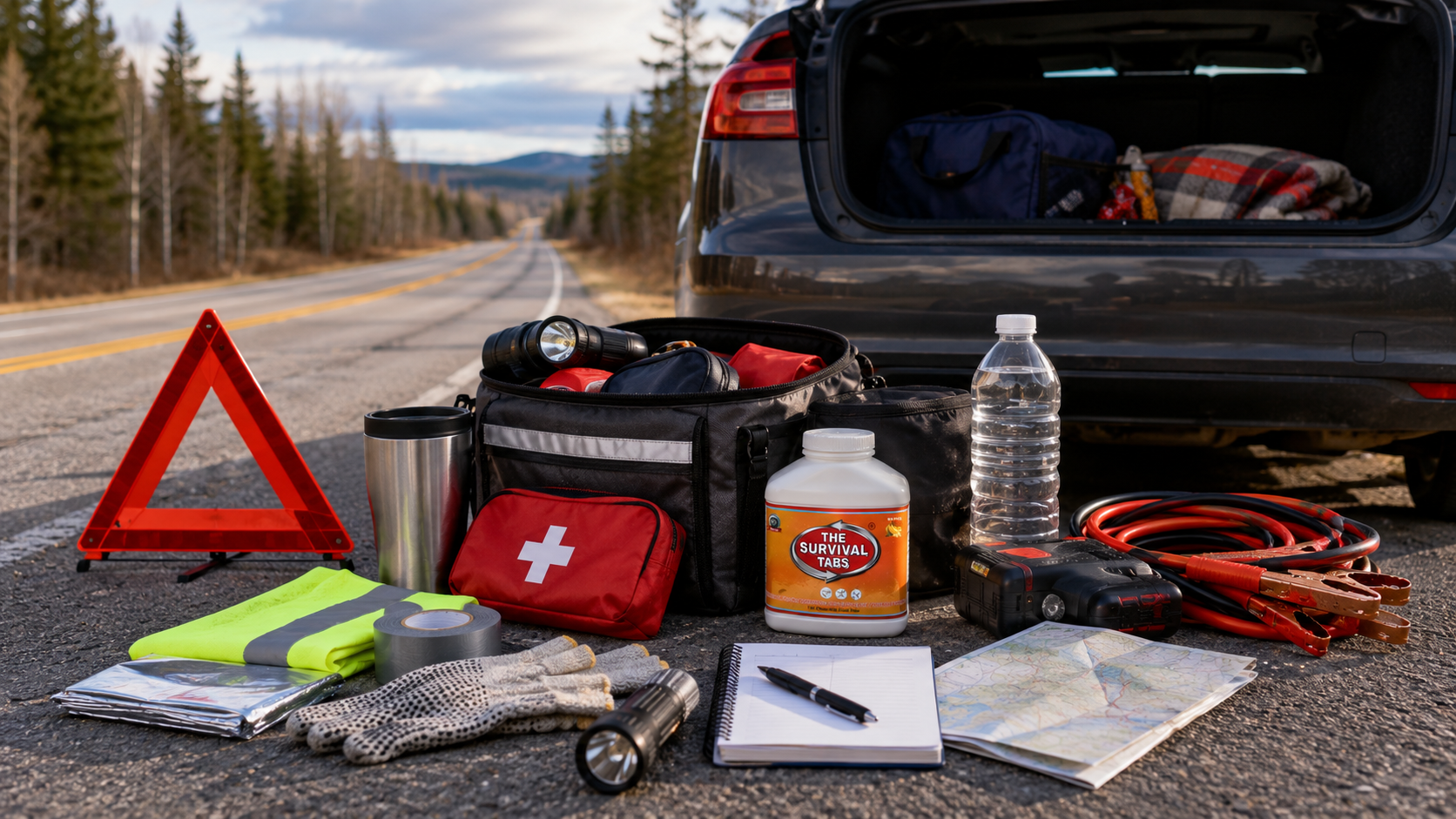
A practical vehicle-ready checklist for breakdowns, delays, severe weather, and evacuation travel
A car emergency kit should help you stay visible, communicate, handle minor problems, and remain safely sheltered until help arrives. Build it around your vehicle, climate, passengers, and typical routes—then inspect it on a schedule.
Quick-start checklist
Communication and information
- Fully charged phone and a vehicle charger or power bank
- Written emergency contacts, roadside-assistance details, and insurance information
- Paper map of your usual region and planned route
- Pen, waterproof notepad, and a copy of essential medical information
Visibility and roadside safety
- Reflective warning triangles or other legal warning devices
- Reflective vest and bright cloth or white flag
- Flashlight or headlamp with spare batteries
- Roadside flares only where legal and safe to use; keep them away from fuel, dry vegetation, and traffic
Basic vehicle recovery and repair
- Jumper cables or a vehicle-compatible jump pack
- Tire-pressure gauge, properly inflated spare tire, jack, lug wrench, and a stable ground mat
- Basic tools, work gloves, duct tape, and shop towels for temporary, minor repairs
- Tow strap only if it is correctly rated and you know the vehicle manufacturer’s approved attachment points
- Small fire extinguisher rated for automotive use, securely mounted and within its service date
Personal needs
- First-aid kit and any necessary medicines
- Drinking water and compact, nonperishable food
- Emergency blankets, rain protection, sturdy footwear, and a change of clothes
- Sanitation supplies, tissues, wipes, and sealable bags
- Passenger-specific supplies for children, older adults, disabilities, and pets
What belongs in the core kit
1. Communication
A phone is the fastest way to request help, but coverage and battery life can fail. Keep a charging cable that fits the vehicle, a charged power bank, and written contact information. Download offline maps before remote trips. Tell someone your route and expected arrival time when conditions or distance make a delay more consequential.
2. Warning and visibility equipment
A disabled vehicle is especially dangerous when other drivers cannot see it. If you can move the car safely, pull as far from moving traffic as practical, turn on hazard lights, set the parking brake, and stay behind a protective barrier when one is safely accessible. Place warning devices only when you can do so without entering traffic. Follow local law and emergency-service instructions.
3. Tire and battery equipment
A kit cannot compensate for neglected maintenance. Know where the jack points are, confirm the spare is usable, and keep the owner’s manual in the car. Never work under a vehicle supported only by a jack. If the location, traffic, weather, or damage makes a repair unsafe, call for professional help.
4. First aid and medicines
Carry supplies you know how to use. A basic kit can cover minor cuts, scrapes, and burns while you wait for professional care. Keep prescribed medicines with the person who needs them when heat, cold, theft, or expiration makes permanent car storage unsafe. Call emergency services for serious injuries, breathing trouble, uncontrolled bleeding, chest pain, signs of stroke, or other life-threatening conditions.
5. Water and emergency food
Water is essential, but vehicle temperatures can damage containers and reduce quality. Use sealed, durable containers, protect them from contamination, and rotate them regularly. Add nonperishable foods that tolerate your climate and require no cooking. The Survival Tabs can serve as a compact supplemental emergency-food option; follow the current package directions and storage guidance, and do not treat any single food as a substitute for water or a complete long-term plan.
6. Clothing and shelter
Pack for the conditions outside the vehicle, not the temperature at departure. A lightweight core can include an emergency blanket, rain shell, gloves, hat, socks, and sturdy footwear. Add region-specific layers before travel. Avoid candles, charcoal devices, camping stoves, and other combustion equipment inside a vehicle because of fire and carbon-monoxide danger.
Seasonal and regional modules
Winter module
- Snow shovel, ice scraper, and brush
- Sand or non-clumping cat litter for traction
- Insulated blankets or sleeping bag, warm layers, hats, gloves, and boots
- Extra windshield-washer fluid suitable for freezing temperatures
- Tire chains or traction devices when legal, appropriate, and compatible with the vehicle
The National Highway Traffic Safety Administration recommends winter supplies including a shovel, scraper, abrasive traction material, jumper cables, flashlight, warning devices, blankets, phone and charger, water, food, and necessary medicine.
Hot-weather module
- Extra drinking water stored and rotated for high heat
- Sun protection, hat, light long-sleeved clothing, and cooling towels
- Work gloves for hot surfaces and roadside tasks
Never leave a child, dependent adult, or animal in a parked vehicle, even briefly. Do not rely on cracked windows to control dangerous heat.
Remote-road or evacuation module
- Additional water and food based on occupants, route, and expected rescue time
- Offline maps, local emergency numbers, and a route-sharing plan
- Vehicle-compatible recovery equipment and a portable air compressor
- Dust protection, eye protection, and region-specific items where appropriate
A car kit should support evacuation travel, but it should not be your entire household emergency plan. Keep larger home supplies and a portable go-kit ready separately.
If you become stranded
- Get out of moving traffic if the vehicle can be moved safely. Turn on hazard lights and set the parking brake.
- Call emergency services or roadside assistance and give your location, vehicle description, direction of travel, and known hazards.
- Stay with the vehicle when it provides the safest shelter and is easier for rescuers to find. Leave only when remaining creates a greater danger, such as fire, rising water, unstable ground, or an exposed traffic lane.
- In snow, keep the exhaust pipe clear before running the engine. Follow current emergency guidance, open a window slightly when advised, and conserve fuel. Carbon monoxide is colorless and odorless; dizziness, weakness, nausea, chest pain, or confusion require immediate fresh air and emergency help.
- Stay visible without standing in traffic. Use hazard lights, reflective gear, a bright cloth, and warning devices when placement is safe.
- Conserve phone power, water, warmth, and food while updating rescuers or your emergency contact.
Vehicle storage and organization
Use a sturdy, closed container that cannot become a projectile during sudden braking or a crash. Secure heavy items low in the cargo area. Keep the flashlight, reflective vest, phone charger, medical information, and warning devices accessible without unpacking the entire vehicle.
Separate the kit into labeled modules: roadside safety, tools, first aid, water and food, clothing, and seasonal gear. A simple inventory card makes inspections faster. Do not store fuel, leaking batteries, loose blades, or hazardous chemicals in an improvised kit.
Maintenance schedule
Monthly
- Confirm the phone cable and charger work
- Check flashlight and power-bank charge
- Look for leaking, swollen, corroded, or damaged items
Seasonally and before long trips
- Adjust clothing, water, traction, and weather gear
- Check tire pressure, spare tire, fluids, wipers, lights, and battery condition
- Review route risks and replace expired food, water, medicine, and first-aid supplies
Annually
- Empty the container, clean it, test reusable equipment, and update the inventory
- Confirm passenger needs, emergency contacts, insurance details, and roadside-assistance information
- Practice locating the jack points and using equipment safely before an emergency
How to choose a ready-made car kit
Commercial kits can be a useful starting point, but marketing labels such as “100-piece” or “all-in-one” do not prove suitability. Evaluate the contents, not the item count.
- Choose a kit with clearly specified, vehicle-appropriate tools and warning equipment.
- Confirm cables, tire tools, tow equipment, and jump packs match your vehicle.
- Replace low-quality or unfamiliar medical items with supplies you understand.
- Add water, food, medicines, clothing, and passenger-specific items separately.
- Avoid relying on unverified product rankings or a year-specific “best kit” list.
Final check
A dependable car emergency kit is compact enough to remain in the vehicle, complete enough for realistic delays, and simple enough to inspect. Start with communication, visibility, basic vehicle equipment, first aid, water, food, and shelter. Add seasonal modules, secure everything, and review the kit before long trips and major weather changes.
Sources
NHTSA Summer Driving & Road Trip Tips
National Weather Service: Prepare for Cold Weather
National Weather Service: What to Do During a Winter Storm
CDC Carbon Monoxide Poisoning Basics
The Survival Tabs official product guidance
Legacy consolidation record
This guide consolidates legacy records ST-0050, ST-0053, and ST-0178. Product-ranking claims and year-specific “best kit” language were not carried forward; the replacement is organized around authoritative safety guidance and practical kit maintenance.