

Camping Bug and Pest Prevention Guide
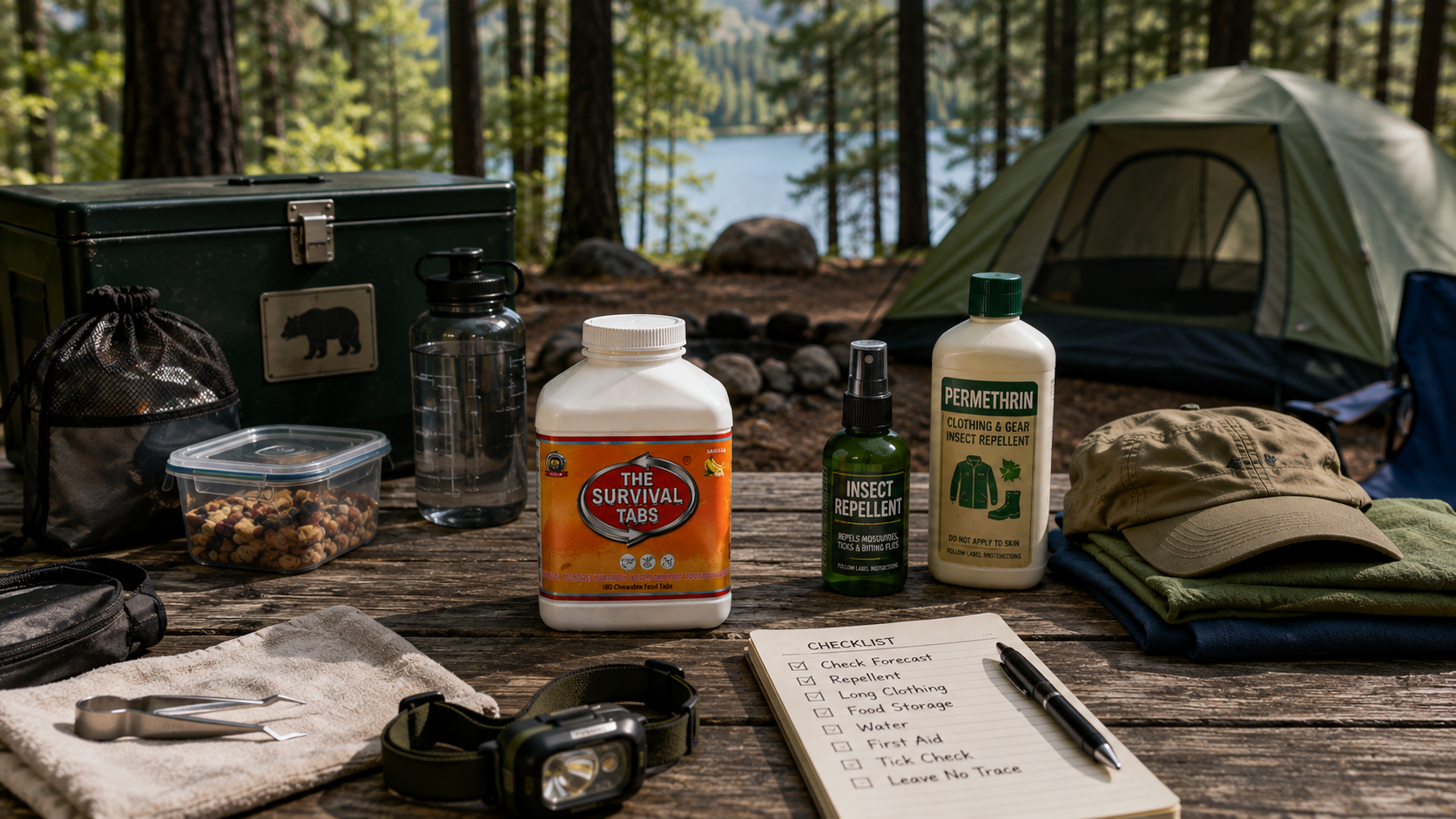
A practical, evidence-based guide to reducing mosquitoes, ticks, rodents, and other campsite pests
Camping should feel restorative, not like a constant battle with insects and animals. The most reliable approach is a layered system: choose the site carefully, keep food and waste controlled, use physical barriers, select registered repellents, inspect for ticks, and follow local rules.
This guide replaces unsupported claims about coffee grounds, mint, homemade essential-oil blends, and other “natural” remedies. Some plant-derived ingredients appear in registered products, but a homemade mixture is not automatically tested for safety, effectiveness, or duration.
No method removes every risk. Conditions, species, weather, location, individual health, and product use all matter. Follow the product label and the instructions of the land manager responsible for your campsite.
Quick-start checklist
- Check official alerts, insect activity, weather, and campsite rules before leaving.
- Pack an EPA-registered repellent suitable for mosquitoes, ticks, or both.
- Bring long sleeves, long pants, socks, closed shoes, and a hat.
- Use a tent or shelter with intact screens and a floor or ground barrier.
- Carry a tick-removal tool or fine-tipped tweezers.
- Store food, trash, toiletries, and scented items exactly as local rules require.
- Keep cooking and sleeping areas clean and separate where required.
- Inspect people, clothing, pets, and gear for ticks after outdoor activity.
- Know where to get medical help if a bite, sting, or illness becomes serious.
1. Understand the real problem
“Bugs and pests” is a broad category. Different problems require different controls.
Biting insects and ticks
Mosquitoes, ticks, biting flies, fleas, and other arthropods may cause discomfort and can transmit disease in some places. Prevention should focus on avoiding bites rather than trying to eliminate every insect in the area.
Food-seeking animals
Mice, rats, squirrels, raccoons, bears, and other wildlife may be attracted by food, trash, cooking residue, pet food, toothpaste, sunscreen, deodorant, or other scented items. Food-storage rules protect people, food, equipment, and wildlife.
Stinging insects
Bees, wasps, hornets, and ants may defend nests or forage around food and sweet drinks. Distance, closed containers, clean tables, and calm movement are safer than disturbing a nest.
Indoor or shelter pests
Cabins, trailers, and tents can develop ant, cockroach, flea, bed bug, or rodent problems. Cleanliness helps, but an established infestation may require the property owner or a qualified pest professional.
2. Plan before the trip
Research the location
- Review the campground or park website for alerts, closures, wildlife rules, and required food-storage methods.
- Check whether ticks, mosquitoes, fleas, or other disease vectors are active in the area and season.
- Ask whether food lockers, bear-resistant containers, screened shelters, or treated bed nets are needed.
- Confirm rules for pets, pesticides, campfires, waste disposal, and greywater.
- Identify the nearest ranger station, urgent-care clinic, or emergency department.
Pack a layered prevention kit
- EPA-registered skin repellent with enough quantity for the trip.
- Long, light-colored clothing that makes ticks easier to see.
- Permethrin-treated clothing or gear when appropriate and used exactly as labeled.
- Head net or bed net for locations with heavy insect pressure.
- Fine-tipped tweezers, mirror, flashlight, soap, and clean water.
- Resealable food containers and trash bags compatible with local wildlife rules.
- Basic first-aid supplies and any prescribed emergency medication.
People with severe allergies should follow their clinician’s plan and make sure companions know where emergency medication is stored and how to call for help.
3. Choose and set up the campsite
Select the site carefully
- Use designated sites whenever possible.
- Avoid standing water, dense brush, animal burrows, obvious nests, and piles of food waste.
- Do not camp directly on animal trails or beside carcasses.
- Look above and around the site for nests before unpacking.
- Follow all local distance rules for water, cooking, food storage, and sleeping.
Create clean zones
Organize the site so food preparation, eating, waste, and sleeping do not blend together. In some areas, local rules require substantial separation. The land manager’s directions take priority over general advice.
- Keep the sleeping area free of food, wrappers, dishes, trash, and scented toiletries.
- Clean spills and crumbs immediately.
- Wash cookware and store it after use.
- Keep drink containers closed when not in use.
- Do not leave pet food or bowls out overnight.
- Inspect doors, screens, zippers, seams, and the shelter floor before dark.
4. Prevent mosquito and biting-insect bites
Use registered repellents
Choose an EPA-registered product labeled for the pest and use you need. The label tells you where it may be applied, how often to reapply it, and what precautions apply.
Registered skin-applied active ingredients include options such as DEET, picaridin, IR3535, oil of lemon eucalyptus or PMD, and 2-undecanone. Product availability and directions differ. Choose by label, pest, protection time, age restrictions, and personal needs—not by marketing claims.
- Apply only to exposed skin or clothing as the label directs.
- Do not apply beneath clothing.
- Avoid eyes, mouth, cuts, wounds, and irritated skin.
- For the face, apply to hands first and then spread carefully if the label permits.
- Wash treated skin after returning indoors or when protection is no longer needed.
- An adult should apply repellent to children according to label directions.
- Do not let children handle the product or apply it to their hands.
Use clothing and shelter barriers
- Wear long sleeves, long pants, socks, and closed shoes where conditions allow.
- Tuck pants into socks in high-tick areas if practical.
- Repair holes in tent mesh and keep zippers closed.
- Use a properly fitted bed net when sleeping without screened protection.
- Use fans in powered campsites when practical; air movement may make it harder for mosquitoes to land, but it is not a complete control.
Permethrin-treated clothing and gear
Permethrin products are for clothing and gear only when the label says so; they are not for direct application to skin. Follow treatment, drying, washing, and retreatment instructions exactly. Keep treated products away from cats while wet and follow all pet-related label precautions.
5. Prevent tick bites
Reduce contact
- Walk near the center of trails.
- Avoid brushing against tall grass, leaf litter, and dense vegetation when possible.
- Use protective clothing and an appropriate registered repellent.
- Keep packs and clothing off brush and the ground when practical.
Check after exposure
- Inspect the whole body, including hairline, scalp, ears, armpits, waist, groin, behind knees, and between toes.
- Check children, companions, and pets.
- Examine clothing, tents, packs, and other gear.
- Shower soon after returning when facilities are available.
- Follow current CDC directions for drying or washing clothing to address ticks.
Remove an attached tick
- Use clean, fine-tipped tweezers.
- Grasp the tick as close to the skin’s surface as possible.
- Pull upward with steady, even pressure. Do not twist or jerk.
- Clean the bite area and your hands.
- Record the date and location of the bite and monitor for symptoms.
Do not rely on petroleum jelly, heat, nail polish, or other folklore methods. Seek medical advice if you develop fever, rash, severe headache, unusual fatigue, spreading redness, or other concerning symptoms after a tick bite.
6. Control food, trash, and scented items
Food control is one of the strongest ways to prevent campsite pest problems. The exact method depends on local wildlife and land-management rules.
- Use provided food lockers when required.
- Use approved animal-resistant containers where required.
- Treat trash, pet food, cookware, coolers, beverages, and scented toiletries as attractants.
- Never leave food or a pack containing food unattended.
- Do not store food in a tent or sleeping shelter.
- Do not assume a cooler, tote, vehicle, or hanging method is acceptable unless local guidance allows it.
- Pack out all trash and food scraps when disposal is unavailable.
Rules designed for bears also reduce access by rodents and other animals. Never feed wildlife, even accidentally.
7. Rodent prevention in cabins, tents, and vehicles
Prevent access
- Close doors, windows, screens, vents, hatches, and vehicle openings.
- Keep food in secure containers and clean crumbs from seats, floors, drawers, and storage bins.
- Do not leave nesting material, open paper products, or pet food accessible.
- Inspect stored gear before reuse.
If you find rodent evidence
Droppings, gnaw marks, nesting material, or damaged food packaging indicate a sanitation and access problem. Do not sweep or vacuum dry rodent urine, droppings, or nesting material because that may stir contaminated particles into the air.
Ventilate enclosed spaces and follow current CDC instructions for wet disinfection and cleanup. Discard contaminated food. If the problem is in a rented cabin or campground facility, notify management.
8. Stinging insects, ants, and other pests
Bees, wasps, and hornets
- Do not disturb nests or block an entrance.
- Keep sweet drinks and food covered.
- Check cans and cups before drinking.
- Move away calmly if insects become defensive.
- Contact the land manager rather than attempting nest removal.
Ants and crawling insects
- Keep food sealed and surfaces clean.
- Move the camp setup away from active trails or nests when allowed.
- Do not spread pesticide powders or sprays on public land unless permitted and labeled for that use.
- Check shoes, clothing, towels, and bedding before use.
9. Pets and pest prevention
Dogs and other pets can carry ticks and fleas into tents, vehicles, and homes. Use only veterinarian-recommended products intended for the animal’s species, size, age, and health status.
- Never use a dog-only pesticide on a cat.
- Check pets for ticks after outdoor activity.
- Store pet food with human food under the same wildlife rules.
- Keep pets away from nests, burrows, carcasses, and wildlife.
- Follow leash and campground rules.
10. What not to rely on
Homemade sprays, coffee grounds, smoke, dryer sheets, bracelets, sound devices, and casually mixed essential oils should not replace registered repellents, barriers, hygiene, and site management.
“Natural” does not mean harmless. Concentrated oils may irritate skin, trigger allergies, harm pets, damage gear, or provide unreliable protection. Never ingest essential oils or apply a homemade pesticide mixture to children or animals.
Citronella, oil of lemon eucalyptus, and other plant-related ingredients should be judged by the specific finished product and label. A registered, tested formulation is not equivalent to a household recipe containing a similarly named ingredient.
11. Responding to bites and stings
Routine minor reactions
Move away from the exposure, wash the area, and use basic first-aid measures appropriate to the person. Avoid scratching. Follow a clinician’s advice for medicines, especially for children, pregnancy, chronic conditions, or possible interactions.
Get urgent help
- Difficulty breathing, wheezing, or throat tightness.
- Swelling of the lips, tongue, face, or neck.
- Fainting, confusion, severe weakness, or rapidly spreading hives.
- Multiple stings, a sting inside the mouth, or a bite from a medically important animal.
- High fever, severe headache, neurological symptoms, or a concerning rash after an insect or tick exposure.
Call emergency services for signs of anaphylaxis or another life-threatening reaction. Use prescribed epinephrine immediately according to the person’s emergency plan; do not delay while waiting to see if symptoms improve.
12. End-of-trip inspection
- Check every person and pet for ticks.
- Inspect and clean clothing, sleeping bags, tents, packs, coolers, and vehicles.
- Remove all food, crumbs, trash, and scented products from storage areas.
- Dry damp gear completely before long-term storage.
- Record damaged mesh, leaking containers, or missing supplies for replacement.
- Seek medical advice for delayed symptoms after a bite or sting.
Frequently asked questions
Are essential oils effective mosquito repellents?
Some active ingredients derived from plants are used in registered products. That does not validate every essential oil or homemade blend. Use a registered product with a label that specifies the pest, application method, and protection directions.
Can I use permethrin on my skin?
No. Permethrin repellent products for campers are used on clothing and gear only as the label directs. Use a skin-applied repellent that is specifically labeled for human skin.
Should food be kept in the tent?
No. Follow local food-storage rules and keep food, trash, cookware, and scented items out of sleeping areas.
Does smoke keep mosquitoes away?
Smoke may change insect behavior locally, but it is inconsistent and introduces fire and air-quality risks. It should not replace registered repellents, clothing, screening, and other proven controls.
What if the campsite already has rodents or insects?
Protect food, avoid dry cleanup of rodent contamination, document the problem, and notify the campground or property manager. Move sites if conditions are unsafe and rules permit.
How often should repellent be reapplied?
Follow the product label. Protection time differs by product, active ingredient, concentration, activity, temperature, water exposure, and perspiration.
Limitations and compliance notes
- This article provides general preparedness information, not medical diagnosis or treatment.
- Pesticide labels are legal directions; use products only as labeled.
- Local park, campground, wildlife, fire, and waste rules take priority.
- Disease risks and recommended precautions vary by location and can change.
- People with allergies, pregnancy, chronic illness, or concerns about children should consult an appropriate health professional.
- Product claims should be limited to verified manufacturer information and should never substitute for public-health guidance.
Official sources
EPA — Find the Repellent That Is Right for You
EPA — Repellents: Protection Against Mosquitoes, Ticks and Other Arthropods
EPA — Repellent-Treated Clothing
EPA — Tips to Prevent Mosquito Bites
CDC — What to Do After a Tick Bite
CDC — How to Clean Up After Rodents
National Park Service — Food Storage Guidance
Editorial approach: calm, education-first, evidence-based, and free of fear-based or unsupported product claims.