

Campfire and Wilderness Fire Safety Guide
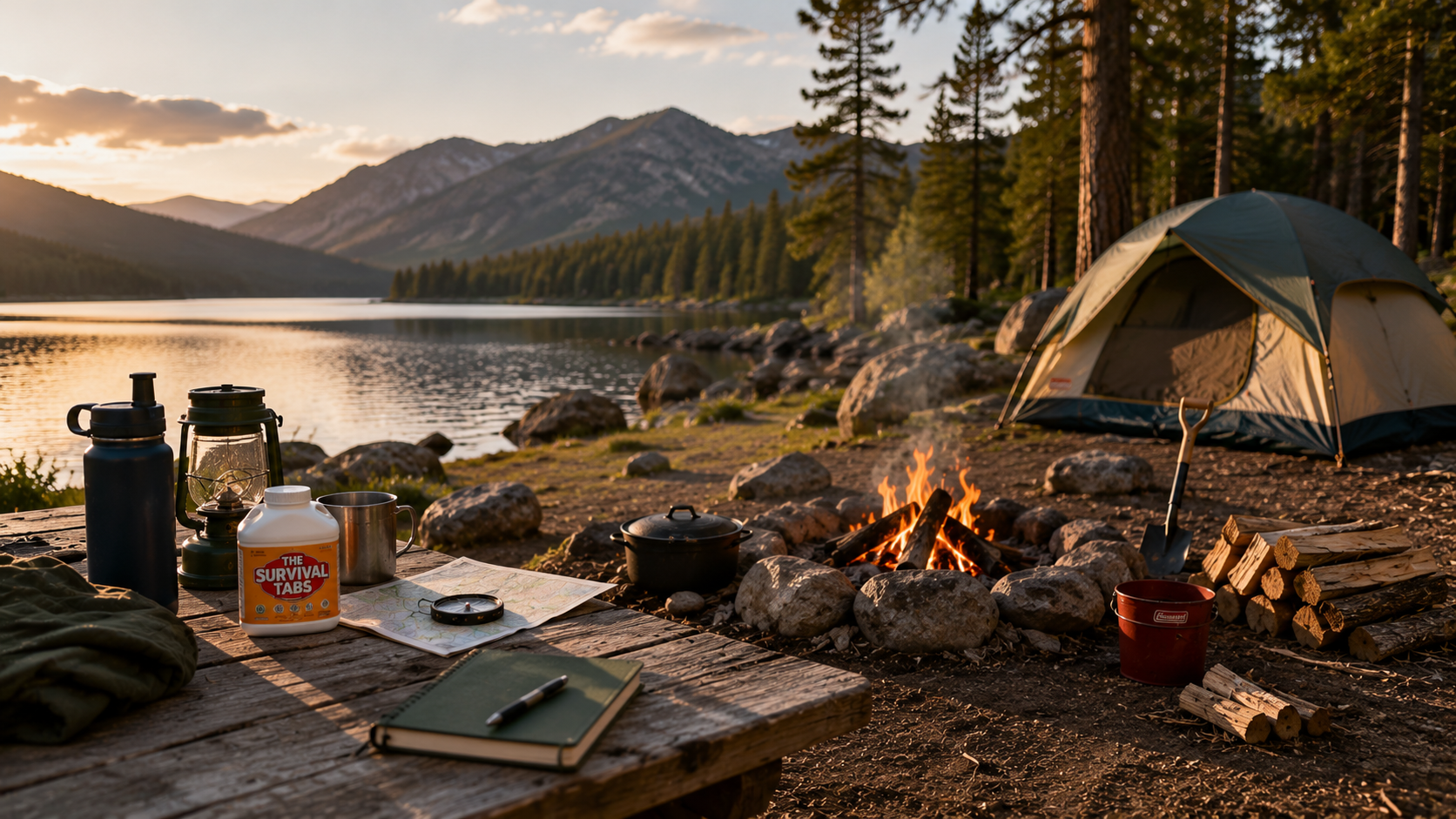
A safety-first guide to deciding whether to have a fire, using one responsibly when permitted, and leaving it completely cold.
Prepared for the Survival Tabs Knowledge Center
Campfire Safety Starts Before a Match Is Lit
A campfire can provide warmth, light, and a place to cook, but it is never automatically necessary. In dry, windy, crowded, smoky, or restricted conditions, the safest fire is no fire.
This guide replaces legacy firecraft material with a decision system. It does not teach primitive ignition challenges, accelerant use, underground fires, fuel production, or methods designed to defeat restrictions.
Local rules, posted closures, permit conditions, weather, and instructions from land managers or emergency officials always take priority over general guidance.
Quick decision: should you have a fire?
* Check the current fire restriction, closure, permit, and campground rules for the exact location.
* Check wind, drought, fire-danger, and Red Flag Warning conditions.
* Use an established fire ring or approved appliance when the site requires one.
* Choose a stove, cold meal, extra clothing, or other no-fire alternative when risk is elevated.
* Do not light a fire if you cannot remain with it continuously.
* Do not light a fire unless sufficient water and a shovel are already at hand.
* Do not light a fire near dry grass, low branches, roots, tents, vehicles, fuel, or other combustibles.
* Do not light a fire if anyone in the group cannot safely avoid flame, sparks, smoke, or hot surfaces.
* Do not light a fire simply because a previous visitor left a ring.
* Do not assume rain, snow, darkness, or a short burn time makes a fire safe.
1. Authority, Restrictions, and Conditions
Verify the exact location
Rules can change by agency, jurisdiction, season, elevation, campground, and day. A fire that is legal at one site may be prohibited a short distance away.
* Identify who manages the land: federal, state, tribal, county, municipal, private, or campground operator.
* Use the managing agency’s current website, posted notice, ranger station, permit office, or official alert.
* Confirm whether wood fires, charcoal, solid-fuel stoves, alcohol stoves, gas stoves, candles, and smoking are treated differently.
* Confirm whether fires are limited to installed metal rings or developed sites.
* Ask whether a permit is required and whether it must be carried.
* Check the effective time and geographic boundary of any restriction.
* Save the information offline when traveling beyond reliable service.
* Recheck on the day of use; yesterday’s answer may be obsolete.
Treat uncertainty as a no-fire decision
If rules cannot be verified, do not improvise. Use a no-flame meal plan or an appliance explicitly allowed by the responsible authority.
Never interpret survival language as permission to ignore a lawful closure. In a genuine life-threatening emergency, contact emergency services or land managers as soon as possible and follow their direction.
Conditions that should stop the plan
* An active fire ban, closure, or evacuation order.
* Strong, gusty, or shifting wind.
* Very high or extreme fire danger.
* Dry grass, needles, leaves, peat, duff, roots, or other hidden fuel around or beneath the site.
* Low branches, overhanging vegetation, tents, tarps, vehicles, structures, or power lines.
* Insufficient water for full extinguishment.
* No responsible adult able to supervise continuously.
* Smoke-sensitive people nearby or poor local air quality.
* A location where embers could roll downhill or blow into vegetation.
* Any uncertainty about whether the fire can be left cold before departure.
2. Choose a Lower-Risk Alternative
A fire is often a comfort, not a necessity. Plan alternatives before the trip so a restriction or weather change does not become a crisis.
* Bring food that can be eaten cold.
* Use an allowed pressurized-fuel stove with an on/off valve only where and when permitted.
* Carry layered clothing, rain protection, an insulated sleeping system, and an emergency blanket for warmth.
* Use a headlamp or lantern for light.
* Use a thermos prepared before travel for hot drinks or meals.
* Pack a power bank rather than relying on firelight or heat for device support.
* Shorten or relocate the outing when cold, wet, smoke, or wind creates unacceptable risk.
* Build group morale with conversation, games, or stargazing instead of a fire.
An allowed stove is not risk-free. It still requires stable placement, clear space, ventilation, fuel handling, supervision, and compliance with current restrictions.
3. Site Selection and Setup
Use established infrastructure
Prefer an installed metal ring, grill, or established site specifically authorized by the land manager. Do not create a new ring merely because the ground appears bare.
* Clear loose combustible material as required by the site rules.
* Look up for branches, dead limbs, and sparks’ possible travel path.
* Look down for roots, organic soil, duff, peat, and cracks that can hide heat.
* Look around for tents, packs, clothing, chairs, vehicles, fuel bottles, and foot traffic.
* Keep the fire small enough to control with the water and tools on hand.
* Position seating to preserve a clear walking route.
* Keep a first-aid kit and communication method accessible.
* Place water and shovel where they can be reached without crossing the fire.
Do not build hazardous fire structures
This guide does not preserve legacy instructions for bean-hole fires, trench fires, underground fires, large reflector fires, improvised fireplaces, or other constructions that can spread heat into soil, roots, or vegetation.
Do not move rocks from streams or use wet or porous rocks near intense heat; heated rocks can fracture. Follow the site’s established design instead of rebuilding it.
4. Fuel and Ignition Boundaries
Use only permitted fuel
* Use locally permitted firewood or fuel.
* Follow rules intended to prevent movement of invasive insects and diseases.
* Do not cut live vegetation.
* Do not strip branches from standing trees.
* Do not burn trash, food packaging, treated or painted wood, plastics, batteries, pressurized containers, glass, foil, or hazardous material.
* Do not burn driftwood or gathered wood where collection is prohibited.
* Keep fuel quantity small and stop adding it well before departure.
* Return unused purchased wood according to local instructions; do not transport it to a new area without permission.
Ignition limits
Use a lawful, controlled ignition method suitable for the approved site. This article intentionally omits primitive friction-fire tutorials and performance-oriented “top ways to start a fire” lists.
* Never use gasoline or other volatile accelerants.
* Do not pour liquid fuel onto a fire or hot coals.
* Do not use fireworks, exploding targets, or improvised incendiary devices.
* Do not use ignition methods that throw sparks when restrictions prohibit them.
* Do not attempt wood distillation, charcoal making, or oil-from-wood processes.
* Stop if wind begins moving sparks outside the ring.
* Keep ignition tools secured from children.
* Store spare fuel away from the fire and according to its label.
5. Supervision and Group Safety
Assign one responsible attendant
A campfire must have continuous, active supervision. “Someone is nearby” is not the same as someone watching the fire.
* Name the responsible adult before lighting.
* Do not leave the fire for a short walk, bathroom trip, swim, meal, or sleep.
* Keep children and pets within direct control.
* Establish a no-running zone around the fire.
* Keep loose hair and clothing away from flame.
* Use long-handled tools appropriate for the site.
* Do not reach over the fire.
* Do not move burning wood outside the ring.
* Do not use alcohol, cannabis, medication, fatigue, or distraction as an excuse for reduced supervision.
* Extinguish the fire early if the group cannot maintain control.
Accessibility and individual needs
* Provide a stable, unobstructed route around the gathering area.
* Position mobility devices where heat, sparks, and soft ground will not create hazards.
* Use visual and verbal warnings for people with hearing or vision needs.
* Plan for asthma, heart or lung disease, pregnancy, sensory sensitivities, and other smoke-related concerns.
* Keep service animals and pets away from hot ground, coals, and sparks.
* Do not pressure anyone to remain near smoke or flame.
* Choose a no-fire gathering when the group cannot be accommodated safely.
6. Cooking, Warmth, and Smoke
Cooking
Cooking over a fire adds burn, food-safety, grease, and spill hazards. Use stable cookware and a setup intended for cooking; never balance heavy pots on uncertain rocks or branches.
* Keep pot handles and utensils away from walking paths.
* Use heat-resistant gloves or tools.
* Treat metal, grates, ash, cookware, and stones as hot long after flames fall.
* Keep raw and cooked food separate.
* Use a food thermometer where appropriate.
* Do not burn food waste or packaging.
* Control grease and do not apply water to a grease fire.
* Have a no-cook fallback if conditions become unsafe.
Warmth
Do not use a campfire as the primary protection against hypothermia. Clothing, shelter, insulation, dryness, and an appropriate sleeping system are more dependable.
Never bring a campfire, charcoal, grill, brazier, or fuel-burning appliance into a tent, camper, vehicle, shelter, or enclosed space. Fire and carbon monoxide can kill without warning.
Smoke
Smoke can irritate the eyes and lungs and can worsen respiratory and cardiovascular conditions. Reduce exposure, move upwind, and end the fire if smoke cannot be controlled.
* Do not assume visible smoke is the only hazard.
* Keep faces out of the smoke plume.
* Move children and smoke-sensitive people away promptly.
* Follow public-health and air-quality advisories.
* Seek urgent help for severe breathing difficulty, chest pain, confusion, fainting, or other emergency symptoms.
* Do not use this article to diagnose or treat smoke exposure.
7. Wet Weather and Wind
Rain does not cancel fire restrictions or eliminate wildfire risk. Fine fuels may dry quickly, sheltered fuels may remain combustible, and roots or duff can hold heat.
* Confirm that fires remain permitted.
* Use an established authorized site.
* Do not build beneath a tarp, tree canopy, rock overhang, or structure.
* Do not strip bark or damage live trees for tinder.
* Do not enlarge the fire to overcome rain or cold.
* Do not use extra accelerant.
* Stop if wind increases or changes direction.
* Choose shelter, dry clothing, food, and evacuation over a fire when exposure risk is rising.
8. Extinguish Completely
Plan backward from departure
Stop adding fuel early. Full extinguishment takes time and water. A fire is not out because flames have disappeared.
Drown, stir, feel, and repeat
* Pour plenty of water over all coals, embers, and burned material.
* Stir the coals and ash so hidden heat is exposed.
* Break apart large burned pieces when it can be done safely.
* Add more water.
* Stir again.
* Check the entire fire area for heat.
* Repeat until every part is cold.
* Do not leave while any heat, smoke, hissing, or glowing material remains.
* Do not bury hot coals or rely on dirt or sand alone.
* Do not scatter warm ash.
Follow the managing agency’s exact extinguishing method. Where touching is advised, approach cautiously and verify cold conditions without placing a hand into uncertain ash or coals.
Before leaving
* Confirm the fire is completely cold.
* Check beneath and around the ring for hidden embers.
* Check nearby vegetation and downwind areas for escaped sparks.
* Remove trash and food waste.
* Restore the site only as permitted.
* Report an escaped or abandoned fire immediately.
* Never assume another person will finish extinguishing it.
9. If the Fire Escapes
Do not take unsafe personal risks trying to suppress a spreading wildland fire. Warn others, move to safety, and call the appropriate emergency number or land manager immediately.
* Give the exact location, route, landmarks, and coordinates if available.
* Describe fire size, direction of spread, wind, smoke, nearby people, and access limits.
* Follow evacuation instructions.
* Do not block emergency vehicles.
* Do not return for equipment.
* Do not enter smoke, steep terrain, or fast-moving fire.
* Preserve relevant information for officials, but do not delay the emergency call.
10. Burns and Medical Emergencies
Burns, smoke exposure, falls, cuts, and eye injuries require appropriate first aid and medical judgment. This section provides preparedness boundaries, not individualized treatment.
* Call emergency services for severe burns, breathing problems, loss of consciousness, electrical injury, extensive burns, or any situation that appears life-threatening.
* Move away from the source only when it is safe to do so.
* Do not apply butter, oil, toothpaste, or unverified remedies to a burn.
* Do not break blisters.
* Do not remove material stuck to burned skin.
* Use official first-aid guidance and seek professional medical advice.
* Document allergies, medications, emergency contacts, and access needs before remote travel.
* Know the evacuation route and expected response limitations.
11. Children, Pets, and Group Leadership
* Teach that matches and lighters are adult tools.
* Keep ignition devices physically secured.
* Set clear boundaries before the fire starts.
* Use a dedicated adult supervisor for young children.
* Do not allow stick waving, running, pushing, or games near the fire.
* Do not let children add fuel.
* Use leashes or other appropriate control for pets.
* Check paws and mobility equipment for contact with hot ash.
* Count everyone before leaving the site.
* End the activity when supervision, weather, or behavior becomes unsafe.
12. Leave No Trace and Resource Protection
* Use a stove when it can meet the need.
* Keep any permitted fire small.
* Use an established fire ring or other approved system.
* Follow local wood-collection rules.
* Do not damage live or standing vegetation.
* Do not leave foil, glass, melted plastic, food, or metal in ash.
* Do not build decorative rock rings.
* Do not scar new ground for convenience.
* Do not burn longer or larger than needed.
* Leave only after the site is cold, clean, and compliant.
13. Campfire Readiness Checklist
Before the trip
* Land manager identified.
* Restrictions and closure source saved.
* Permit obtained if required.
* No-fire meal plan packed.
* Allowed stove checked if carried.
* Weather and fire danger checked.
* Water capacity sufficient for extinguishing.
* Shovel or required tool packed.
* First-aid kit packed.
* Communication and location tools packed.
* Group medical and accessibility needs reviewed.
* Departure time allows full extinguishment.
At the site
* Rules rechecked.
* Established approved ring selected.
* Ground, overhead, and surrounding hazards checked.
* Wind acceptable.
* Water and shovel placed within reach.
* Responsible attendant named.
* Children and pets controlled.
* Fuel legal and limited.
* No hazardous trash or accelerant present.
* Exit route remains clear.
Before departure or sleep
* No new fuel added near departure time.
* All coals and burned pieces drenched.
* All material stirred.
* Water added again.
* No glow, smoke, steam, or hissing remains.
* Entire area cold.
* Downwind area checked.
* Trash removed.
* Group counted.
* Site left only after final cold check.
14. Frequently Asked Questions
Is an existing fire ring always legal to use?
No. A ring can remain from an earlier season, an illegal fire, or a time before restrictions changed. Verify current rules.
Is a fire safe if it is raining?
Not automatically. Restrictions still apply, wind may change, and hidden fuels can hold heat. Rain is not a substitute for supervision and complete extinguishment.
Can dirt or sand put out a campfire?
Do not rely on dirt or sand alone. Official campfire guidance emphasizes water, stirring, repeated cooling, and confirming that the site is cold.
Can I leave glowing coals for the next group?
No. Never transfer responsibility to unknown visitors. Leave the fire completely out and cold.
What if water is scarce?
If you cannot reserve enough water for complete extinguishment, do not start the fire. Drinking-water needs also take priority.
Can I burn trash?
No. Trash can release harmful fumes, leave sharp debris, damage the site, and create unpredictable sparks or explosions.
Are underground or bean-hole fires safer in wind?
This guide does not recommend them. They can conceal heat and spread into roots or organic soil, and they may violate local rules.
Should I build a larger fire when cold or wet?
No. Solve cold and wet exposure with shelter, dry layers, insulation, food, and evacuation decisions. A larger fire increases control problems.
Can a campfire be used inside a tent or shelter?
No. Open flame, smoke, and carbon monoxide make tents, vehicles, campers, and enclosed shelters dangerous locations for fires or charcoal.
When should I call for help?
Call immediately for an escaped fire, a serious burn, breathing difficulty, loss of consciousness, or any life-threatening situation. Follow local emergency instructions.
15. Editorial and Professional Review Gate
* Wildland-fire or land-management review for restrictions, site selection, wildfire prevention, and suppression boundaries.
* Fire-safety review for ignition, supervision, extinguishment, cooking, fuel, and carbon-monoxide language.
* Clinical or burn-care review for injury and smoke-exposure guidance.
* Accessibility review for mobility, sensory, respiratory, and communication needs.
* Outdoor-education review for realistic group leadership and remote-area limitations.
* Legal review for jurisdiction-dependent restrictions, permits, liability, and emergency-reporting language.
Publication should not imply that following a checklist guarantees safety. Conditions change, local rules control, and outdoor fire always carries residual risk.
Official Sources
U.S. National Park Service — Campfires
U.S. Forest Service — Fire: Know Before You Go
Smokey Bear — Campfire Safety
Leave No Trace — Minimize Campfire Impacts
CDC — Wildfire and Wildfire Smoke Safety
Ready.gov — Preventing and Treating Burns
Source links should be rechecked during publication review because restrictions, agency pages, and public-health guidance can change.
End of ST-KC-039.