

Bulk Emergency Food Buying Guide
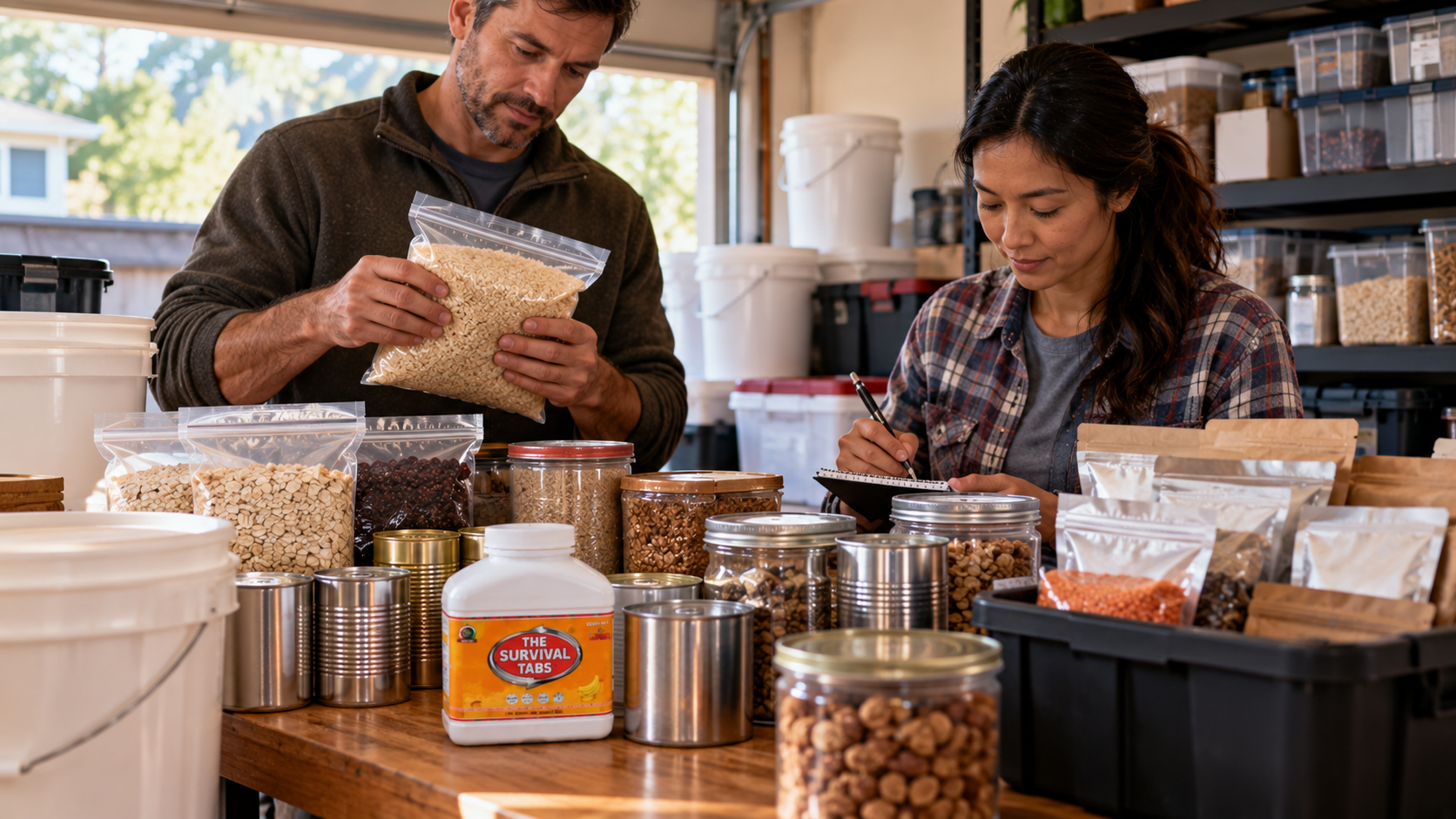
Bulk Emergency Food Buying Guide
Bulk buying can lower unit costs, but only when the food fits the household, storage conditions and realistic use. A large package is not savings if it expires, becomes contaminated or cannot be prepared.
Calculate usable cost
Compare price per calorie, serving and weight, but also include shipping, containers, preparation water, fuel and waste. Verify what the seller calls a “day” of food.
Buy familiar food first
Test smaller quantities before committing. Account for allergies, medical diets and household preferences.
Inspect storage capacity
Confirm dry, stable, pest-resistant space. Large packages may need safe portioning after opening; secondary containers do not restore a factory seal.
Diversify
Avoid one flavor, one nutrient profile or one supplier. Combine ordinary pantry food, no-cook choices and longer-life reserves.
Product comparison
Evaluate Survival Tabs by current price, calories, servings, shelf-life conditions and intended compact role. Do not compare package counts without calories or imply that compact nutrition replaces a complete pantry.