

Bug-Out Bag Guide
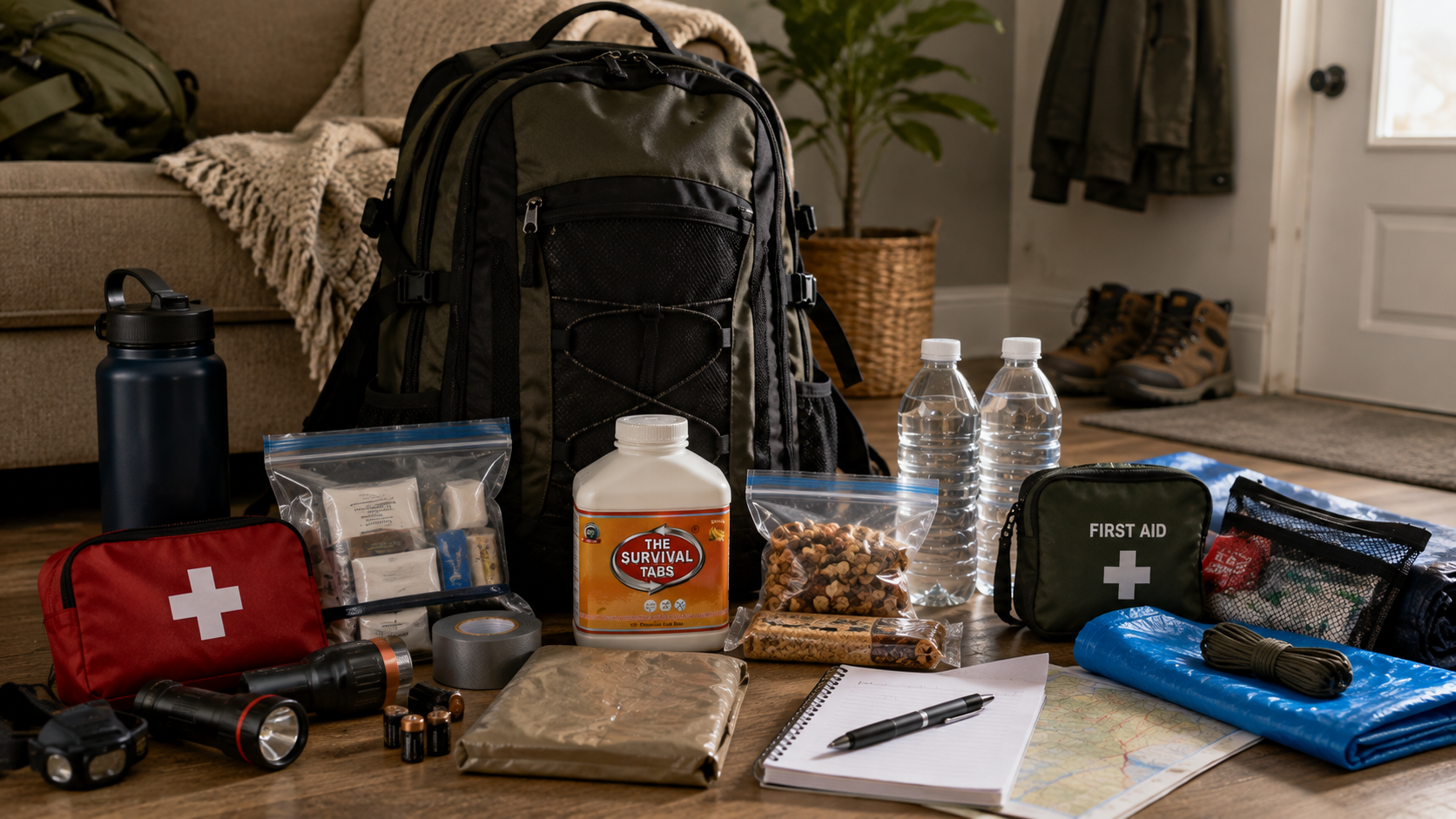
How to Build, Fit, Store, and Maintain a Practical Evacuation Bag
A bug-out bag is a portable emergency kit designed to help you leave quickly when authorities order an evacuation or when remaining where you are is unsafe. It is not a substitute for an evacuation plan, a home emergency supply, or professional instructions. Its purpose is simple: keep essential items together, portable, and ready to support a safe move to a shelter, hotel, family member’s home, or another planned destination.
The best bag is not the one with the most gear. It is the one you can actually carry, find quickly, and use under stress.
1. Start With the Evacuation Plan
Build the plan before buying equipment. Ready.gov recommends discussing your shelter plan, evacuation route, household communication plan, and emergency-kit needs in advance.
Before packing, answer these questions:
• What hazards could require evacuation where you live—wildfire, hurricane, flood, chemical release, earthquake damage, or another local emergency?
• Who will travel with you, including children, older adults, people with disabilities, and pets?
• Where could you go, and what are at least two routes?
• How will household members reconnect if separated?
• Which medicines, documents, devices, or mobility items cannot be replaced quickly?
• Will you travel by car, public transportation, bicycle, or on foot?
Always follow official evacuation orders and approved routes. A bug-out bag should help you leave; it should never delay departure while you search for extra items.
2. Choose the Right Bag
Use a durable backpack or other hands-free bag that fits the person carrying it. A school backpack can work if it is strong, comfortable, and large enough for essentials. Expensive tactical equipment is not required.
Look for:
• Two shoulder straps and, when possible, a chest or waist strap
• Strong zippers and reinforced seams
• A size that does not encourage overpacking
• Separate compartments or labeled pouches
• Some weather protection, or a waterproof liner
• A bright tag or identification label without displaying sensitive personal details
Test the loaded bag indoors and on a short walk. It should not interfere with balance, breathing, mobility aids, or the ability to assist another person. Children should carry only age-appropriate lightweight items; adults remain responsible for essential water, food, medicines, and documents.
3. Core Bug-Out Bag Checklist
Water
Water is heavy, so an evacuation bag must balance immediate needs with portability. Carry an amount you can safely manage, and keep additional emergency water at home and, if appropriate, in your vehicle.
Include:
• Sealed drinking water in manageable containers
• A reusable bottle
• A backup water-treatment method appropriate to your area and understood before an emergency
• Oral rehydration supplies only when recommended for your household and used according to directions
The CDC recommends storing at least one gallon of water per person per day for three days at home, and trying for a two-week home supply when possible. That full quantity is usually too heavy for one backpack. Do not treat filters or purification products as permission to drink from floodwater, chemically contaminated water, or any source authorities have declared unsafe.
Food
Pack compact, nonperishable food that requires little or no cooking, suits the people carrying it, and can be eaten during travel or at a shelter.
Good criteria are:
• Ready to eat
• Familiar and tolerated by the user
• Clearly dated
• Protected from crushing, moisture, and pests
• Appropriate for allergies, medical diets, infants, or other special needs
Examples may include shelf-stable bars, nut or seed products when allergies permit, dried fruit, crackers, pouches, and other compact emergency foods. The Survival Tabs may be included as one compact component of a broader emergency-food plan. Follow the product label and do not rely on any single food as a complete replacement for adequate calories, water, medical care, or a balanced diet.
Pack utensils and a manual can opener only if your selected foods require them. Avoid making your evacuation dependent on cooking fuel or an open flame.
Medicines, Health, and First Aid
Include:
• Essential prescription medicines in their original labeled containers when possible
• A written medicine list with doses, allergies, prescribers, and pharmacy details
• Basic first-aid supplies
• Spare glasses, contact-lens supplies, hearing-aid batteries, or other daily health items
• Masks appropriate for common public-health or smoke needs, following local guidance
• Hand sanitizer, soap, tissues, menstrual supplies, and basic hygiene items
• Sunscreen and insect repellent when relevant
Medication supply rules vary. Ask your clinician, pharmacist, and insurer how to maintain an emergency reserve safely. Never pack temperature-sensitive medicine without a plan for correct storage.
Documents and Money
Keep originals secured when possible and carry protected copies or encrypted digital backups of essential information.
Consider:
• Identification
• Insurance information
• Emergency contacts
• Medical information and prescriptions
• Proof of address
• Pet vaccination and ownership records
• A paper map and written destination details
• Small bills and coins
• Spare keys
Store paper copies in a waterproof pouch. Do not place every original document or all household cash in one easily lost bag.
Communication, Light, and Power
Include:
• Mobile phone and charging cable
• Charged power bank
• Battery-powered or hand-crank radio
• Flashlight or headlamp
• Spare compatible batteries stored safely
• Whistle
• Paper, permanent marker, and pencil
• Printed contact list
Download local emergency alerts and offline maps before a crisis. Conserve power by lowering screen brightness, closing unnecessary apps, and using airplane mode when communication is not required.
Clothing, Shelter, and Personal Protection
Select for local weather and likely destination:
• Change of socks and underwear
• Lightweight layers
• Rain protection
• Sturdy closed-toe footwear
• Work gloves
• Emergency blanket or compact sleep layer
• Hat and sun protection
• Small towel or bandana
Avoid packing heavy survival tools that you have not trained to use. Weapons, oversized blades, fuel, and hazardous materials may be prohibited in shelters, public transport, or evacuation centers and can create additional risk.
Navigation and Basic Tools
Useful items may include:
• Local paper map
• Compact multi-tool where lawful and appropriate
• Duct tape wrapped around a small card
• Cord
• Spare eyeglasses
• Small repair kit
• Trash bags and resealable bags
• N95 respirators when recommended for relevant hazards and properly fitted
Gear does not replace skills. Learn how each item works before placing it in the bag.
4. Customize for Every Household Member
Infants and Young Children
Add safe feeding supplies, diapers, wipes, clothing, comfort items, and age-appropriate identification. Follow current public-health guidance for infant feeding during emergencies; unsafe water can make feeding equipment dangerous.
Older Adults and People With Disabilities
Include the daily items the person actually uses: mobility-device accessories, communication cards, backup batteries, sensory supports, medical-device information, and instructions for anyone assisting. The CDC advises building a kit around individual needs.
Pets
Prepare a lightweight pet evacuation kit with food, water, bowls, medicine, leash or harness, carrier, sanitation supplies, identification, vaccination records, and a current photo. Identify pet-friendly evacuation destinations before an emergency. A larger shelter-in-place pet kit can remain at home while the evacuation version stays portable.
5. Pack by Priority
Organize the bag so the most urgent items are easiest to reach.
Top or outer pocket:
• Identification and emergency contacts
• Phone cable and power bank
• Flashlight
• Medicines needed during travel
• Mask, whistle, and small first-aid items
Middle:
• Food
• Clothing layers
• Hygiene kit
• Radio and tools
Close to the back:
• The heaviest dense items, secured so they do not shift
Bottom:
• Sleep layer
• Spare clothing
• Items unlikely to be needed immediately
Use waterproof pouches or resealable bags by category. Label them plainly: MEDICINE, DOCUMENTS, FOOD, POWER, HYGIENE. Avoid loose items that are hard to find in the dark.
6. Where to Store the Bag
Store the bag:
• Near a normal exit but away from floodwater, extreme heat, pests, and direct sunlight
• Where every responsible household member knows it is kept
• Clear of locked cabinets or clutter that could delay departure
• With shoes, keys, mobility aids, and pet carriers nearby
• Separate from household supplies that are too heavy to evacuate
If your risks and travel patterns justify it, keep smaller tailored kits at work or in a vehicle. Vehicle temperatures can damage food, water containers, batteries, and medicines, so inspect and rotate those items more often.
7. Maintenance Schedule
A packed bag is only useful if its contents still work.
Check the bag at least every six months and after any use. Also review it before local high-risk seasons.
Confirm:
• Food, medicines, batteries, and water are within safe dates
• Clothing still fits and matches the season
• Contact details, routes, documents, and pet records are current
• Power banks and devices are charged
• Flashlights, radios, and alarms operate
• Packaging is dry, sealed, and pest-free
• The total weight remains manageable
• Household medical and accessibility needs have not changed
Write the next inspection date on a tag attached to the bag. Replace used items immediately after a drill or evacuation.
8. Practice With the Bag
Run a calm household drill:
1. Send an agreed alert.
2. Put on shoes and collect essential daily-use items.
3. Pick up the bags and pet carriers.
4. Leave by the primary route.
5. Identify the backup route and meeting point.
6. Walk or carry the loaded bags far enough to test comfort.
7. Note what was missing, hard to find, unnecessary, or too heavy.
8. Correct the bag and plan the same day.
A drill should reveal friction, not create fear. Repeat whenever the household, address, transportation, or local risk changes.
9. What a Bug-Out Bag Cannot Do
A bug-out bag cannot make every route safe, replace official warnings, guarantee access to clean water, provide medical treatment, or support an indefinite period away from home. It is one part of a broader system that includes:
• A household emergency plan
• Home emergency food and water
• A vehicle emergency kit
• Insurance and document backups
• Local alerts
• Community contacts
• Skills and periodic practice
If officials say to shelter in place, follow that instruction unless your immediate location is unsafe. If ordered to evacuate, leave promptly using the recommended route.
Quick Final Checklist
Before you call the bag ready, verify:
• The evacuation plan and two routes are known
• The bag fits the carrier and can be lifted safely
• Water and ready-to-eat food are present
• Medicines and medical information are current
• Identification, contacts, cash, keys, and maps are protected
• Phone power, radio, and light are available
• Clothing and weather protection match local conditions
• Children, older adults, disabilities, and pets are covered
• The bag is labeled, accessible, and dated for inspection
• Everyone knows when to take it and when to follow shelter instructions instead
Sources and Further Guidance
Ready.gov — Build A Kit
https://www.ready.gov/kit
Ready.gov — Make A Plan
https://www.ready.gov/plan
CDC — How to Create and Store an Emergency Water Supply
https://www.cdc.gov/water-emergency/about/how-to-create-and-store-an-emergency-water-supply.html
CDC — Be Prepared in Case You Need to Evacuate
https://www.cdc.gov/natural-disasters/psa-toolkit/be-prepared-in-case-you-need-to-evacuate.html
CDC — Building an Emergency Kit for People With Disabilities
https://www.cdc.gov/disability-emergency-preparedness/people-with-disabilities/build-a-kit.html
CDC — Build a Pet Disaster Preparedness Kit
https://www.cdc.gov/healthy-pets/emergency-preparedness/preparedness-kit.html
National Weather Service — Emergency Supplies Kit
https://www.weather.gov/owlie/emergencysupplieskit
Editorial note: This guide provides general preparedness education. Follow local emergency-management instructions, product labels, and advice from qualified medical professionals for individual needs.