

Wildfire Smoke and Air Quality Preparedness Guide
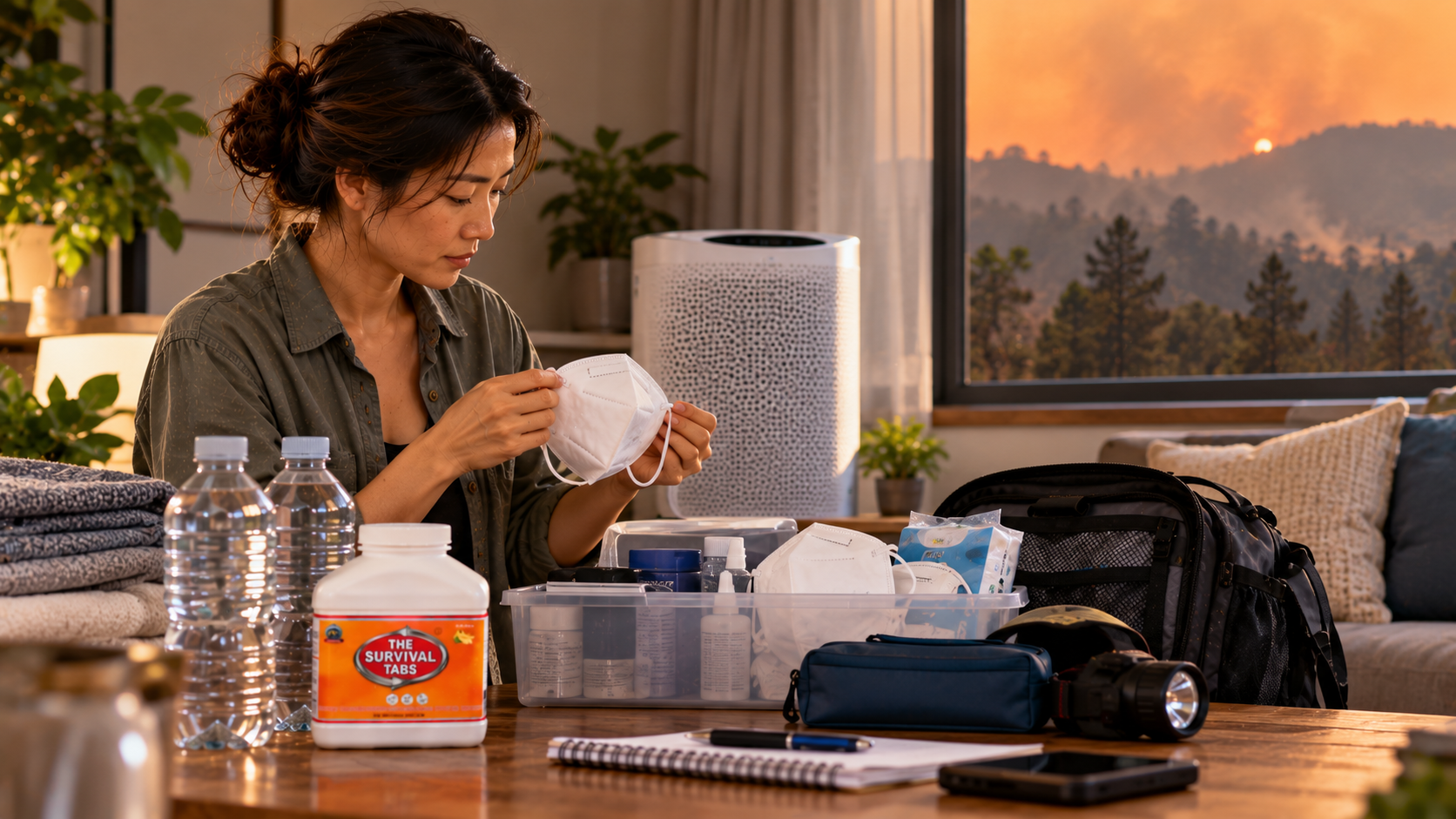
Quick answer: Monitor official air-quality information, reduce smoke entering the home, create a cleaner-air room when possible, and follow health-provider and evacuation guidance. Smoke can affect communities far from the fire.
Plan before smoke arrives
Know where to check the Air Quality Index and local emergency alerts. Identify household members at higher risk, including children, pregnant people, older adults, and people with heart, lung, kidney, or other chronic conditions. Review individual action plans and medication continuity with healthcare providers.
Create cleaner indoor air
Choose a room that can be closed from outside air. Use a portable air cleaner sized for the room or an HVAC filter the system can safely handle. Set compatible systems to recirculate and close outdoor-air intakes when officials recommend it. Follow manufacturer directions.
Avoid adding indoor pollution
During smoke events, avoid smoking, candles, incense, wood fires, aerosol sprays, and unnecessary frying, broiling, or vacuuming. Never leave a do-it-yourself fan-filter device unattended, and do not create electrical or overheating hazards.
Limit outdoor exposure
Follow local advice about outdoor activity. If you must go outside, a correctly worn, well-fitting NIOSH-approved respirator may reduce particle exposure; it does not remove all gases and may not fit everyone. Children require a product that fits properly. Seek professional advice when a health condition affects respirator use.
Know when to relocate or seek care
Evacuate when ordered. Consider a cleaner location when indoor air cannot be kept safer or symptoms worsen. Use emergency services for severe breathing difficulty, chest pain, confusion, or other medical emergencies. Continue checking air quality after the fire because smoke may remain.
Quick checklist
- Follow current official alerts and local instructions.
- Include medications, accessibility, children, older adults, pets, and transport needs.
- Keep essential contacts and records available offline.
- Review supplies and plans after every major change or event.
Frequently asked questions
Does a cloth mask stop wildfire smoke?
Loose face coverings do not provide the same particle protection as a properly fitting approved respirator.
Should windows always stay closed?
Follow local heat and smoke guidance. A sealed hot home can create another hazard, so plan a cooler cleaner-air alternative.
Official sources
- CDC — Wildfire Safety: https://www.cdc.gov/wildfires/safety/
- AirNow Fire and Smoke Map: https://fire.airnow.gov/
This guide provides general preparedness education. Current local instructions, product labels, and qualified professional guidance take priority.