

Emergency Food Safety and Inspection Guide
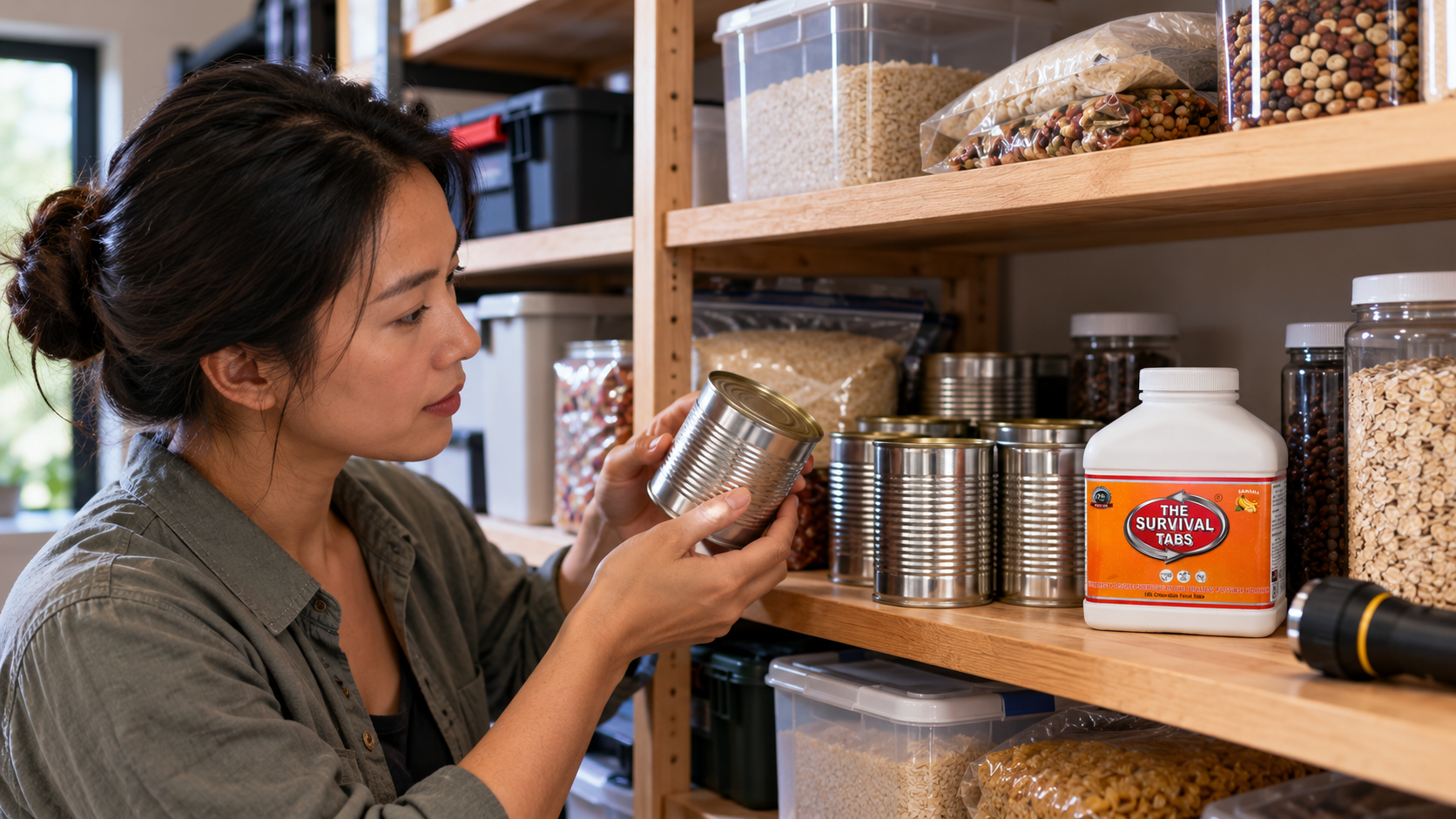
Emergency Food Safety and Inspection Guide
Inspect emergency food before relying on it. Storage time alone does not prove safety; packaging condition, temperature, moisture, pests, floodwater and chemical exposure also matter.
Inspect the storage area
Look for heat, leaks, condensation, pests, chemicals and physical damage. Keep food away from fuel, cleaners and contaminated water.
Inspect packaging
Do not use leaking, swollen, badly rusted, punctured, unsealed or contaminated packages. Preserve lot, date, ingredient and allergen information.
After an outage
Use appliance thermometers and current official time-temperature guidance. Never taste food to determine safety. Appearance and smell cannot identify every hazard.
After flooding or fire
Discard food exposed to floodwater, sewage, firefighting chemicals, smoke damage or unsafe heat as directed by public-health authorities.
Long-shelf-life foods
Inspect Survival Tabs and other long-life products periodically. A shelf-life statement assumes intact packaging and correct storage and does not apply automatically after opening or damage.